Gujarat Local Body Elections 2025: Voting Begins Across 393 Civic Bodies Today
Synopsis
Gujarat's massive local body elections are underway today across 393 civic bodies, with 4.18 crore voters casting ballots for 9,992 seats. Conducted under new 27% OBC reservation norms and watched as a pre-Assembly barometer, the results on April 28 could reshape Gujarat's political landscape heading into 2025-26.
Key Takeaways
Voting for Gujarat local body elections 2025 is underway on April 27 across 393 civic bodies , with results on April 28 .
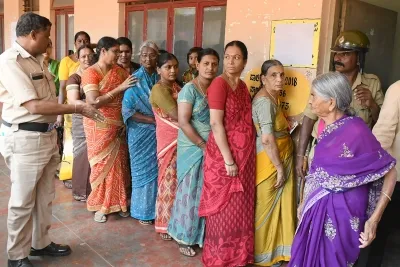
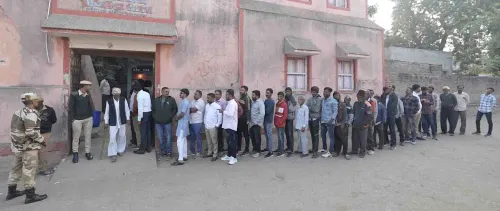
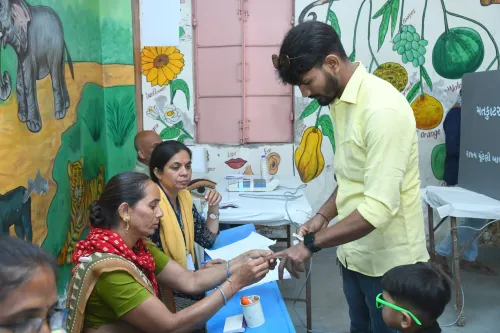
Over 4.18 crore voters are eligible to cast their ballots at nearly 50,000 polling stations from 7:00 AM to 6:00 PM .
A total of 9,992 local body seats are at stake, with over 20,000 candidates still in the fray after withdrawals.
The BJP is defending its control over the municipal corporations of Ahmedabad, Surat, Vadodara, and Rajkot .
Elections are being held under revised 27% OBC reservation norms for the first time, requiring major ward delimitation across the state.
Results are widely seen as a political barometer ahead of the Gujarat Assembly elections expected in late 2025 .
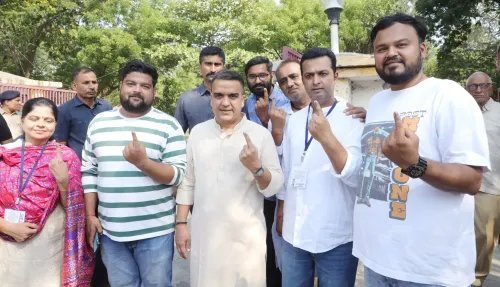
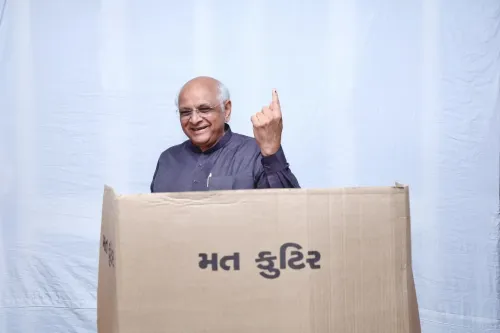
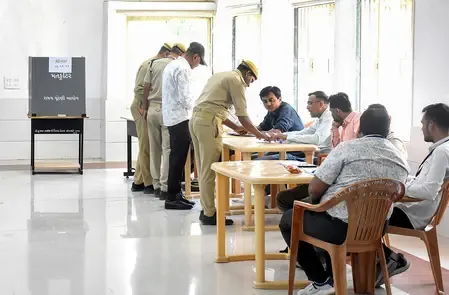
Gujarat heads to the polls on Sunday, April 27, 2025, as voting commences across 393 local self-government bodies in one of the state's largest democratic exercises in recent years. Over 4.18 crore eligible voters will decide the fate of 9,992 local representatives across municipal corporations, municipalities, district panchayats, and taluka panchayats. Polling runs from 7:00 AM to 6:00 PM, with vote counting scheduled for April 28.
Scale and Scope of the Elections
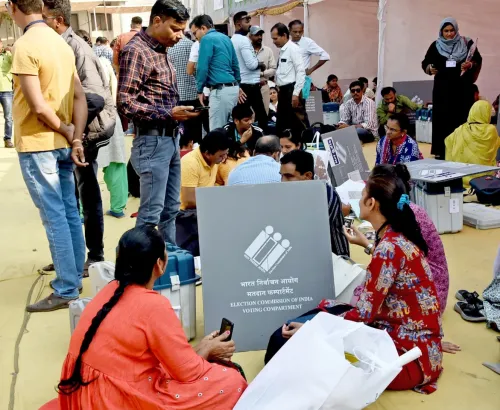
The electoral exercise spans 15 municipal corporations, 84 municipalities, 34 district panchayats, and 260 taluka panchayats — making it one of the most comprehensive local governance polls in Gujarat's history. Nearly 50,000 polling stations have been set up across the state to manage the massive voter turnout expected.
After a wave of candidate withdrawals, over 20,000 candidates remain in contention, while a number of candidates have already secured their seats unopposed. If required, repolling will be conducted on April 28, the same day as the vote count.
Key Political Battlegrounds
The contest is a multi-party fight involving the Bharatiya Janata Party (BJP), the Indian National Congress, the Aam Aadmi Party (AAP), and a significant number of independent candidates. The BJP currently dominates the four most politically consequential municipal corporations — Ahmedabad, Surat, Vadodara, and Rajkot — and will be defending those strongholds today.
Political analysts view these elections as a critical stress test for the BJP's grassroots dominance in Gujarat, especially as the party prepares for the Gujarat Assembly elections expected at the end of 2025 and the national general elections within the next two years. A strong performance here will be used by the BJP as a mandate endorsement, while any losses — particularly in urban corporations — could embolden the opposition.
OBC Reservation Norms and Structural Reforms
These elections are being conducted under revised Other Backward Classes (OBC) reservation norms, which mandate 27 percent reservation for OBC candidates across local bodies. This marks a significant policy shift that required extensive ward delimitation and restructuring in multiple districts across Gujarat.
Combined with existing reservations for Scheduled Castes (SCs), Scheduled Tribes (STs), and women, the new framework is expected to substantially alter the composition of local governance institutions. Critics and social activists have noted that while the OBC reservation is a step forward, the delimitation process itself has been contentious in several districts, with allegations of gerrymandering surfacing ahead of the polls.
Political Significance: A Pre-Assembly Barometer
This election cycle holds outsized political significance beyond its immediate administrative purpose. Local body elections in Gujarat have historically served as reliable indicators of voter mood before state and national polls. In 2021, the BJP swept six municipal corporations, a result that foreshadowed its landslide victory in the 2022 Gujarat Assembly elections where it won 156 out of 182 seats.
The AAP, which made a notable debut in the 2021 municipal polls and the 2022 Assembly elections before failing to win a single seat, will be looking to rebuild its base at the grassroots level. Congress, still struggling to find its footing in Gujarat after years of electoral setbacks, is counting on OBC consolidation and anti-incumbency in rural panchayat areas to improve its tally.
What to Watch After the Results
With vote counting set for April 28, 2025, all eyes will be on the performance of the BJP in urban municipal corporations and the Congress and AAP in rural panchayat bodies. The results will likely set the political tone in Gujarat for the next 12 to 18 months, influencing candidate selection, alliance negotiations, and campaign strategies ahead of the Assembly polls. The outcome of OBC-reserved seats in particular will be closely analyzed as a gauge of how effectively parties have adapted to the new reservation landscape.
Point of View
Congress, and AAP ahead of the 2025 Assembly polls. The BJP's unchallenged dominance in Gujarat's urban corporations has historically translated into Assembly sweeps, but the introduction of 27% OBC reservation and fresh delimitation introduces genuine unpredictability this time. What the mainstream narrative misses is the quiet power struggle within OBC communities themselves — parties that fail to field credible OBC candidates in newly carved wards risk losing a demographic that could tilt both local and state outcomes. The April 28 results will tell us whether Gujarat's political map is shifting, or whether the BJP's organisational machine remains invincible even at the ward level.
NationPress
19 Sept 2026
Frequently Asked Questions
When are the Gujarat local body elections 2025 and when will results be declared?
Gujarat local body elections are being held on April 27, 2025, with polling from 7:00 AM to 6:00 PM. Vote counting and results are scheduled for April 28, 2025.
How many civic bodies and voters are involved in Gujarat local body elections 2025?
The elections cover 393 civic bodies including 15 municipal corporations, 84 municipalities, 34 district panchayats, and 260 taluka panchayats. Over 4.18 crore voters are eligible to vote across nearly 50,000 polling stations.
What is the OBC reservation rule in Gujarat local body elections 2025?
Gujarat's 2025 local body elections are being conducted under revised norms that provide 27 percent reservation for Other Backward Classes (OBCs). This required extensive ward delimitation and restructuring across several districts.
Which parties are contesting the Gujarat local body elections 2025?
The BJP, Congress, Aam Aadmi Party (AAP), and independent candidates are all contesting the elections. The BJP currently holds the municipal corporations of Ahmedabad, Surat, Vadodara, and Rajkot.
Why are Gujarat local body elections 2025 politically significant?
These elections are seen as a key barometer of public sentiment ahead of the Gujarat Assembly elections expected in late 2025 and national general elections within two years. The results will influence party strategies and candidate selection for upcoming state and national polls.