Gujarat Local Body Polls: 736 Seats Won Uncontested Before April 26 Vote
Synopsis
736 seats have been won uncontested in Gujarat's April 26 local body elections spanning municipal corporations, municipalities, and panchayats. With 25,537 candidates contesting 8,263 remaining seats and over 4 crore voters eligible, the scale of walkovers raises pointed questions about the health of grassroots democracy in India's most BJP-dominant state.
Key Takeaways
736 seats across Gujarat's local bodies were won uncontested ahead of the April 26, 2025 elections, spanning all governance tiers.
In 84 municipalities , 385 of 2,624 seats were declared uncontested, with 53 entire wards skipping the vote entirely.
A total of 25,537 candidates will contest 8,263 seats ; the electorate includes over 4.08 crore voters .
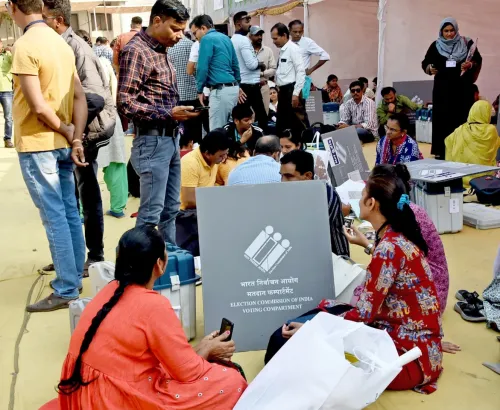
92,583 police personnel and 2,64,715 polling staff have been deployed across 48,450 polling stations .
A dry day is in effect from 6 p.m.
April 26 , and on counting day April 28 .
Seats in Bardoli, Bavla, Vijaynagar, and Chikhlod (Kheda) had elections cancelled due to candidate deaths or mass withdrawal of nominations.
Gujarat's State Election Commission has confirmed that 736 seats across local self-government bodies have been won uncontested ahead of the April 26, 2025 elections — a development that raises fresh questions about political competition at the grassroots level in one of India's most industrially dominant states. The uncontested wins span municipal corporations, municipalities, and panchayats, covering every tier of local governance across the state.
Uncontested Wins: Tier-by-Tier Breakdown
In the 84 municipalities holding general elections, 385 out of 2,624 seats were declared uncontested, resulting in 53 entire wards being settled without a single vote cast. Voting will proceed in the remaining 603 wards, where 5,441 candidates are in the fray.
Among the 15 municipal corporations, 43 of 1,044 seats were won unopposed. Since no single corporation ward was entirely uncontested, all 261 wards will see polling for the remaining 1,001 seats, with 3,145 candidates competing.
In rural governance, 52 of 1,090 seats in the 34 district panchayats were settled without a contest, leaving 1,038 constituencies going to polls with 3,059 candidates. For the 260 taluka panchayats, 252 of 5,234 seats were won without opposition.
Cancelled and Vacant Seats: Key Details
Several seats will remain vacant or have elections postponed due to procedural anomalies. No nomination forms were filed for the 1-Adiya (Harij, Patan) and 11-Satlasana-02 (Mehsana) taluka panchayat seats.
Elections for three seats — 3-Astan (Bardoli, Surat), 4-Dahegamda (Bavla, Ahmedabad), and 6-Chitariya (Vijaynagar, Sabarkantha) — were cancelled following the death of recognized political party candidates. In the Fagvel taluka panchayat of Kheda, the election for the Chikhlod seat was cancelled after all valid candidates withdrew their nominations.
In the 11 municipalities undergoing by-elections, 4 seats were won uncontested, leaving 21 candidates competing in 9 contested wards.
Scale of the Electoral Exercise
Statewide, 25,537 candidates are contesting 8,263 seats across all local body categories. The total electorate stands at 40,816,713 voters, comprising 21,071,001 men, 19,744,864 women, and 848 others.
The State Election Commission has set up 48,450 polling stations, deployed 1,08,188 Balloting Units and 1,22,951 Control Units. A total of 92,583 police personnel and 2,64,715 polling staff have been mobilized. Officials have identified 14,275 sensitive and 2,196 hyper-sensitive booths for special monitoring.
Commission Directives and Voter Facilities
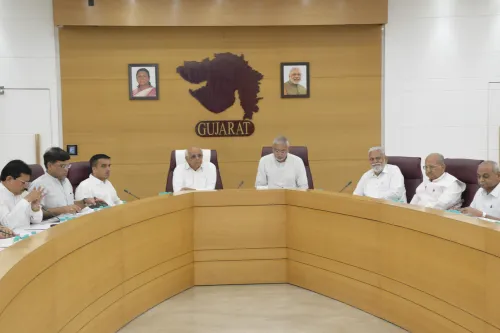
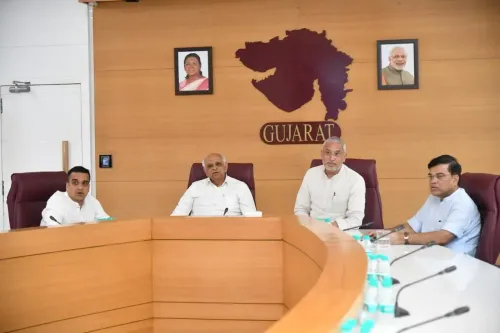
State Election Commission Secretary R.G. Gohil stated that the Commission aims for elections to be held completely fair, free, and in a peaceful atmosphere. He added that the Commission places faith in political parties, candidates, voters, and the public to cooperate in this democratic festival.
A dry day has been enforced from 6 p.m. on April 24 until 6 p.m. on April 26, and again on counting day, April 28. The Labour Commissioner has mandated a three-hour voting leave for employees under the Gujarat Shops and Establishments Act 2019, subject to no operational disruption.
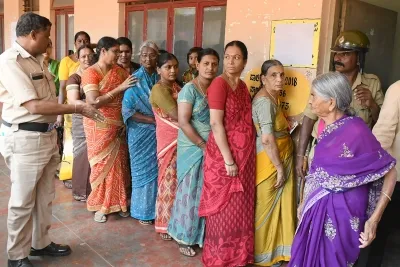
Given ongoing heatwave conditions, all booths have been equipped with shade, drinking water, and ORS. Voters must carry their Elector Photo Identity Card (EPIC); those without it may use any of 14 alternative identity documents — including Aadhaar, PAN card, Passport, or Driving License — issued at least one month prior to the election date. Polling hours are 7 a.m. to 6 p.m.
Broader Significance: What the Numbers Reveal
The scale of uncontested victories — 736 seats across all tiers — is not merely an administrative footnote. Historically, high numbers of walkover wins in local body elections in Gujarat have pointed to dominant single-party control, candidate intimidation concerns, or strategic withdrawal by opposition groups. This comes amid the BJP's entrenched hold over Gujarat's political landscape, having governed the state for over two decades.
Critics and political analysts have previously flagged that unopposed wins at the panchayat and municipality level can hollow out grassroots democracy, as local governance decisions go unchallenged. With results expected on April 28, 2025, the outcome will serve as a key barometer of voter sentiment ahead of future state-level electoral cycles.
Point of View
But walkovers at this scale suggest either a collapse of opposition infrastructure or a chilling effect on candidacy at the grassroots. When citizens in 53 wards cannot exercise a real choice, the democratic festival the Commission celebrates rings hollow. India's election commissions must go beyond logistics and begin asking harder questions about why competition is dying at the local level — because that is where governance actually touches people's lives.
NationPress
1 Oct 2026
Frequently Asked Questions
How many seats were won uncontested in Gujarat local body elections 2025?
A total of 736 seats were won uncontested across Gujarat's local self-government bodies ahead of the April 26, 2025 elections. These walkovers span municipal corporations, municipalities, district panchayats, and taluka panchayats.
When are the Gujarat local body elections being held in 2025?
The Gujarat local body elections are scheduled for April 26, 2025 , with polling from 7 a.m. to 6 p.m. Vote counting will take place on April 28, 2025 .
How many candidates are contesting in Gujarat local body polls 2025?
25,537 candidates are contesting 8,263 seats across all categories of local bodies in Gujarat. The total electorate comprises over 4.08 crore voters .
Why were some Gujarat local body election seats cancelled?
Some seats were cancelled due to the death of recognized political party candidates in constituencies like Bardoli, Bavla, and Vijaynagar. The Chikhlod seat in Kheda was cancelled after all valid candidates withdrew their nominations.
What ID documents can Gujarat voters use if they do not have an EPIC card?
Voters without an Elector Photo Identity Card (EPIC) can use any of 14 alternative documents , including Aadhaar card, PAN card, Passport, or Driving License. These documents must have been issued at least one month before the election date .