Goyal Recalls Advani's Rath Yatra on Diwali-Ayodhya Day
Synopsis
Commerce Minister Piyush Goyal on Diwali 2026 paid tribute to L.K. Advani's 1990 Rath Yatra, calling the 'Mandir wahin banayenge' slogan a symbol of collective resolve and crediting Advani's struggle as the foundation of the now-consecrated Ram temple in Ayodhya.
Key Takeaways
Union Commerce Minister Piyush Goyal posted a tribute on 8 November 2026 , coinciding with Diwali .
He invoked the slogan 'Mandir wahin banayenge' as a symbol of collective national resolve.
The post specifically honours L.K.
Advani's 1990 Rath Yatra as the historic catalyst for the Ram Janmabhoomi movement.
The Supreme Court's November 2019 verdict paved the legal way for the Ram temple's construction in Ayodhya .
Goyal described it as fortunate that the occasion falls on Diwali, with Lord Ram now enshrined in Ayodhya.
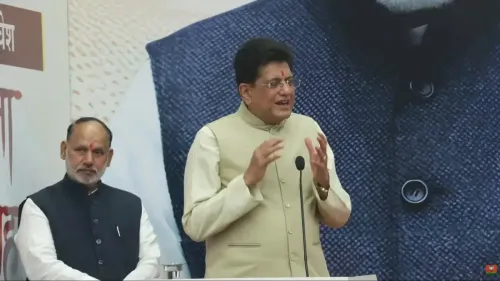
On a day that collapsed decades of political struggle into a single moment of devotion, Union Commerce and Industry Minister Piyush Goyal invoked the slogan 'Mandir wahin banayenge' ('The temple will be built right there') on Sunday, 8 November 2026 — a day he noted coincides with Diwali — to honour veteran BJP leader L.K. Advani's historic contribution to the Ram Janmabhoomi movement.
'Mandir Wahin Banayenge' — From Slogan to Sanctum
Goyal described the rallying cry as 'a symbol of our collective sentiment and resolve.' The phrase was the defining call of the Ram Janmabhoomi campaign that animated Indian politics for over three decades, long before a single stone was laid at the site in Ayodhya, Uttar Pradesh. Its transformation from street-corner chant to stone-and-mortar reality is precisely what Saturday's reflection is built on.
Advani's 1990 Rath Yatra — The Journey That Changed Indian Politics
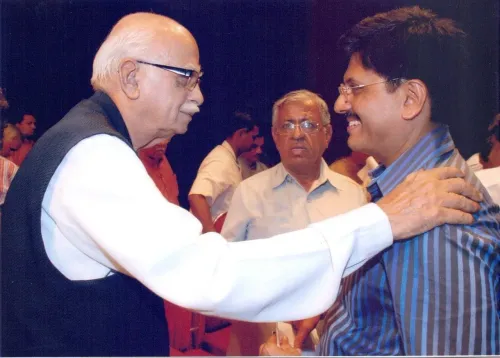
At the centre of Goyal's tribute is L.K. Advani, who in 1990 undertook the now-legendary Rath Yatra across the country, mobilising mass support for a temple at Ayodhya's disputed site. That procession — a gilded chariot winding through thousands of towns and villages — redrew the BJP's electoral map and placed the Ayodhya question at the apex of national political debate. Goyal called this occasion an opportunity to 'remember that historic journey, and his resolve, struggle, and contribution.'
Advani's yatra was eventually halted by authorities, but the movement it seeded did not stop. The Supreme Court's landmark verdict of November 2019 cleared the legal path for temple construction, and the consecration of the Ram Janmabhoomi temple in Ayodhya followed — completing an arc that spans more than three decades of litigation, mobilisation, and national debate.
Diwali in Ayodhya — Faith and Politics in the Same Frame
Goyal noted what he called a fortunate coincidence: that this moment arrives on Diwali, and that Prabhu Shri Ram virajmaan hain — 'Lord Shri Ram is now enshrined' — in Ayodhya. The blending of a religious festival with the temple's symbolic completion is deliberate and potent. For the BJP's core base, the two are inseparable: the festival of lights finding its fullest expression in the city of Ram's birth, with a consecrated temple now standing where none stood before.
The minister's post, delivered with a video, is as much an act of political memory as religious observance — situating the party's present within the long continuum of its foundational struggle, and placing Advani's personal sacrifice at the beginning of that line.
The completed temple in Ayodhya is now both a religious destination and a living political landmark — and on this Diwali, senior BJP voices are making sure neither meaning is forgotten.
Point of View
Connecting the BJP's current cultural authority to Advani's foundational sacrifice at a moment of maximum symbolic resonance — Diwali, with the Ayodhya temple now standing. By foregrounding Advani's 1990 Rath Yatra, the minister implicitly argues that the party's present triumphs are the direct fruit of its old guard's struggles. The gesture also serves to reconcile generational narratives within the BJP: honouring a patriarch while celebrating an achievement his movement made possible. As Ayodhya evolves from a contested site into a developed pilgrimage city, such public commemorations signal that the political meaning of the temple will be actively curated, not quietly shelved.
NationPress
8 Nov 2026
Frequently Asked Questions
What is the slogan 'Mandir wahin banayenge' and where does it come from?
'Mandir wahin banayenge' means 'The temple will be built right there' and was the rallying cry of the Ram Janmabhoomi movement demanding a temple at the Ayodhya site believed to be Lord Ram's birthplace. It became a defining slogan of the BJP-led campaign from the late 1980s onward.
What was L.K. Advani's Rath Yatra in 1990?
In 1990, senior BJP leader L.K. Advani undertook a Rath Yatra — a cross-country procession in a vehicle decorated as a chariot — to mobilise public support for the construction of a Ram temple at Ayodhya. The journey significantly expanded the BJP's political base and placed the Ayodhya issue at the centre of Indian politics.
How was the Ram temple in Ayodhya finally built?
The Supreme Court of India delivered a landmark verdict in November 2019 awarding the disputed Ayodhya site for the construction of a Ram temple. Construction followed, and the temple was subsequently consecrated, completing a movement that began decades earlier.
Why did Piyush Goyal mention Diwali in his post about the Ram temple?
Goyal noted that his tribute fell on Diwali and described it as a fortunate coincidence, linking the festival of lights with Lord Ram's presence in Ayodhya — a city traditionally associated with the story of Ram's return home, which Diwali is said to celebrate.
What is Piyush Goyal's current role in the Indian government?
Piyush Goyal serves as the Union Minister of Commerce and Industry. He is also a senior BJP leader and the Leader of the House in the Rajya Sabha.