Goyal's Diwali Tribute to Border Guards
Synopsis
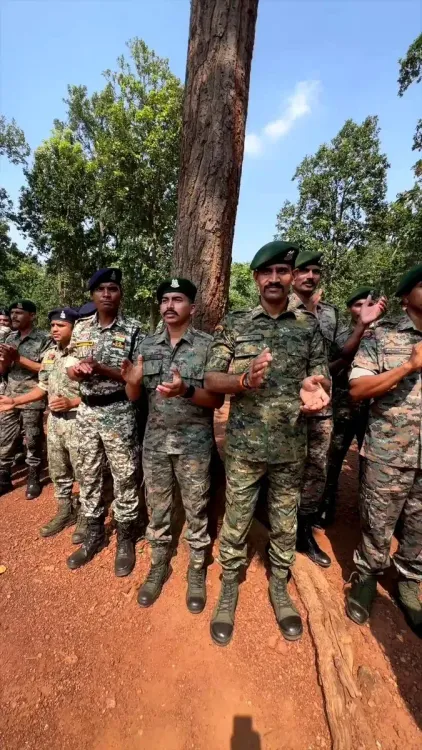
Union Commerce Minister Piyush Goyal marked Diwali 2026 by saluting India's border security forces as 'guardians of the borders, pride of the nation,' in a post that reflects a broader tradition of senior leaders honouring defence personnel during major festivals.
Key Takeaways
Union Commerce and Industry Minister Piyush Goyal posted a Diwali tribute to India's border security forces on 8 November 2026 .
He described them as 'sīmāon ke rakṣak, rāṣṭra ke gaurav' — 'guardians of the borders, pride of the nation.' The gesture is part of a recurring pattern of senior Indian leaders honouring armed and paramilitary forces during major festivals.
Forces guarding India's borders include the BSF, ITBP, SSB, Army, and Assam Rifles , with hundreds of thousands on duty during the festival.
No policy announcement or legislative action is attached to the message.
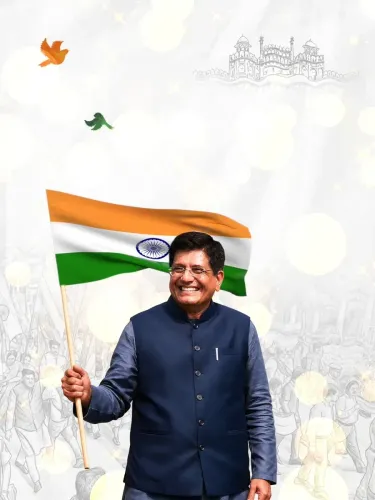
On a festival when millions light lamps at home, Union Commerce and Industry Minister Piyush Goyal turned the light outward — toward the men and women standing watch on India's borders. On Sunday, 8 November 2026, he posted a Diwali message that called the country's border security forces 'sīmāon ke rakṣak, rāṣṭra ke gaurav' — 'guardians of the borders, pride of the nation.'
A salute in the season of lights
The message is brief, but its framing is deliberate. By pairing the festival's greeting with an explicit tribute to border personnel, Goyal echoes a practice that has become a fixture of Indian public life: senior leaders using Diwali as a moment to remind civilians of the sacrifice required so that festive peace is possible. For the soldiers and paramilitary troopers deployed along India's vast land borders — from the high-altitude Himalayan posts to the riverine frontiers of the northeast — Diwali arrives without family, without the warmth of home, often without even reliable light.
Border forces and the Diwali moment
India's border security architecture spans several forces — the Border Security Force (BSF) along the Pakistan and Bangladesh frontiers, the Indo-Tibetan Border Police (ITBP) in the high Himalayas, the Sashastra Seema Bal (SSB) on the Nepal and Bhutan borders, and the Army and Assam Rifles across the northeast and Line of Actual Control. Collectively, hundreds of thousands of personnel spend the festival on operational duty. Senior political leaders addressing them publicly during festivals carries both symbolic and morale significance.
Tributes of this nature are issued across party lines, but BJP leaders holding constitutional posts have made them a consistent part of their festive communications calendar. As Leader of the House in the Rajya Sabha, Goyal occupies one of the most visible seats in Indian legislative life, lending institutional weight to what might otherwise read as a routine social-media post.
No policy announcement accompanies the message, and none is implied. This is the festival doing what festivals do best — pausing the machinery of governance to acknowledge the human cost of national security. The kicker, as every soldier on a cold border post knows, is that the lights go on at home precisely because they don't come home.
Point of View
But the consistency with which senior BJP leaders use festive occasions to foreground national security themes reflects a broader strategic communications pattern. For a minister who is also the government's face in the Rajya Sabha, the message reinforces an image of institutional patriotism that complements the party's core electoral identity. The post carries no policy weight, but in the grammar of Indian political optics, symbols are rarely 'merely' symbolic. That said, tributes of this kind are genuinely cross-partisan — the sentiment lands because the sacrifice is real.
NationPress
8 Nov 2026
Frequently Asked Questions
What did Piyush Goyal post on Diwali 2026?
Piyush Goyal posted a Diwali greeting on 8 November 2026 paying tribute to India's border security forces, calling them 'guardians of the borders, pride of the nation.'
Which forces guard India's land borders?
India's land borders are guarded by the Border Security Force (BSF), the Indo-Tibetan Border Police (ITBP), the Sashastra Seema Bal (SSB), the Indian Army, and the Assam Rifles, among other formations.
Who is Piyush Goyal?
Piyush Goyal is India's Union Minister of Commerce and Industry, a senior BJP leader, and the Leader of the House in the Rajya Sabha.
Why do Indian politicians tribute armed forces on Diwali?
Diwali is India's most prominent festival of lights and family gatherings; politicians use it to publicly acknowledge the sacrifices of soldiers and paramilitary personnel who remain on duty away from their families during the celebrations.
Does the Diwali tribute post signal any new policy for defence forces?
No. The post is a ceremonial festive greeting and tribute. No policy announcement or legislative action has been linked to it.