Goyal Calls 2026 Diwali Historic as India Claims Victory Over Naxalism
Synopsis
Union Minister Piyush Goyal declared Diwali 2026 as India's first festival of lights after winning the decades-long battle against Naxalism and Maoist terror, framing the moment as a historic milestone in India's internal security.
Key Takeaways
Union Commerce Minister Piyush Goyal declared on November 8, 2026 that India has won its fight against Naxalism and Maoist terror.
The Naxalite movement began in Naxalbari, West Bengal in 1967 and spread across a 'Red Corridor' in central and eastern India.
In 2006 , Prime Minister Manmohan Singh called Naxalism India's 'single biggest internal security challenge.' Post- 2014 , the government pursued a dual approach combining security operations with infrastructure development in LWE-affected districts .
Official statistics showed a steady decline in LWE-related violence and the number of affected districts over the preceding decade.
The Ministry of Home Affairs annual LWE report and parliamentary proceedings will be key forums to verify the claim with operational data.
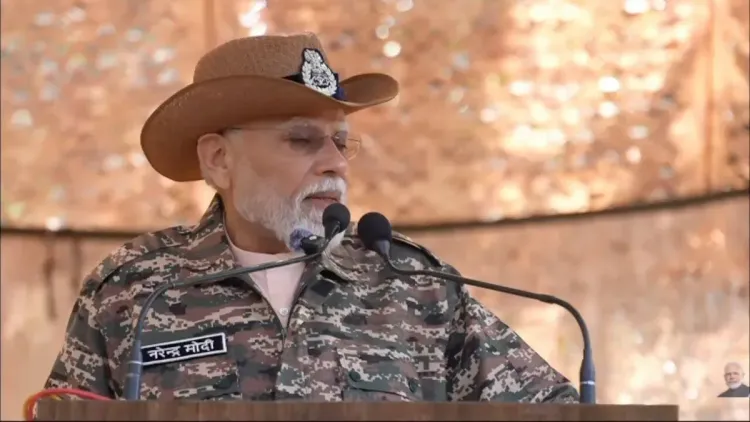
Sixty years after Naxalism first took root in the forests of Naxalbari, Union Commerce and Industry Minister Piyush Goyal declared on Sunday, November 8, 2026 that India has finally closed the chapter on left-wing extremism — and that this Diwali is the first to be celebrated in its absence.
Posting on X, Goyal wrote: 'Saal 2026 ki Diwali vishesh hai. Yeh pehli Diwali hai jab desh, Naxalwad aur Maovaadi aatank ke khilaf dashakon purani ladai jeet chuka hai.' — 'The Diwali of 2026 is special. This is the first Diwali when the country has won the decades-old battle against Naxalism and Maoist terror.'
A Six-Decade Insurgency and Its Long Shadow
The Naxalite movement traces its origins to a 1967 peasant uprising in Naxalbari, West Bengal, and over decades evolved into a guerrilla insurgency spanning the so-called 'Red Corridor' — a swath of central and eastern India covering parts of Chhattisgarh, Jharkhand, Odisha, Maharashtra, and neighbouring states. At its peak, it claimed hundreds of lives annually, targeted security forces, disrupted infrastructure, and kept vast forest-district populations in a grip of fear and economic isolation.
In 2006, then Prime Minister Manmohan Singh described Naxalism as India's 'single biggest internal security challenge' — a phrase that entered the country's strategic vocabulary and stuck for two decades. The acknowledgement of its scale was itself a landmark.
The Dual Strategy That Turned the Tide
Post-2014, the government sharpened a twin-track approach: intensified kinetic operations by central armed police forces, combined with an accelerated push for roads, schools, mobile connectivity, and livelihood schemes in LWE-affected districts. Official data recorded a steady decline in violence year on year — fewer casualties, fewer districts on the red list, dwindling cadre strength.
Surrender and rehabilitation policies ran in parallel, drawing fighters out of the jungle with promises of legal protection and economic integration. The strategy was not new, but its consistency and resourcing post-2014 gave it a momentum earlier iterations had lacked.
Why Diwali 2026 Carries This Particular Weight
Goyal's choice of Diwali — the festival of light, synonymous with the defeat of darkness — as the symbolic marker is deliberate and potent. The framing places 2026 as the year the arc of a six-decade struggle bends decisively. For residents of former LWE districts, the significance is not rhetorical: it is the difference between a Diwali lit under threat and one lit in peace.
The Ministry of Home Affairs' annual LWE report and forthcoming parliamentary sessions will be the spaces where the operational metrics behind this declaration are tested and scrutinised. The political claim is on the table — now the numbers must hold it up.
Point of View
The statement raises the political stakes: a victory declared this publicly can be scrutinised this publicly.
NationPress
8 Nov 2026
Frequently Asked Questions
Has India completely eliminated Naxalism in 2026?
Union Minister Piyush Goyal declared on November 8, 2026 that India has won its decades-long battle against Naxalism. The formal operational data behind this claim will be detailed in the Ministry of Home Affairs annual LWE report and scrutinised in Parliament.
What is Naxalism and when did it start in India?
Naxalism is a left-wing extremist insurgency that began with a peasant uprising in Naxalbari, West Bengal in 1967. It spread across a 'Red Corridor' in central and eastern India, involving parts of Chhattisgarh, Jharkhand, Odisha, and Maharashtra.
What did the Indian government do to fight Naxalism?
Post-2014, the government sharpened a dual-track strategy combining intensified security operations by central armed police forces with accelerated infrastructure development, mobile connectivity, schools, and livelihood schemes in LWE-affected districts, alongside surrender and rehabilitation policies.
Why is Diwali 2026 considered special in context of Naxalism?
Minister Piyush Goyal framed Diwali 2026 as the first festival of lights celebrated after India's victory over Naxalist and Maoist terror, using the symbolism of light triumphing over darkness to mark what he called the end of a six-decade insurgency.
Which areas were most affected by Naxalism in India?
The worst-affected areas formed the so-called 'Red Corridor' spanning parts of Chhattisgarh, Jharkhand, Odisha, Maharashtra, and neighbouring central and eastern Indian states, where Maoist cadres conducted guerrilla operations for decades.