Bihar CM flags four major road projects in state
Synopsis
Bihar's Chief Minister has highlighted four infrastructure projects — a Gandak bridge, a Patna elevated road, a Patna–Purnia greenfield expressway, and a Varanasi–Ranchi–Kolkata six-lane highway — signalling the state's expanding road-connectivity agenda.
Key Takeaways
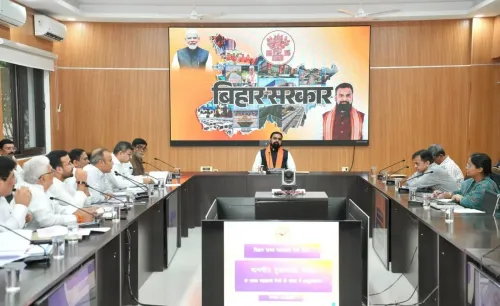
Bihar's Chief Minister listed four road and bridge projects in a statement shared by the official CMO account on 2 November 2026 .
A 2-lane bridge over the Gandak river aims to improve rural connectivity across one of Bihar's major waterways.
A 6-lane elevated road with service road in Patna targets urban congestion in the state capital.
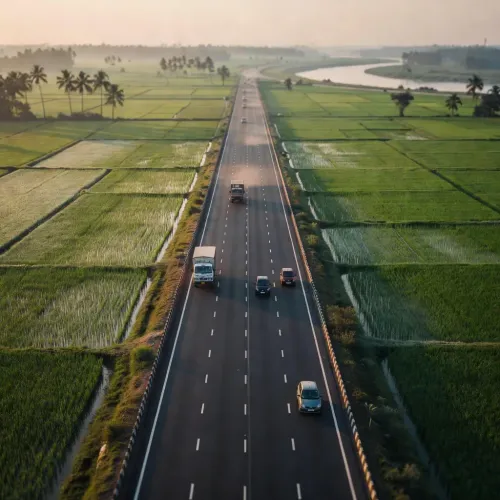
The Patna–Purnia 4-lane greenfield expressway would link the capital to eastern Bihar's Purnia district on a new alignment.
The Varanasi–Ranchi–Kolkata 6-lane greenfield highway is an inter-state corridor spanning Uttar Pradesh, Jharkhand, and West Bengal.
Greenfield projects of this scale are typically executed under the central Bharatmala programme in partnership with state governments.
Four road and bridge projects — spanning a river crossing, an urban flyover, and two greenfield corridors that reach across state borders — are on Bihar's infrastructure radar, the Chief Minister's Office of Bihar signalled in a post on X on Monday, 2 November 2026. The statement, attributed to the Chief Minister, sketches an ambition that runs from a local bridge over the Gandak river all the way to a six-lane highway linking Varanasi, Ranchi, and Kolkata.
The Chief Minister's statement, as quoted by the official office, listed the projects: a 2-lane bridge over the Gandak river, a 6-lane elevated road with service road in Patna, a Patna–Purnia 4-lane greenfield expressway, and the Varanasi–Ranchi–Kolkata 6-lane greenfield highway. In the original Hindi, the office described these as 'महत्वपूर्ण परियोजनाएं' — 'important projects'.
A Gandak crossing and Patna's urban gridlock
The Gandak river is one of Bihar's major waterways, and a new two-lane bridge would improve connectivity for communities on its banks — a perennial gap in the state's rural road network. In Patna, the proposed six-lane elevated corridor with a parallel service road targets the capital's chronic urban congestion, an issue that has grown with the city's expanding population and vehicle load.
Patna–Purnia greenfield expressway: east Bihar's connectivity leap
The proposed Patna–Purnia 4-lane greenfield expressway would link the state capital with Purnia district in eastern Bihar — a stretch that currently relies on older national highway alignments that pass through market towns. A greenfield alignment bypasses congested corridors entirely, cutting travel time and opening up freight movement for an agriculturally productive but road-starved part of the state.
Varanasi–Ranchi–Kolkata corridor: the inter-state picture
The most ambitious listing is the Varanasi–Ranchi–Kolkata 6-lane greenfield highway, a corridor that would stitch together three major cities across Uttar Pradesh, Jharkhand, and West Bengal. Projects of this nature typically fall under the central government's Bharatmala programme, which has prioritised greenfield expressways to decongest existing national highways and improve logistics efficiency across eastern India. Bihar sits at the geographic centre of this corridor — making the state both a beneficiary and a critical right-of-way zone.
Bihar's state budgets have consistently allocated funds for river bridges and highway widening since the mid-2010s, but greenfield expressways represent a more capital-intensive, faster-throughput generation of investment. The key milestones to watch: land acquisition notifications, tender awards, and how these corridors feature in the next central highway review or state budget. The projects are named — the clock to ground-breaking is the next question.
Point of View
Suggesting coordinated centre-state ambition rather than purely state-funded outlays. Announcing specific project names without timelines or funding confirmations is a familiar pre-budget or pre-election posture across Indian state governments. The real test will be whether land acquisition and tender processes follow within the next fiscal cycle.
NationPress
2 Nov 2026
Frequently Asked Questions
What are the four road projects announced by the Bihar Chief Minister?
The four projects are: a 2-lane bridge over the Gandak river, a 6-lane elevated road with service road in Patna, a Patna–Purnia 4-lane greenfield expressway, and a Varanasi–Ranchi–Kolkata 6-lane greenfield highway.
What is the Patna–Purnia greenfield expressway?
It is a proposed 4-lane greenfield expressway that would connect Patna, Bihar's state capital, with Purnia district in eastern Bihar on a new road alignment, bypassing existing congested routes.
Which states does the Varanasi–Ranchi–Kolkata highway pass through?
The proposed 6-lane greenfield highway connects Varanasi in Uttar Pradesh, Ranchi in Jharkhand, and Kolkata in West Bengal, with Bihar sitting along the corridor.
Is the Gandak river bridge a new project in Bihar?
The Chief Minister referenced a new 2-lane bridge over the Gandak river as one of several important projects; Bihar has historically invested in river bridge construction as part of its rural connectivity agenda.
What is Bharatmala and how does it relate to Bihar's highways?
Bharatmala is the central government's flagship highway development programme that prioritises greenfield expressways and inter-state corridors. Bihar's large-scale highway projects, including greenfield corridors, are typically developed in partnership with the central Ministry of Road Transport and Highways under this programme.