FM Sitharaman: GST, tax reforms built on trusting citizens

Synopsis
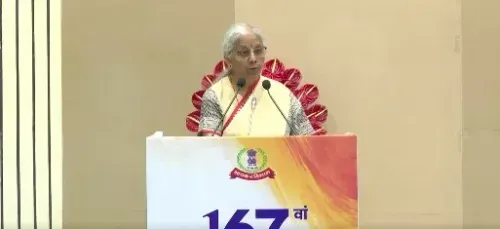
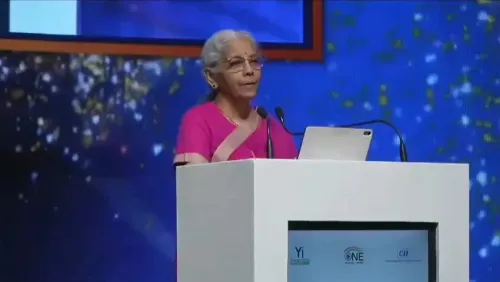
Union Finance Minister Nirmala Sitharaman, speaking at the Financial Express Leadership Awards 2026 in Mumbai, said GST and income tax reforms are grounded in explicitly trusting taxpayers, businesses and farmers — and that PM Modi wants every future policy to reflect this principle as a governing charter.
Key Takeaways
Nirmala Sitharaman declared at the Financial Express Leadership Awards 2026 in Mumbai that India's tax reforms are built on explicitly trusting citizens and businesses.
GST , launched in July 2017 , and the Faceless Income Tax Assessment Scheme , introduced in 2020 , are cited as flagship expressions of this trust-first approach.
PM Narendra Modi has directed that every policy reflect the principle: 'trust the business, trust the industry, trust the taxpayer.' Sitharaman described this orientation as a 'charter' — a standing institutional mandate, not a one-off Budget measure.
Upcoming GST Council meetings and the next Union Budget will be key tests of whether the trust-based philosophy advances further.
Trust — not surveillance — is now the governing philosophy of India's tax architecture. Speaking at the Financial Express Leadership Awards 2026 in Mumbai, Maharashtra on Monday, November 2, Union Finance Minister Nirmala Sitharaman declared that every policy reform her ministry has pursued flows from a single, explicit commitment: trust the taxpayer, trust the business, trust the farmer.
The shift from compliance-first to trust-first governance
Sitharaman's remarks reframe a decade of economic policy as one coherent arc. 'We have started doing things differently by explicitly trusting the people, businesses, farmers and taxpayers,' she said, adding that GST, income tax overhauls, and broader policy reforms are all 'built on this trust.' The framing is deliberate — a government-as-regulator posture replaced, at least in principle, by a government-as-partner one.
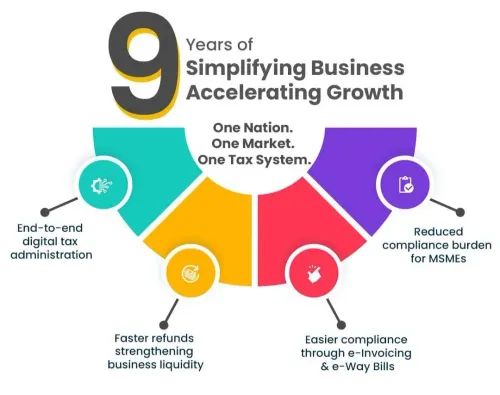
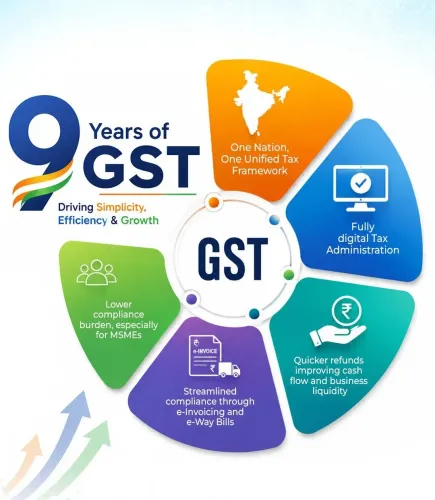
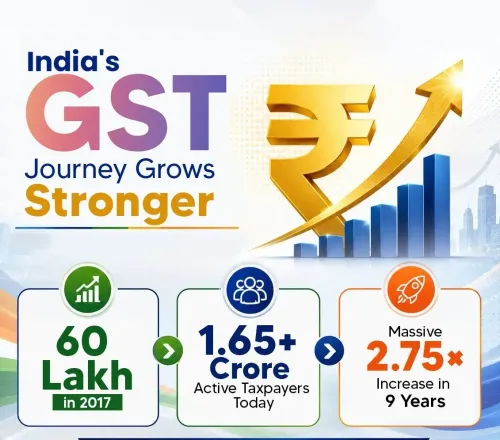
The roots run back to July 2017, when GST unified India's fractured indirect-tax landscape into a single national market, collapsing dozens of central and state levies into one system. Then in 2020, the Faceless Income Tax Assessment Scheme removed the physical interface between officers and taxpayers entirely — no face, no address, no room for discretionary pressure. Each step pointed in the same direction: assume good faith, then verify digitally.
Modi's mandate: a charter for every ministry
Sitharaman was explicit that the directive comes from the top. Prime Minister Narendra Modi, she said, 'wants every policy to reflect this principle — trust the business, trust the industry, trust the taxpayer. That will be our charter.' Elevating it to a 'charter' signals this is not a Budget-cycle talking point but a standing institutional orientation that all ministries are expected to internalise.
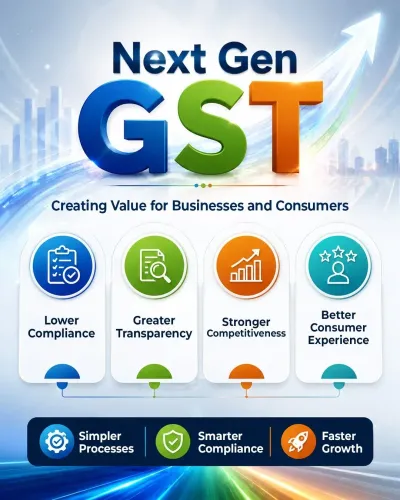
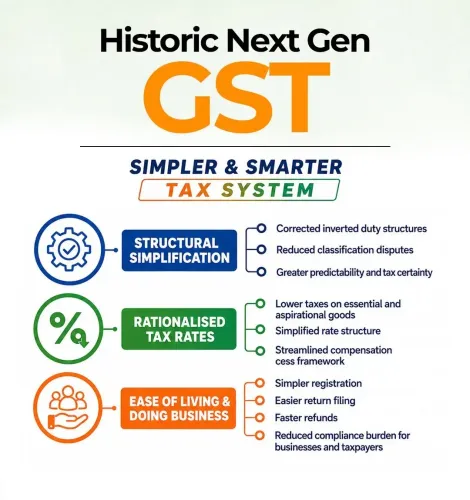
The broader pattern across successive Union Budgets and GST Council decisions bears this out: progressive rate rationalisation, expanded digital filing, reduced physical scrutiny, and rising thresholds for compliance triggers. The stated goal is a voluntary-compliance culture — one where citizens file correctly because the system is simple and fair, not because they fear an audit knock.
What taxpayers, businesses and farmers stand to watch
The Finance Minister's framing sets clear expectations for the months ahead. Upcoming GST Council meetings will be the first test — whether rate rationalisation advances further, or whether new threshold changes ease the burden on small businesses and farmers. The next Union Budget will be the bigger canvas: whether 'trust the taxpayer' translates into structural simplification, reduced compliance deadlines, or new presumptive-tax regimes for the self-employed and the agrarian economy.
The speech also lands as a signal to industry at a flagship leadership forum — exactly the audience that lobbies hardest for ease-of-doing-business gains. Naming businesses, farmers, and taxpayers in the same breath is a political choice: it binds three constituencies — urban enterprise, rural agriculture, and the salaried middle class — under one rhetorical tent.
If the charter holds, the next Budget won't just adjust numbers — it will define whether trust-based governance is a philosophy or a promise.
Point of View
She signals that this is a whole-of-government posture, insulating individual ministry decisions from being read as ad hoc. The speech also performs double duty as an industry signal: at a leadership awards forum, naming businesses alongside farmers and taxpayers broadens the coalition of beneficiaries and pre-empts criticism that trust-based reforms favour corporates over ordinary citizens. The real test, however, lies in specifics — whether GST rate rationalisation and income-tax simplification in the next Budget match the rhetorical ambition of a 'charter.'
NationPress
2 Nov 2026
Frequently Asked Questions
What did Nirmala Sitharaman say at the Financial Express Leadership Awards 2026?
She said India's GST, income tax, and other policy reforms are built on explicitly trusting the people, businesses, farmers and taxpayers, and that PM Modi wants every future policy to reflect this trust-first principle as a governing charter.
What is the Faceless Income Tax Assessment Scheme?
The Faceless Income Tax Assessment Scheme, launched in 2020 , removes physical interface between tax officers and taxpayers entirely, using digital systems to minimise discretionary pressure and build trust in the compliance process.
When was GST introduced in India?
GST — Goods and Services Tax — was rolled out nationwide in July 2017 , replacing multiple central and state levies with a unified indirect-tax system to create a single national market.
What does 'trust the taxpayer' mean as a government policy principle?
It refers to designing tax systems that assume good-faith behaviour by citizens and firms by default — using technology, simplified filing, reduced audits, and lower compliance burdens — rather than a compliance-heavy approach that treats everyone as a potential evader.
What should businesses and taxpayers watch for after Sitharaman's speech?
Upcoming GST Council meetings for rate rationalisation and the next Union Budget are the key milestones where the 'trust charter' will be tested through concrete policy measures such as new compliance thresholds or simplified tax regimes.