Sitharaman Urges Young Entrepreneurs to Take Risks, Back India
Synopsis
Union Finance Minister Nirmala Sitharaman, addressing an audience in Madurai on 18 July 2026, urged young entrepreneurs to take risks and seize opportunities, describing India as the ideal place to innovate, backed by stable governance, policy certainty, and a predictable tax regime.
Key Takeaways
Union Finance Minister Nirmala Sitharaman delivered remarks on entrepreneurship in Madurai, Tamil Nadu on 18 July 2026 .
She urged young entrepreneurs to 'overcome any hesitation in taking risks and seize the opportunities before them.' Sitharaman cited a stable government, policy certainty, a predictable tax regime, and a responsive administration as India's core business advantages.
The address aligns with a decade of reforms including Make in India (2014), Startup India (2016), GST (2017), and the Insolvency and Bankruptcy Code (2016).
The next Union Budget is the key watch point for fresh measures on angel tax and startup credit guarantee schemes.
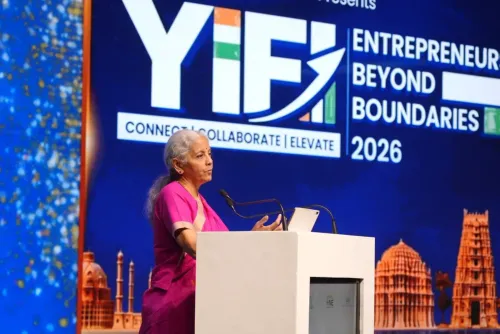
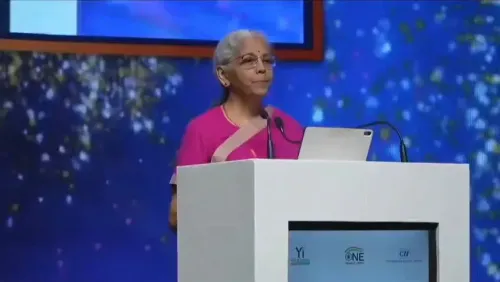
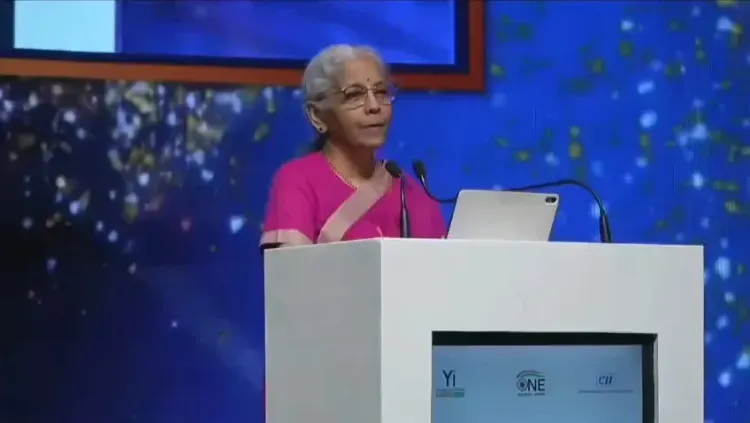
Union Finance Minister Nirmala Sitharaman on Saturday, 18 July 2026, called on young entrepreneurs to shed hesitation and embrace risk-taking, asserting that India today offers an unmatched environment for innovation and business creation. Speaking in Madurai, Tamil Nadu, she cited stable governance, policy certainty, and a predictable tax regime as the foundational pillars of the country's business-friendly climate.
Context
Sitharaman's remarks, shared on her official X account, carried a direct message to the startup generation: 'Today's generation is better equipped than ever before to innovate, build and succeed.' She pointed to 'easy access to information, resources, technology and world-class infrastructure' as forces that have dismantled many of the barriers entrepreneurs faced a few decades ago. The address in Madurai — a major commercial and cultural hub in southern Tamil Nadu — is part of a broader pattern of regional outreach by senior central government ministers aimed at reinforcing the administration's economic narrative beyond the national capital.
Policy Backdrop
The minister's confidence in India's business ecosystem is rooted in a decade of structural reforms. The Make in India campaign, launched in September 2014, set out to improve ease-of-doing-business rankings and attract foreign and domestic investment. The Startup India initiative, unveiled in January 2016, followed with tax benefits, compliance simplifications, and funding support specifically designed to nurture new ventures.
The rollout of the Goods and Services Tax (GST) from July 2017 replaced a fragmented web of central and state levies with a unified national market, directly addressing the 'predictable tax regime' that Sitharaman invoked in Madurai. The Insolvency and Bankruptcy Code, enacted in 2016, further strengthened exit mechanisms, reducing the risk calculus for entrepreneurs and investors alike. Successive Union Budgets have layered digital public infrastructure and physical connectivity investments on top of these foundational reforms.
Stakeholders and Impact
The primary audience for Sitharaman's message is India's large and growing cohort of young, first-generation entrepreneurs, particularly those in tier-2 and tier-3 cities who may be deterred by perceived regulatory complexity or capital access challenges. Tamil Nadu itself hosts a significant technology and manufacturing ecosystem, with Madurai emerging as a node for small and medium enterprises in textiles, engineering, and services.
For the broader startup ecosystem, the Finance Minister's explicit endorsement of 'a responsive, approachable government' signals continued administrative intent to reduce friction for new businesses. Venture capital communities and angel investors are likely to read the statement as a reaffirmation that the policy environment will remain stable, a concern that has periodically surfaced around issues such as angel tax treatment for early-stage funding rounds.
What's Next
Attention will now turn to the next Union Budget for concrete follow-through — specifically, any fresh announcements on angel tax rationalisation, expanded startup tax benefits, or new credit guarantee schemes for first-time founders. At the state level, the rollout of central entrepreneurship programmes in Tamil Nadu will be watched as a measure of how the Centre's policy confidence translates into ground-level support. Sitharaman's Madurai address reinforces that the government views the southern states not merely as beneficiaries of policy but as active participants in India's broader innovation ambition.
Point of View
The Finance Minister is also pitching to the diaspora entrepreneurship network that Tamil Nadu commands. The speech fits a recognisable arc: as India courts global investment indices, senior ministers are increasingly deployed as brand ambassadors for the reform narrative at the regional level.
NationPress
16 Oct 2026
Frequently Asked Questions
What did Nirmala Sitharaman say in Madurai about entrepreneurs?
Sitharaman urged young entrepreneurs to overcome hesitation in taking risks, stating that India offers stable governance, policy certainty, and a predictable tax regime that make it the ideal place to innovate and do business.
When did Nirmala Sitharaman speak in Madurai?
She delivered her remarks on entrepreneurship in Madurai on Saturday, 18 July 2026, as shared on her official X account.
What government schemes back India's startup ecosystem?
Key central government initiatives include Startup India (launched January 2016), Make in India (September 2014), the GST unified tax system (July 2017), and the Insolvency and Bankruptcy Code (2016), all aimed at reducing barriers for new businesses.
Why is Nirmala Sitharaman speaking in Tamil Nadu?
Senior ministers regularly conduct regional outreach in southern states as part of a broader strategy to communicate the Centre's economic and policy reforms directly to local business communities and entrepreneurs.
What should young entrepreneurs watch for in the next Union Budget?
Key items to watch include potential announcements on angel tax rationalisation, expanded startup tax benefits, and new credit guarantee schemes for first-time founders.