Sitharaman in Madurai: India 3rd-largest startup hub, fastest-growing economy
Synopsis
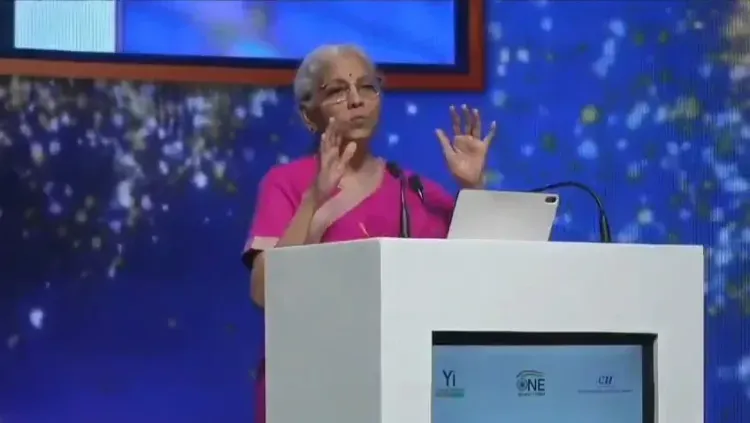
Union Finance Minister Nirmala Sitharaman, speaking in Madurai on 18 July 2026, highlighted India's status as the fastest-growing major economy, its projected 1/6th share of global growth, and a startup ecosystem of over 2.4 lakh DPIIT-recognised ventures that have created more than 23 lakh direct jobs, ranking third in the world.
Key Takeaways
Union Finance Minister Nirmala Sitharaman described India as the fastest-growing major economy in the world during a speech in Madurai on 18 July 2026 .
India is projected to contribute nearly one-sixth of global growth over the coming years.
More than 2.4 lakh DPIIT-recognised startups have collectively created over 23 lakh direct jobs .
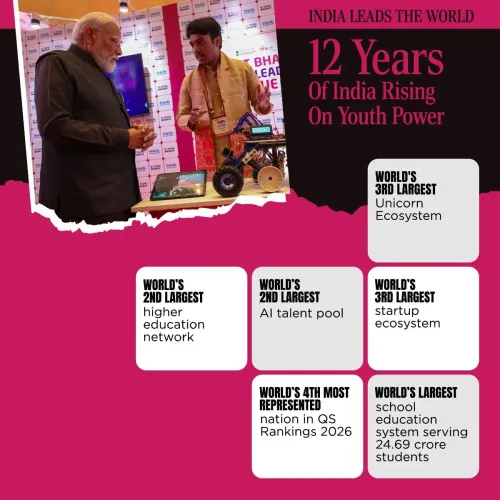
India's startup ecosystem is now ranked third largest globally .
India holds the largest pool of young workforce in the world, a demographic seen as a key growth driver.
The remarks were the first part of a multi-post thread, with further details expected.
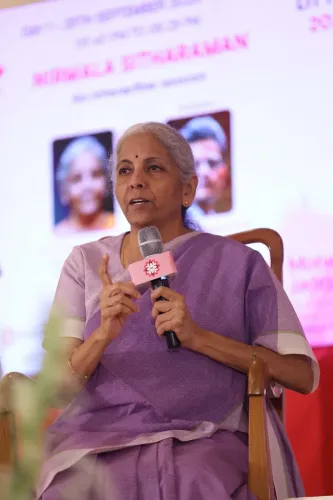
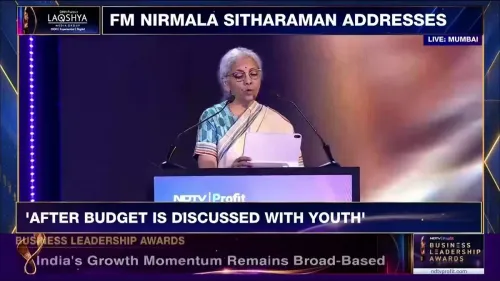
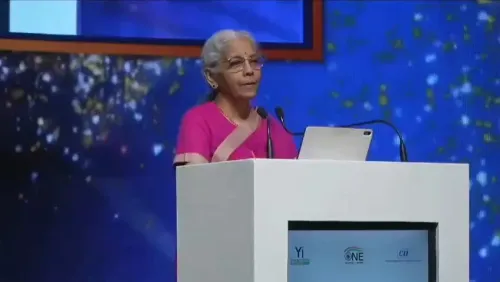
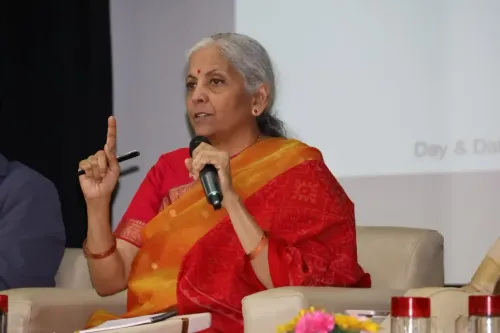
Union Finance Minister Nirmala Sitharaman, speaking in Madurai, Tamil Nadu on Saturday, 18 July 2026, declared India the fastest-growing major economy in the world and highlighted the country's rising contribution to global growth, its demographic advantage, and the scale of its startup ecosystem.
Context
Addressing an audience in Madurai, Sitharaman cited a cluster of economic indicators to underscore India's position on the world stage. She stated that India is projected to contribute 'nearly 1/6th of global growth over the coming years' and pointed to the country's 'largest pool of the youngest workforce anywhere in the world' as a structural advantage. The remarks were shared as part of a thread, marked '1/n', indicating a multi-part statement.
On the startup front, she said that more than 2.4 lakh DPIIT-recognised startups have together created over 23 lakh direct jobs, and that India's startup ecosystem is now the third largest globally.
Policy Backdrop
The Department for Promotion of Industry and Internal Trade (DPIIT) has been the nodal body for recognising startups under the Startup India initiative, which was launched in 2016 to promote entrepreneurship, ease of doing business, and innovation-led ventures. The programme provides registered startups with a range of benefits including tax exemptions, faster patent processing, and access to government procurement.
India's broader economic trajectory has been shaped by the 1991 liberalisation and successive waves of reform — from digital public infrastructure to production-linked incentives — that successive governments have used to attract investment and formalise the economy. The emphasis on India's share of global growth aligns with the country's positioning in forums such as the G20, where it has consistently projected itself as a driver of world economic expansion.
Stakeholders and Impact
The figures cited by Sitharaman carry direct relevance for India's estimated 65 crore-strong working-age population, a cohort that economists and policymakers often describe as the country's 'demographic dividend.' If harnessed effectively through skill development and job creation, this workforce is seen as a key engine for sustained growth over the next two to three decades.
For the startup community, the minister's remarks signal continued political and policy attention to the ecosystem. Founders, investors, and incubators — particularly in Tier-2 and Tier-3 cities such as Madurai itself — stand to benefit from any further policy measures that may follow from such public commitments. Employment figures linked to DPIIT-recognised startups are also closely watched by industry bodies as a measure of quality job creation in the formal economy.
What's Next
The multi-part nature of Sitharaman's post suggests additional data points or policy positions are expected to follow in subsequent parts of the thread. Observers will watch for announcements related to startup incentives, employment-linked schemes, or fiscal measures in the next Union Budget. Parliamentary scrutiny of DPIIT's performance metrics and the methodology behind startup job-creation figures is also anticipated as these numbers enter public discourse.
India's claim to the fastest-growing major economy title, if sustained, will likely anchor the government's economic messaging heading into the next electoral cycle and in multilateral diplomatic engagements.
Point of View
Global growth share, startup scale, demographic size) into a single, shareable narrative ahead of what is likely a significant policy or electoral moment. The choice of Madurai, a non-metro city in Tamil Nadu, signals an effort to broaden the BJP's economic messaging into southern India, where the party has historically faced headwinds. The framing of startup job creation as a core employment story is also notable: it shifts the political conversation from agrarian distress and manufacturing employment gaps toward a tech-forward, aspirational register that resonates with urban and semi-urban youth. Whether the figures withstand independent scrutiny will determine how durable this messaging proves to be.
NationPress
16 Oct 2026
Frequently Asked Questions
Is India really the fastest-growing major economy in the world?
Finance Minister Nirmala Sitharaman stated on 18 July 2026 that India is the fastest-growing major economy in the world. This characterisation is broadly consistent with projections from multilateral institutions that have ranked India ahead of other large economies in GDP growth forecasts, though exact rankings can vary by source and methodology.
How many startups are recognised by DPIIT in India?
According to Nirmala Sitharaman's statement in Madurai on 18 July 2026, more than 2.4 lakh startups have been recognised by the Department for Promotion of Industry and Internal Trade (DPIIT) under the Startup India initiative.
How many jobs have Indian startups created?
Sitharaman stated that DPIIT-recognised startups have together created over 23 lakh direct jobs. This figure refers to formal employment reported by startups registered under the Startup India programme.
What is India's rank in the global startup ecosystem?
India's startup ecosystem is ranked third largest globally, according to Finance Minister Nirmala Sitharaman's speech in Madurai on 18 July 2026.
What is the Startup India initiative and when was it launched?
Startup India is a government initiative launched in 2016 to promote entrepreneurship and innovation. It is administered by the DPIIT and offers registered startups benefits such as tax exemptions, faster patent processing, and access to government procurement opportunities.