Pakistan's ISKP ties draw global alarm: Report flags terror proxy strategy
Synopsis
A detailed MEMRI report alleges Pakistan's military is cultivating ISKP not out of ideology but as a calculated pressure tool against the Afghan Taliban and Baloch insurgents — reverting to a four-decade proxy playbook. With TTP launching over 1,000 attacks in 2025 and CPEC under threat, the report calls on Western governments to tie aid to verifiable counterterrorism action.
Key Takeaways
Pakistan's military is reportedly extending patronage to ISKP as a strategic proxy, according to a MEMRI report published in July 2026 .
Cross-border drone activity between Afghanistan and Pakistan was reported on 30 June 2026 , linked to alleged ISKP hideouts.
Tehreek-e-Taliban Pakistan (TTP) launched over 1,000 attacks in 2025 , inflicting casualties across Khyber Pakhtunkhwa .
Baloch armed groups have escalated attacks on CPEC infrastructure, raising alarm in Beijing .
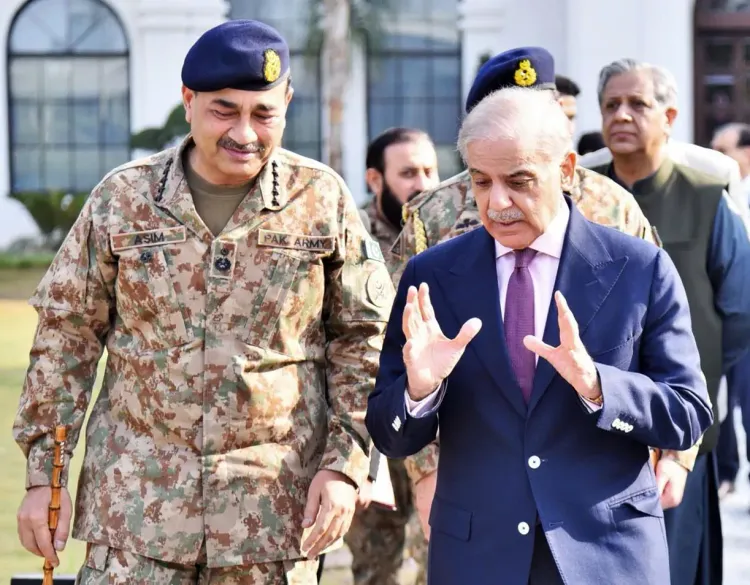
Army Chief Field Marshal Syed Asim Munir's 'hard state' policy has reportedly deepened alienation among Pashtun and Baloch populations.
The report urges Western governments to condition aid to Islamabad on independently verified action against ISKP networks.
Pakistan's military establishment is reportedly extending covert patronage to the Islamic State Khorasan Province (ISKP) — not out of ideological alignment, but as a calculated strategic tool to pressure both the Afghan Taliban and Baloch insurgents, according to a detailed report by the US-based Middle East Media Research Institute (MEMRI). The findings, published in July 2026, warn that these emerging links carry serious implications for regional and global security.
Cross-Border Strikes and the ISKP Connection
On 30 June 2026, reports emerged of cross-border drone activity between Afghanistan and Pakistan, centred on alleged ISKP hideouts. According to the MEMRI report, such incidents have grown more frequent as Pakistan has reportedly devised a strategy to counter the Taliban through terror proxies operating in the region.
Pakistan's military has simultaneously carried out airstrikes inside Afghanistan under the stated pretext of counterterrorism. Critics argue these strikes, which have reportedly targeted civilian populations, function as pressure operations against the Taliban government while projecting a counterterrorism posture to Western audiences.
Why Pakistan Turned to ISKP
The report traces Pakistan's alleged pivot to ISKP directly to the collapse of its relationship with the Afghan Taliban following August 2021. Cross-border skirmishes between Pakistani and Afghan forces have escalated sharply. The Tehreek-e-Taliban Pakistan (TTP) launched over 1,000 attacks in 2025 alone, inflicting significant casualties on Pakistani security forces across Khyber Pakhtunkhwa. Mediation efforts involving Qatar, Turkey, and China have, according to the report, yielded no progress.
Simultaneously, Baloch armed groups have intensified attacks on security forces and key infrastructure projects in Balochistan, including assets tied to the China-Pakistan Economic Corridor (CPEC). Chinese concerns over the safety of their personnel and investments have reportedly been conveyed directly to Army Chief Field Marshal Syed Asim Munir, placing him under considerable pressure.
The 'Hard State' Policy and Its Fallout
In response to converging security pressures, Munir has reportedly adopted what the report describes as a 'hard state' policy of coercion in both Khyber Pakhtunkhwa and Balochistan. Analysts cited in the report argue this approach has further alienated Pashtun and Baloch populations, deepening the crisis rather than resolving it.
The report contends that, facing these pressures, Pakistan's security establishment has reverted to what analysts describe as a four-decade-old playbook: cultivating terror proxies, deploying them selectively, and performing just enough counterterrorism theatre to retain international legitimacy — a pattern critics say has been applied both against India and in Afghanistan.
International Community Called to Act
The MEMRI report issues a direct call to Western governments, urging them to condition military and economic assistance to Islamabad on verifiable, independently monitored action against ISKP networks operating inside Pakistan. It warns that growing instability in South Asia carries the potential for wider consequences for global security.
With Pakistan's alleged ISKP links now drawing scrutiny from international researchers, pressure on Islamabad to demonstrate credible, transparent counterterrorism action is likely to intensify in the months ahead.
Point of View
Not threats to be eliminated. The ISKP angle is particularly significant because it marks a potential shift from Sunni-nationalist proxies toward a more volatile, globally networked militant outfit — one that has already struck Central Asia and Europe. Western governments have historically absorbed Pakistan's counterterrorism theatre as sufficient cover for continued aid flows; conditioning that assistance on independent verification, as the report demands, would be a structural departure from decades of policy. Whether Washington and its allies have the appetite for that confrontation — given Pakistan's nuclear status and its geographic relevance to any Afghanistan policy — remains the defining question this report cannot answer.
NationPress
16 Oct 2026
Frequently Asked Questions
What does the MEMRI report say about Pakistan and ISKP?
The report by the US-based Middle East Media Research Institute alleges that Pakistan's military establishment is extending patronage to ISKP as a calculated strategic tool to pressure the Afghan Taliban and Baloch insurgents, not out of ideological affinity. It warns that these links are fuelling growing instability across South Asia with potential global consequences.
Why would Pakistan's military support ISKP?
According to the report, Pakistan's relationship with the Afghan Taliban collapsed after August 2021, and cross-border TTP attacks — exceeding 1,000 in 2025 alone — have inflicted serious losses on Pakistani forces. Facing this pressure alongside Baloch insurgent attacks on CPEC infrastructure, the report argues Pakistan's security establishment reverted to cultivating a new terror proxy to regain leverage.
What happened on 30 June 2026 at the Afghanistan-Pakistan border?
Reports emerged of cross-border drone activity between Taliban-controlled Afghanistan and Pakistan, centred on alleged ISKP hideouts. The MEMRI report notes such incidents have become more frequent as part of what it describes as Pakistan's strategy to counter the Taliban through proxy militant groups.
What is the 'hard state' policy attributed to Army Chief Syed Asim Munir?
The report describes it as a policy of coercive crackdowns in Khyber Pakhtunkhwa and Balochistan, aimed at suppressing both TTP-linked militancy and Baloch insurgency. Critics cited in the report argue this approach has deepened alienation among Pashtun and Baloch communities rather than resolving the underlying political grievances.
What action does the report call for from Western governments?
The MEMRI report urges Western governments that provide military and economic assistance to Pakistan to condition that aid on verifiable, independently monitored action against ISKP networks inside Pakistan. It argues that without such conditions, international assistance risks indirectly enabling the instability it seeks to prevent.