Pakistan's Lashkar-ISKP gamble backfires as TTP, BLA tighten grip
Synopsis
Pakistan's bid to use Lashkar-e-Tayiba and ISKP as proxy forces against the TTP and BLA has collapsed — 18 soldiers are dead, morale is cratering, and locals in both KP and Balochistan are reportedly backing the insurgents. Officials are pointing fingers at Field Marshal Asim Munir, whose post-Operation Sindoor gambits have, by their own account, backfired on every front.
Key Takeaways
18 Pakistani security personnel were killed and scores injured in coordinated TTP attacks on security camps and police posts in Khyber Pakhtunkhwa .
The ISI and Pakistani Army had enlisted Lashkar-e-Tayiba and ISKP operatives to fight the TTP and BLA — a strategy officials say has demonstrably failed.
The BLA has expanded operations in Balochistan , reportedly deploying female fidayeens, with locals voluntarily joining its ranks according to officials.
Lashkar-e-Tayiba fighters are reportedly reluctant combatants, questioning the need to fight groups they view as ideological allies.
Officials attribute the strategic collapse to Field Marshal Asim Munir , citing a series of failed gambits since Operation Sindoor .
Pakistani security force morale is described as critically low, with personnel reportedly withdrawing from front-line positions.
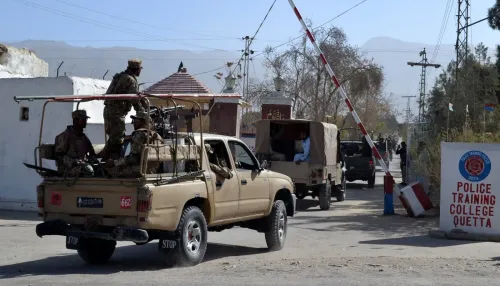
Pakistani security forces have suffered fresh, significant losses at the hands of the Tehreek-e-Taliban Pakistan (TTP), with 18 security personnel killed and scores wounded in a coordinated assault on security camps and police posts across Khyber Pakhtunkhwa (KP). The attacks, which included gun battles and loud explosions in the Bajaur district, represent a sharp escalation and, according to officials, a clear signal that Islamabad's latest counter-insurgency strategy has failed.
The Lashkar-ISKP Gamble
Facing mounting casualties at the hands of both the Balochistan Liberation Army (BLA) and the TTP, the Inter-Services Intelligence (ISI) and the Pakistani Army reportedly roped in operatives from Lashkar-e-Tayiba and the Islamic State Khorasan Province (ISKP) to bolster their campaign against the two insurgencies. A large number of these operatives were deployed specifically against the TTP. The results, according to officials, have been dismal.
'The Pakistani security forces and their stooges within the Lashkar-e-Tayiba and ISKP were clearly caught napping,' an official said.
Why the Strategy Is Failing
Officials attribute the setbacks to a fundamental asymmetry in local support and territorial knowledge. The TTP has reportedly spent years mapping Khyber Pakhtunkhwa in granular detail, giving it logistical and intelligence superiority over the forces arrayed against it. 'The TTP has grown in strength, but more importantly, they have the support of the locals. This has helped them in mapping the territory, and this means that they are much better in terms of logistical superiority,' an official said.
The situation in Balochistan mirrors this dynamic. The BLA has expanded its operational capacity and has, according to officials, begun deploying female fidayeens against Pakistani security forces. 'In Balochistan, the locals are willingly joining the BLA, despite the organisation not forcing them to do so,' another official noted, adding that widespread resentment over what residents perceive as oppressive establishment policies is fuelling voluntary recruitment.
Cracks Within the Proxy Forces
An Intelligence Bureau official indicated that the Lashkar-e-Tayiba's commitment to the fight is far from certain. 'While the ISKP has shown resolve to fight, the case is not the same with the Lashkar-e-Tayiba. They have agreed to fight this battle reluctantly,' the official said. Rank-and-file fighters within Lashkar-e-Tayiba are reportedly questioning the rationale of battling groups they consider ideological kin, particularly given the organisation's historical alignment with the Afghan Taliban.
The ISKP, for its part, agreed to participate reportedly because its leadership calculated that a weakened Afghan Taliban would open a path to controlling Afghanistan. That calculation has not materialised — the Taliban remains firmly in control in Kabul, and the ISKP's campaign against both the TTP and BLA has not progressed as anticipated.
Munir's Misadventures, Officials Say
Multiple officials attributed the broader strategic drift to Field Marshal Asim Munir, whose decisions they say have compounded Pakistan's internal security crisis. 'It is the misadventure by Field Marshal Asim Munir which has dragged the establishment into this mess. Since the embarrassment faced by Asim Munir during Operation Sindoor, he has indulged in various stunts to save his face,' one official said. 'Be it the battle against the Afghan Taliban or raising the tempo against the TTP and BLA, all his adventures have failed or backfired.'
Morale Collapse on the Front Lines
Officials warn that sustained losses are now eroding the fighting will of Pakistani security forces. Many personnel have reportedly withdrawn from active positions, unable to sustain further casualties. 'Those on the battle front appear to be an extremely demoralised lot, and this explains why the battle is not going Pakistan's way,' an official added. If the trend continues, analysts note, the operational capacity of both the regular forces and their proxy augmentations could deteriorate further, leaving Islamabad with diminishing options in both KP and Balochistan.
Point of View
Lashkar has historically avoided fighting Pashtun and Afghan-linked groups — and conscripting them into a Pakistani counter-insurgency was never a sustainable arrangement. What the officials' accounts reveal is not just a tactical failure but a legitimacy deficit: when locals in both KP and Balochistan are voluntarily backing the insurgents, no proxy force can compensate. The attribution of blame to Asim Munir is significant — if the criticism is coming from within the intelligence establishment, it signals fractures at the top that could outlast any single military setback.
NationPress
29 Sept 2026
Frequently Asked Questions
What happened in the TTP attack on Khyber Pakhtunkhwa?
The Tehreek-e-Taliban Pakistan launched coordinated attacks on security camps and police posts in Khyber Pakhtunkhwa, including the Bajaur district, killing 18 Pakistani security personnel and injuring scores more. The assault involved gun battles and explosions.
Why did Pakistan bring in Lashkar-e-Tayiba and ISKP against the TTP and BLA?
After suffering heavy losses against both the TTP and the BLA, the ISI and Pakistani Army reportedly recruited Lashkar-e-Tayiba and ISKP operatives to augment their counter-insurgency operations. Officials say the strategy has failed, citing the groups' lack of local knowledge and reluctant participation.
Why are TTP and BLA gaining the upper hand, according to officials?
Officials say both groups benefit from strong local support in their respective regions — KP and Balochistan — which gives them superior territorial intelligence and logistics. The BLA is also reportedly seeing voluntary local recruitment driven by resentment of establishment policies.
What is Operation Sindoor and how does it relate to this situation?
Operation Sindoor is referenced by officials as an episode of embarrassment for Field Marshal Asim Munir, after which he reportedly pursued a series of aggressive gambits — including escalating against the TTP, BLA, and Afghan Taliban — that officials say have all backfired.
What is the current state of morale among Pakistani security forces?
Officials describe morale as critically low, with many personnel reportedly withdrawing from front-line positions due to sustained casualties. Those still deployed are described as demoralised, which officials say is a key factor in why operations against the TTP and BLA are not succeeding.