Why Did Terror Groups Fail to Unite Against BLA?
Synopsis
As the Balochistan Nationalist Army rises, a bold attempt by Pakistan's military to unify terror groups against them backfires. With increasing violence and community mobilization, the future looks grim for Pakistan's establishment.
Key Takeaways
Military alliance attempts against BLA have backfired.
BLA has garnered widespread support in Balochistan.
Casualties from recent attacks are significant and concerning.
Women are actively participating in BLA operations.
Negotiation may be a better approach for the Pakistan establishment.
New Delhi, Feb 2 (NationPress) The strategy to unite Lashkar-e-Taiba and Islamic State Khorasan Province (ISKP) against the Balochistan Nationalist Army (BLA) and Tehreek-e-Taliban Pakistan (TTP) seems to have been unsuccessful.
The Pakistan Army and ISI devised a plan to combine forces of the two terror organizations to combat the BLA and TTP, as their ongoing struggle has proven to be extremely challenging.
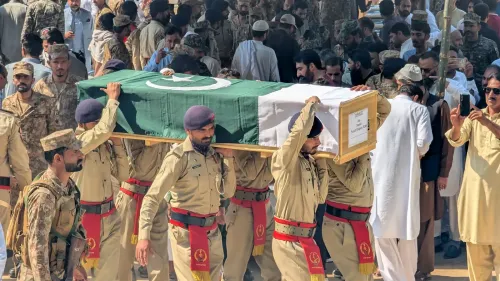
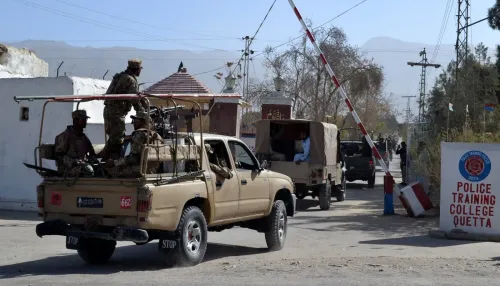
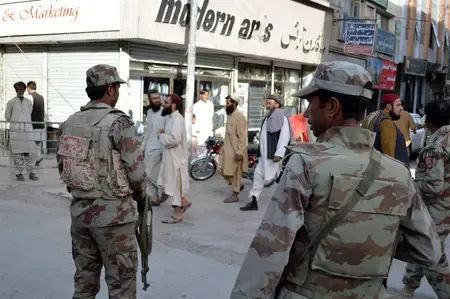
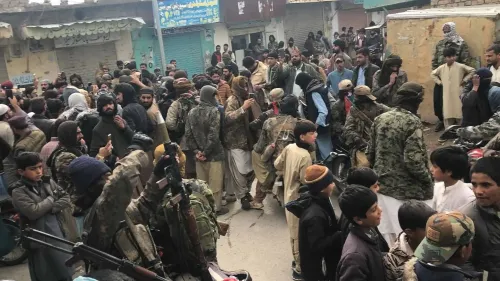
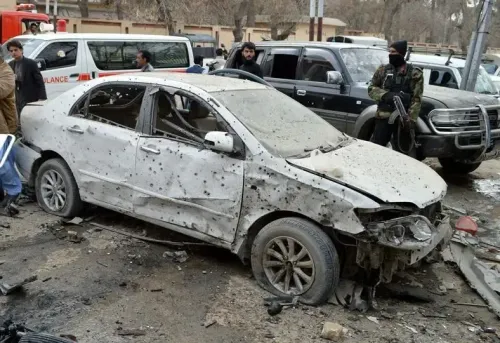
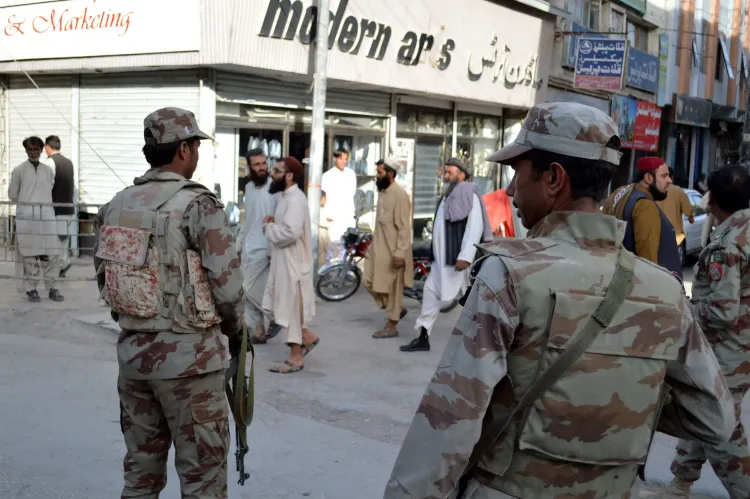
In a notable escalation, the BLA executed a wave of attacks in Quetta and other regions during "Operation Herof Phase 2." These assaults extended over 40 hours, with the BLA claiming to have killed 200 Pakistani security personnel. Although these figures remain unverified, the group regards them as cautious early estimates.
Balochistan Chief Minister Sarfraz Bugti stated that 17 law enforcement officials and 31 civilians lost their lives in these attacks. Sources indicate that the attempt to unite ISKP and Lashkar-e-Taiba did not yield the desired results, leaving the Pakistan establishment embarrassed after this significant assault.
Experts have noted that the establishment struggles to counter the BLA, as it has transformed into a widespread movement, with large numbers of Baloch people rallying against the Pakistani authorities.
Another official suggested that the ongoing violence will persist, and the BLA shows no intention of retreating. Rather than trying to pit these two terror factions against the BLA, the Pakistan establishment ought to consider negotiations and address the demands being made.
The Baloch populace remains committed to their cause and will not capitulate to the establishment's pressures, according to the official.
Given the nature of recent attacks, it may only be a matter of time before ISKP and Lashkar-e-Taiba withdraw from this conflict, another official noted.
When queried about the possibility of deploying other terror groups like Jaish-e-Mohammad, the official deemed it improbable. The BLA's strength makes it a formidable opponent, and many members of these terror groups are reluctant participants, leading to the failure of this strategy.
Upon examining the attacks, it becomes evident that the BLA is resolute. Each BLA fighter is a willing participant, which complicates the Pakistan establishment's efforts to manage the situation.
The BLA has indicated that women also participated in the assaults, including Asifa Mengal, who executed a "VBIED (vehicle-borne improvised explosive device) operation" targeting the ISI headquarters in Noshki.
Pakistan's Defence Minister Khwaja Asif confirmed that two of the attackers were women. Officials report that the conflict shows no signs of abating.
BLA commander Bashir Zaire Baloch has urged supporters to mobilize, and the Baloch people are likely to respond, posing a significant challenge for the Pakistan establishment.
An Intelligence Bureau official highlighted that Pakistan's proxies, notably Jaish-e-Mohammad and Lashkar-e-Taiba, will proceed with caution in the future when responding to the Pakistan establishment's directives.
These groups have suffered morale setbacks following Operation Sindoor, resulting in a lackluster recruitment drive and making regrouping more challenging than anticipated by the ISI.
Under these conditions, these terror organizations are likely to avoid engaging in the Baloch conflict out of fear of further losses and reputational damage.
This trend could jeopardize any revival plans, as potential recruits increasingly shy away from joining these terror outfits.
Point of View
It is crucial to recognize the complexities surrounding the BLA's uprising. The Pakistani establishment must adopt a comprehensive approach that prioritizes dialogue over confrontation to address the underlying grievances of the Baloch people.
NationPress
13 Oct 2026
Frequently Asked Questions
What led to the failure of the alliance between Lashkar-e-Taiba and ISKP?
The alliance failed primarily due to the BLA's strong resolve and widespread support among the Baloch people, making it difficult for the combined forces to overpower them.
What has been the impact of the BLA's recent attacks?
The BLA's attacks have resulted in significant casualties among Pakistani security forces and highlighted the increasing strength of the BLA as a mass movement.
Is there a possibility of other terror groups being deployed against the BLA?
It is unlikely that other groups like Jaish-e-Mohammad will be deployed due to the BLA's formidable strength and the reluctance of many militants within these groups.
What role have women played in the BLA's operations?
Women, including noted figure Asifa Mengal, have actively participated in BLA operations, showcasing the group's diverse approach to recruitment and engagement.
How is the Pakistan establishment responding to the situation?
The Pakistan establishment is facing embarrassment and challenges in countering the BLA, leading to suggestions for negotiation rather than further militarization.