Is Pakistan's Security Overstretched Amid Balochistan Escalation?
Synopsis
The escalation in Balochistan has highlighted serious challenges for Pakistan's security forces, with the BLA claiming significant victories. The situation raises questions about the effectiveness of military strategies and the need for political dialogue.
Key Takeaways
Balochistan has seen intense conflict between the Pakistani state and the BLA.
The BLA claims substantial victories, indicating a shift in power dynamics.
Pakistan's military is struggling to cope with simultaneous threats from various groups.
Geographical challenges complicate military operations in the vast region.
Dialogue may be essential for a peaceful resolution to the conflict.
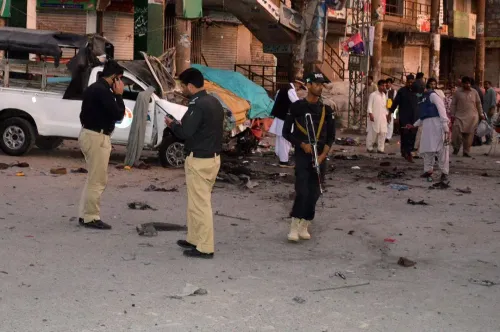
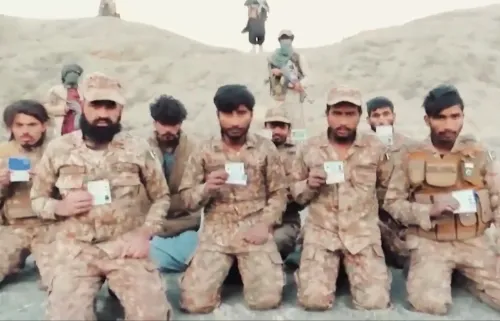
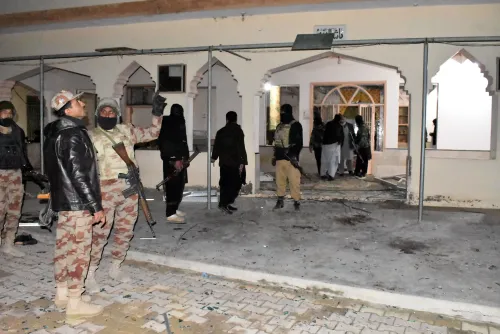
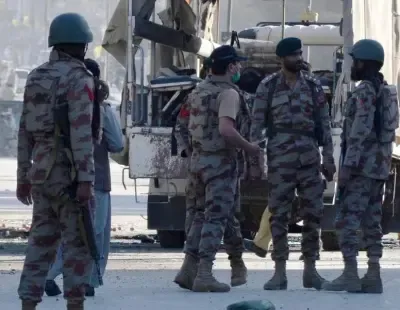
New Delhi, Feb 4 (NationPress) The recent developments in Balochistan have put the Pakistan establishment in a difficult position as the Balochistan Liberation Army (BLA) asserts that it has eliminated at least 280 Pakistani personnel during Phase II of "Operation Herof".
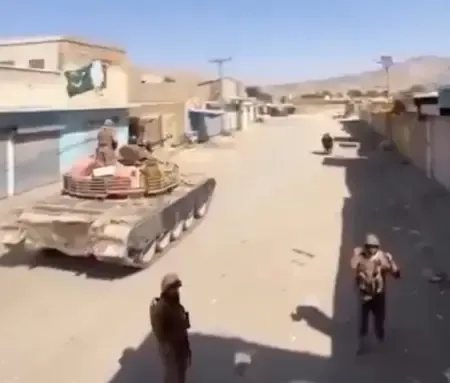
Reports emerging from Balochistan indicate that numerous Pakistani forces are retreating swiftly, unable to match the operational capabilities of the BLA. The BLA claims to have lost 35 of its own fighters, including 18 suicide attackers from the Majeed Brigade.
Indian officials note that the conflict between the Pakistan establishment and the Baloch populace has persisted for nearly 60 years. However, the current intensity of this conflict is unprecedented, and the Pakistan security establishment is facing unexpected losses, according to an official.
Another official remarked that the Pakistan establishment should have pursued a political resolution to the issue but opted for violence instead, resulting in its current predicament. The military leadership appears too proud to engage in dialogue with Baloch leaders, trapping themselves in a situation with no clear exit.
On a different note, groups like the BLA have significantly bolstered their capabilities. They are now employing advanced weaponry and heavily relying on intelligence to combat their adversaries. Their leadership includes young individuals, and there are increasing roles for women in their ongoing struggle.
Experts observe that the fact that many Pakistani soldiers are withdrawing underscores the strength of the BLA and the determination of the Baloch people. Many are reluctant to continue fighting, recognizing that they are on a losing side, similar to the situation against the Tehreek-e-Taliban Pakistan (TTP).
Indian intelligence assessments indicate that the Pakistan establishment is under siege from multiple fronts. There are threats from the Taliban in Afghanistan, the TTP, and the Baloch insurgents within Pakistan. The security forces are engaged in simultaneous confrontations with all three entities, complicating their ability to allocate sufficient personnel. An official from the Intelligence Bureau noted their difficulty in reallocating forces from one front to another.
During the recent hostilities, the BLA reported successful strikes against members of the Army, Frontier Corps (FC), police, Counter Terrorism Department (CTD), and army-supported death squads. This situation is alarming, as five different units are unable to defeat a single group, according to officials.
The BLA has maintained effective communication and ensured that information regarding "Herof 2" is disseminated. This has further embarrassed the Pakistan establishment, as the extent of their losses is becoming public. Previously, they managed to keep casualties hidden, but now they are struggling to do so, experts assert.
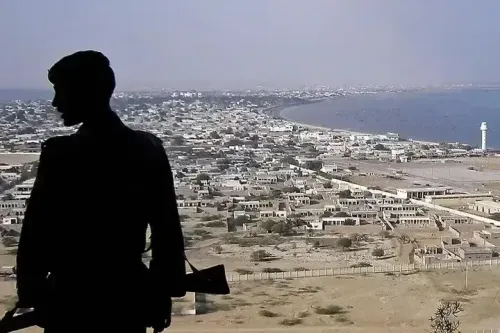
Even Pakistan’s Defence Minister, Khawaja Asif, acknowledged that the security forces are hindered against the Baloch insurgents due to the vastness of Balochistan. His comments followed simultaneous attacks across various towns in the province by the BLA.
Asif informed the National Assembly that their forces face geographical challenges, as Balochistan constitutes over 40% of Pakistan's territory, making operations more complex than in densely populated cities. He emphasized the necessity of deploying a substantial amount of forces and ruled out any negotiations with the BLA.
Officials suggest that the Defence Minister’s admission speaks volumes. While the government may wish to engage in dialogue with the Baloch people, many within the military are likely to oppose this, even at the cost of further losses and embarrassment, the official concluded.
Point of View
It is essential to approach this complex issue with an unbiased lens. The situation in Balochistan underscores the dire need for dialogue and understanding between the Pakistan establishment and the Baloch populace. It is imperative to consider the voices of all parties involved to foster a peaceful resolution.
NationPress
29 Sept 2026
Frequently Asked Questions
What is the Balochistan Liberation Army?
The Balochistan Liberation Army (BLA) is a militant group fighting for the independence of Balochistan from Pakistan, seeking greater autonomy and rights for the Baloch people.
Why is there conflict in Balochistan?
The conflict in Balochistan stems from long-standing grievances regarding political, economic, and social marginalization of the Baloch people by the Pakistani state.
What is Operation Herof?
Operation Herof is a military campaign launched by Pakistan aimed at suppressing insurgency and violence in Balochistan, particularly against groups like the BLA.
How has the BLA managed to strengthen its position?
The BLA has strengthened its position by acquiring advanced weaponry, utilizing intelligence effectively, and mobilizing a younger leadership, including active participation from women.
What are the geographical challenges faced by Pakistani forces in Balochistan?
Balochistan is vast and sparsely populated, exceeding 40% of Pakistan's territory, making military operations complex and difficult compared to more densely populated regions.