Why Did Pakistan's Munir Remain Silent After Intelligence Failures in Balochistan?
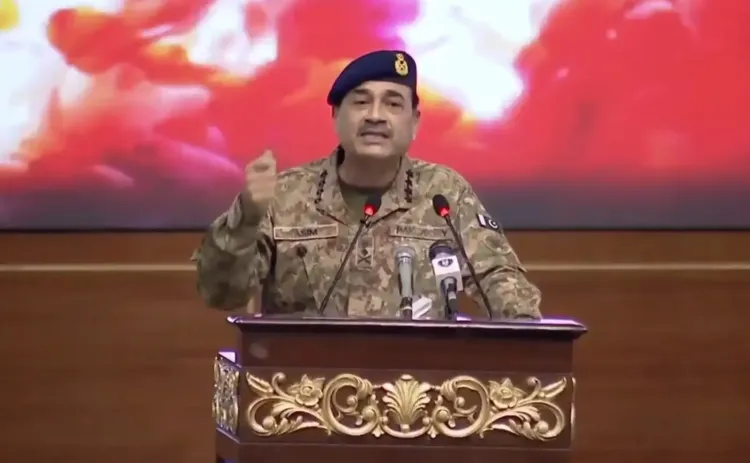
Synopsis
Field Marshal Munir's silence following the intelligence failures in Balochistan raises pressing questions about the effectiveness of Pakistan's military. The BLA's recent operation underscores the challenges faced by security forces, prompting scrutiny of the military's claims of local support. The situation is critical as it highlights significant gaps in intelligence and operational readiness.
Key Takeaways
Operation Herof 2.0 demonstrates the operational capabilities of BLA.
Intelligence failures raise serious concerns for Pakistan's military.
Local support for BLA challenges military narratives.
Field Marshal Munir faces pressing questions about military effectiveness.
Casualty reports highlight discrepancies in military statistics.
Quetta, Feb 6 (NationPress) The Inter Services Public Relations (ISPR), the media branch of the Pakistan army, has again celebrated what should be a source of embarrassment by proclaiming the "victory of security forces" in Balochistan. This narrative masks a significant intelligence failure by Pakistan's Inter-Services Intelligence (ISI) and military, who were unable to identify the activities of the Baloch Liberation Army (BLA), as reported.
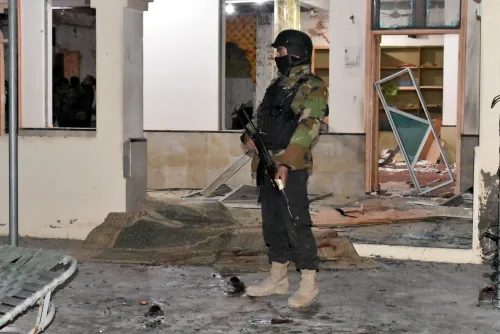
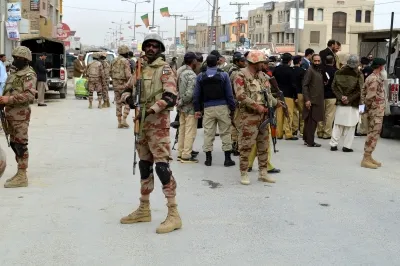
On January 30, the BLA initiated 'Operation Herof 2.0', targeting law enforcement and military forces across several cities within nine districts of Balochistan, including the capital, Quetta, as detailed in a report in Eurasia Review.
“A large-scale operation involving hundreds of fighters necessitated extensive coordination through electronic means, alongside significant physical movement and gathering of BLA personnel prior to the assaults. The failure of ISI and the military to detect this indicates a serious intelligence shortcoming, yet questioning those in uniform remains taboo in Pakistan,” remarked Nilesh Kunwar, a retired Indian Army officer, in Eurasia Review.
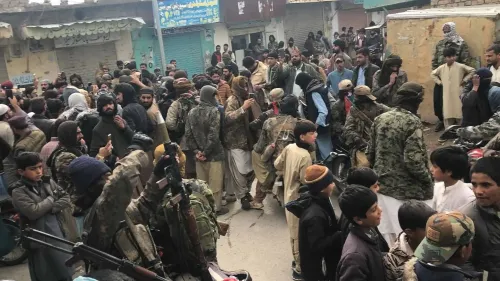
Operation Herof 2.0 has highlighted the resolve and readiness of BLA fighters, including female combatants, to face death. Unlike previous tactics, BLA fighters maintained control over populated regions and engaged in prolonged firefights. Footage from the area illustrated local residents interacting with and even supporting BLA fighters, countering the Pakistani army’s narrative that armed groups instill fear in civilians, as noted in the report.
“As the Chief of Defence Forces, Field Marshal Munir must confront pressing inquiries: If the army claims the populace of Balochistan supports them rather than armed factions, why is it unable to suppress such groups? If these factions pose a threat to locals, how do we explain videos showing civilians not just moving freely but also socializing with BLA fighters?” questioned Kunwar.
“After publicly asserting that 'We will defeat these [Baloch] terrorists soon,' how did the BLA manage to execute such a grand operation? If these groups are allegedly backed by New Delhi, how is it that ISI, touted as the world's leading intelligence agency, is powerless to sever this connection?” he added.
The report critiqued Field Marshal Munir for failing to take responsibility for the intelligence oversights that allowed major militant assaults in Balochistan, including the August 2024 Operation Herof, the 2025 Jaffar Express Hijacking, and the ongoing Operation Herof 2.0.
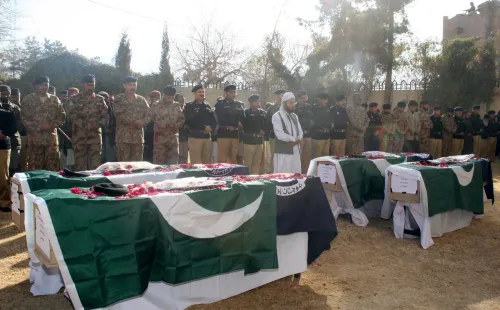
Statistical data on casualties provided by the Pakistani military indicates that the BLA has lost nearly ten fighters for every security personnel killed during Operation Herof 2.0. However, this statistic is not commendable, as the casualty figures for the BLA appear inflated while those of the security forces are likely minimized, Kunwar noted in the Eurasia Review.
Point of View
I emphasize the necessity for transparent discussions regarding the military's operational effectiveness and intelligence capabilities. The situation in Balochistan demands our attention, as it directly impacts the stability of the region and national security. It's vital to support our armed forces while holding them accountable for their actions.
NationPress
29 Sept 2026
Frequently Asked Questions
What triggered Operation Herof 2.0?
Operation Herof 2.0 was launched by the BLA to target law enforcement and military forces in several districts of Balochistan, highlighting a significant operational shift in their tactics.
Why is there criticism towards ISI and the military?
The criticism arises from their failure to detect the extensive coordination and movements of BLA fighters prior to the attacks, raising concerns about their operational intelligence.
What is the significance of the BLA's recent operations?
The BLA's operations illustrate their capability to mobilize effectively and challenge military narratives, demonstrating a persistent insurgency in the region.
How has the local population reacted to BLA fighters?
Reports indicate that locals have interacted positively with BLA fighters, contradicting military claims that these groups terrorize civilians.
What are the implications of the intelligence failures?
These failures raise serious questions about national security and the effectiveness of military operations in countering insurgency in Balochistan.