Did 'Operation Herof' Challenge the Pakistan Army's Dominance in Balochistan?
Synopsis
The Baloch Liberation Army's Operation Herof has marked a pivotal moment in Balochistan's military history, demonstrating their ability to challenge state authority. This operation has not only showcased their military capabilities but also sent a strong message regarding the Baloch people's political agency. What does this mean for the future of the region?
Key Takeaways
Operation Herof marks a significant escalation in the Baloch Liberation Army's military activities.
The operation demonstrated the BLA's ability to challenge the Pakistani state.
Coordinated attacks were carried out across 14 cities in Balochistan.
Over 362 casualties among Pakistani security forces were reported.
This operation is indicative of the growing intensity of conflict in Balochistan.
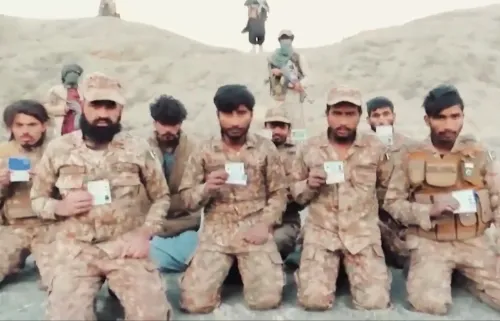
Quetta, Feb 10 (NationPress) The second phase of 'Operation Herof' initiated by the Baloch Liberation Army (BLA) has revealed the group's potential to undermine state authority in Pakistan's Balochistan and assert control. This operation saw the BLA executing the most extensive, organized, and comprehensive attacks in the history of the Baloch national armed struggle across pivotal cities in Balochistan, as detailed in a recent report.
According to the report, 50 members of the BLA’s suicide unit, the Majeed Brigade, participated in these operations, marking a significant event in military history. The operation, spanning six days, effectively disrupted the state’s influence throughout Balochistan. The editorial from The Balochistan Post stated that this phase of Operation Herof serves as proof of the BLA's ability to dismantle state authority in the region.
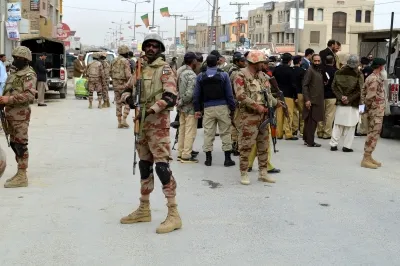
On January 31, Baloch fighters executed simultaneous attacks across various cities and towns, causing substantial casualties and damage to the Pakistani military.
Recently, the BLA declared the week-long operation concluded, with their fighters successfully achieving their objectives.
The coordinated urban combat, as reported by The Balochistan Post (TBP), extended over 14 cities in Balochistan, representing the largest, most intense, and organized military action in the group’s history.
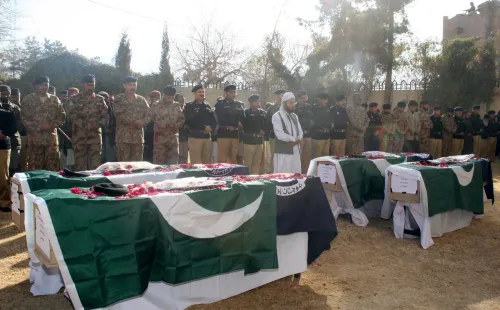
The TBP report, citing BLA officials, indicated that over 362 personnel from Pakistani security forces were killed during this operation.
The BLA spokesperson noted that those casualties included members from the Pakistani Army, Frontier Corps, police, and what they referred to as state-supported armed groups.
“By conducting synchronized attacks on military bases, police stations, intelligence centers, and economic hubs in 12 strategically and economically significant cities, the BLA showcased its military prowess on a grand scale, effectively challenging the perception of Pakistan Army's supremacy in Balochistan,” the editorial further elaborated.
Through these coordinated strikes, the BLA communicated to the international community that Baloch national entities possess decision-making authority and that investments in the region cannot occur without their consent.
Furthermore, the coordinated actions involving thousands of fighters in Quetta and Gwadar, crucial for the China–Pakistan Economic Corridor (CPEC), alongside Noshki and Chagai—cities associated with major global mining projects like Reko Diq and Saindak—illustrate that the BLA has ample manpower, and future operations are expected to be even more systematic and extensive, as noted by The Balochistan Post.
The series of coordinated operations in Balochistan over six days indicates that intense confrontations between the Pakistan Army and Baloch resistance fighters are imminent, with Operation Herof poised to play a pivotal role in reshaping the political and military landscape of Balochistan.
Point of View
It is imperative to recognize the complexities of the ongoing conflict in Balochistan. The recent actions of the BLA highlight a critical juncture in the political and military dynamics of the region. While such operations may challenge state authority, they also underscore the urgent need for dialogue and understanding to address the underlying issues that fuel unrest. Our commitment remains with the nation to seek sustainable solutions for peace and stability.
NationPress
3 Oct 2026
Frequently Asked Questions
What is 'Operation Herof'?
Operation Herof is a military operation launched by the Baloch Liberation Army aimed at demonstrating their capability to challenge state authority in Balochistan.
How many cities were involved in the operation?
The operation involved coordinated attacks across 14 cities in Balochistan.
What were the reported casualties?
Over 362 personnel from Pakistani security forces were reported killed during the operation.
What message does the BLA aim to convey through this operation?
The BLA aims to convey that Baloch national institutions possess decision-making power and that investments in the region cannot occur without their approval.
What implications does this operation have for the future of Balochistan?
The operation suggests that intense confrontations between the Pakistan Army and Baloch resistance fighters are likely, potentially reshaping the political and military landscape of the region.