What Does Herof-2 Mean for Balochistan's Insurgency?
Synopsis
The recent escalation of violence in Balochistan, marked by the BLA's Operation Herof-2, signals a pivotal shift in the insurgency. This analysis delves into the operation's implications, revealing the underlying causes and the BLA's evolving strategies.
Key Takeaways
Operation Herof-2 represents a significant escalation in Balochistan's insurgency.
The operation showcases enhanced coordination and sophistication among BLA fighters.
Political exclusion and systemic oppression continue to fuel insurgent activities.
Women are playing an increasingly active role in the insurgency.
There is an urgent need for dialogue and reform to address Baloch grievances.
Islamabad: Balochistan has persistently been a region plagued by violence, enforced disappearances, and systematic oppression. Many Baloch individuals feel that enduring these conditions has become increasingly untenable, leading communities to believe that armed resistance is their only viable response.
This long-standing frustration recently came to a head when the Baloch Liberation Army (BLA) initiated one of its most extensive and coordinated offensives to date. The BLA announced the commencement of simultaneous attacks in various towns and cities, branding it as Operation Herof-2. The operation's scale, geographic distribution, and political implications not only indicate an uptick in violence but also suggest a fundamental shift in the conflict — one that questions previous assumptions regarding the insurgency’s capabilities, trajectory, and root causes.
In contrast to previous localized or symbolic violence, Herof-2 unfolded as a synchronized operation across the province. This suggests an unprecedented level of coordination, manpower, and intelligence that surpasses sporadic militant activities, indicating a more sophisticated insurgent approach aimed at overwhelming state capabilities while enhancing political messaging.
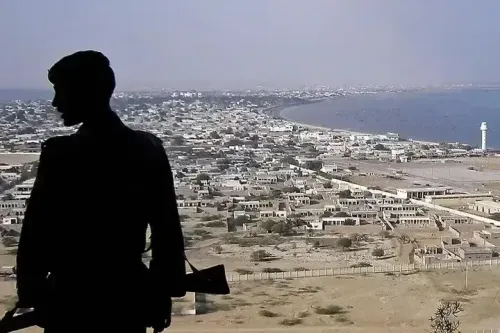
Reports from local officials and government sources indicate that violence, confrontations, and bombings occurred in at least 16 locations, including Quetta, Nushki, Mastung, Dalbandin, Kalat, Kharan, Panjgur, Gwadar, Pasni, Turbat, Tump, Buleda, Mangochar, Lasbela, Kech, and Awaran. The wide geographic scope of the attacks — spanning coastal areas to mountainous regions — highlights the ambition of the operation and its intention to showcase reach across the entire province.
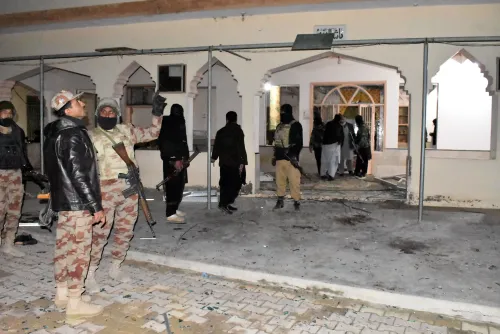
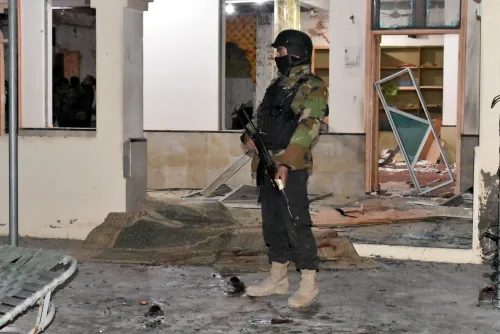
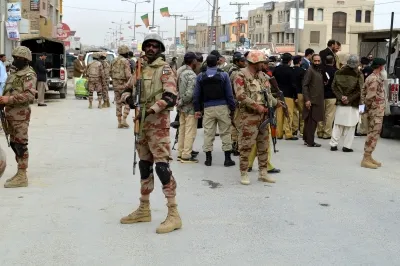
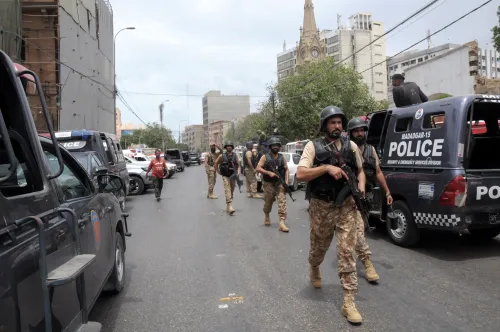
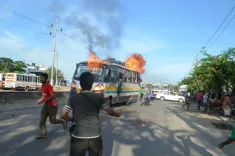
In Quetta, armed fighters were reportedly observed moving openly with automatic weapons, attacking police posts, setting fire to bank branches, and burning police vehicles in broad daylight. Parts of the provincial capital were effectively paralyzed for several hours. Similar incidents occurred in other towns, where Baloch fighters targeted security installations, transportation infrastructure, and symbols of state authority. Videos of fighters patrolling the streets and clashing with security forces circulated widely on social media until internet shutdowns and information controls were enacted, a familiar tactic during unrest.
Security forces claimed that 67 'militants' were killed while they thwarted what they described as coordinated attacks intended to destabilize the province. In contrast, the BLA asserted that its fighters struck 48 sites across 14 cities and killed 84 security personnel. Although these figures remain unverified and likely exaggerated from both sides, the conflicting claims highlight the unprecedented scale and intensity of the operation.
Reports of suicide bombings and vehicle-borne improvised explosive devices in Quetta, Gwadar, Pasni, Nushki, and Dalbandin further underline the operational sophistication involved. This was not merely a symbolic show of strength or a limited hit-and-run campaign. It represented a province-wide assessment of the state's security architecture, revealing vulnerabilities across urban centers, highways, border regions, and coastal districts simultaneously. The occurrence of attacks in previously considered secure areas suggests an adjustment in insurgent capabilities — and a corresponding strain on state responses.
The term Herof, a Balochi literary expression meaning 'black storm', was initially used by the BLA during a series of attacks in August 2024. However, Phase-2 starkly contrasts its predecessor. The current operation exhibits a broader geographic reach, heightened violence, and reportedly involves a significantly larger number of fighters. Estimates from Pakistan's Intelligence Bureau indicate that between 800 and 1,000 Baloch fighters may be engaged, reflecting an expansion in recruitment, logistics, and command-and-control structures.
Importantly, officials and analysts have noted the participation of women in direct combat roles, rather than being restricted to suicide attacks — a significant shift in the insurgency's social dynamics. This evolution indicates both desperation and adaptability, reflecting deeper societal fractures and the erosion of traditional divides between civilian protest and armed resistance.
Equally notable is the BLA's evolving media and propaganda strategy. Shortly after the attacks, the group released new footage of its leader, Bashir Zaib, seated on a Honda 125 motorcycle in rugged mountainous terrain believed to lie between Kharan and Chagai. The imagery appears intentional and meticulously curated. Analysts have observed its similarity to viral images of BLA leaders from other regions, meant to convey mobility, endurance, territorial familiarity, and defiance.
The symbolism is further amplified by geography. The Chagai region, particularly around Dalbandin, is central to Pakistan's economic aspirations in Balochistan due to its extensive mineral reserves, including the Reko Diq and Saindak projects. With foreign interest growing — particularly a pledged $7 billion investment from Barrick Gold and anticipated funding from the Asian Development Bank — the appearance of the BLA leader in this area sends a calculated message. It signals the group's intent and perceived capability to challenge not just the Pakistani state but also international economic interests operating within the province. By showcasing this imagery inside Balochistan, the BLA counters persistent narratives that its leadership operates mainly from across the Afghan border. This serves a dual purpose: alleviating diplomatic pressure on Kabul while reinforcing the group’s claim of local legitimacy, rootedness, and popular support within Balochistan.
The growing strength and assertiveness of the BLA cannot be understood in isolation from Balochistan’s political trajectory over the past decade, particularly since 2018. The provincial and national elections that year faced widespread criticism from opposition parties and civil society groups for being manipulated, resulting in a government perceived by many locals as corrupt, unrepresentative, and disconnected from public grievances. As political avenues dwindled, the province became increasingly militarized. Expanded powers granted to the Counter Terrorism Department and other security agencies were accompanied by ongoing allegations of enforced disappearances, extrajudicial killings, and custodial deaths.
For many Baloch families, these practices turned abstract political grievances into profoundly personal traumas. Several incidents stand out as pivotal moments. The killing of university student Hayat Baloch by Frontier Corps personnel in August 2020, the earlier killing of Malik Naz inside her home, and the death of Baalach Mula Baksh in CTD custody in November 2023 each sparked waves of protest and heightened public outrage. These cases became symbols of impunity, reinforcing perceptions that accountability mechanisms were either ineffective or absent.
The suppression of the 'Haq Do Tehreek' movement in Gwadar, prolonged internet shutdowns, restrictions on media coverage, and repeated crackdowns on peaceful demonstrators further diminished faith in non-violent resistance. Each cycle of protest and repression deepened polarization, narrowing the space for dialogue while strengthening arguments for armed struggle. The arrest and ongoing detention of activist Dr. Mahrang Baloch under public order laws has become a focal point for public anger, especially among younger and urban Baloch. Analysts argue that her imprisonment has expedited the transition from civil protest to armed resistance, including an uptick in the recruitment of women into its ranks.
This trajectory was further reinforced by the widely criticized February 2024 elections and official rhetoric that seemed to minimize or dismiss the severity of the insurgency. From this perspective, Herof-2 is not merely an armed offensive timed to coincide with regional instability in neighboring Iran or broader geopolitical tensions. It is a statement made through violence: that years of political exclusion, coercive security policies, and denial of structural grievances have transformed a low-level insurgency into a more organized, confident, and deadly conflict.
The operation’s timing, scale, and messaging suggest a deliberate effort to draw national and international attention to a conflict that peaceful mobilization has, according to many Baloch, failed to resolve. In that sense, Herof-2 represents both a tactical escalation and a strategic indictment — one that challenges the notion that Balochistan’s unrest can be contained through force alone, without addressing the political conditions that continue to fuel it.
Point of View
I believe that understanding the complexities of the Balochistan situation requires a nuanced perspective that prioritizes the voices of the local population. The ongoing violence and the rise of insurgent activities underline the urgent need for dialogue and reform, ensuring that the grievances of the Baloch people are addressed to foster lasting peace.
NationPress
3 Oct 2026
Frequently Asked Questions
What is Operation Herof-2?
Operation Herof-2 is a coordinated offensive launched by the Baloch Liberation Army (BLA) across multiple cities in Balochistan, marking a significant escalation in violence and insurgent activities.
What are the main objectives of the BLA?
The BLA aims to challenge state authority in Balochistan, highlighting grievances related to political exclusion, enforced disappearances, and systemic oppression faced by the Baloch people.
How has the BLA's strategy evolved?
The BLA's strategy has shifted from localized attacks to more coordinated, province-wide operations, indicating a maturation of their insurgent approach and increased operational sophistication.
What are the implications of the recent violence?
The recent violence underscores the urgent need for political dialogue and reform in Balochistan, as ongoing repression and military actions may exacerbate existing tensions and grievances.
What role do women play in the BLA?
Women are increasingly participating in direct combat roles within the BLA, marking a significant evolution in the insurgency's social composition and indicating a shift in traditional gender roles in armed conflict.