27 Baloch Civilians Killed by Pakistani Forces During Operation Herof: Alarming Report Revealed
Synopsis
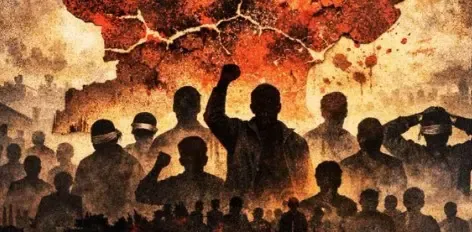
A recent report reveals that the killing of 27 forcibly disappeared Baloch civilians by Pakistani forces during 'Operation Herof' is part of a disturbing trend in Balochistan, highlighting ongoing human rights violations and escalating violence in the region.
Key Takeaways
27 Baloch civilians were killed by Pakistani forces during Operation Herof.
This incident is part of a longstanding pattern of violence in Balochistan.
The killings raise serious concerns about human rights violations .
State-imposed restrictions hinder media coverage of the crisis.
The Baloch population continues to demand independence .
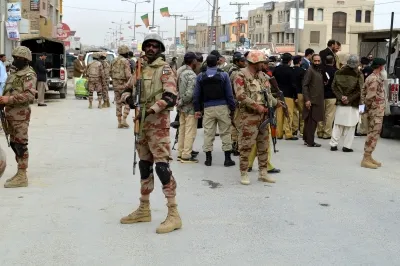
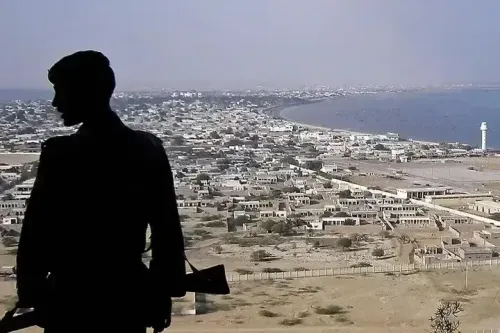
Quetta, Feb 28 (NationPress) The tragic demise of 27 Baloch civilians, forcibly disappeared and subsequently killed by Pakistani forces during the recent second phase of 'Operation Herof', is not an isolated occurrence but rather a continuation of a longstanding trend in Balochistan, as highlighted in a recent report.
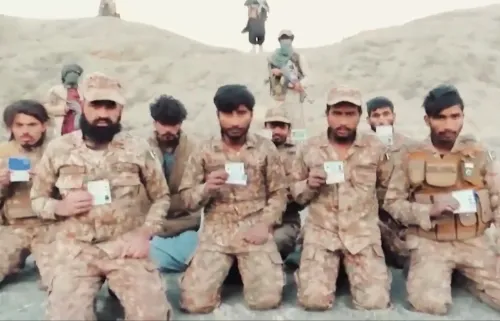
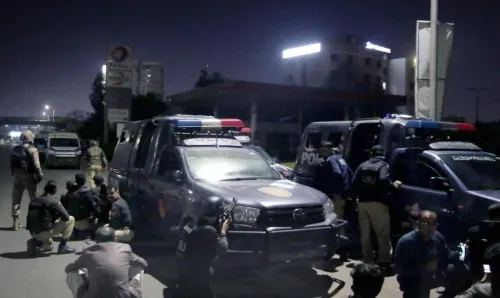
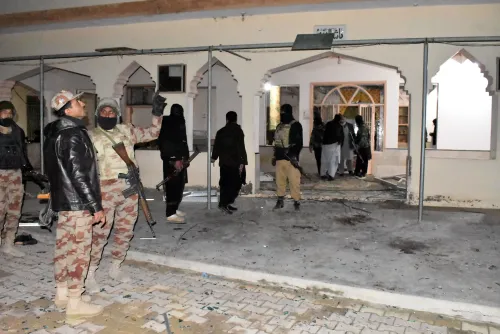
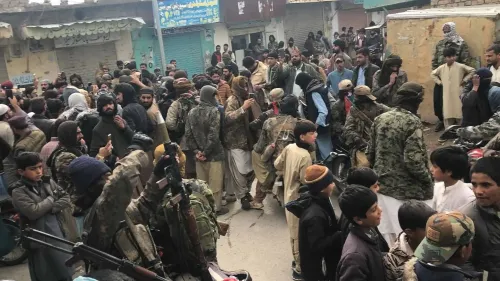
As per the Balochistan Post, the second phase of armed resistance, 'Operation Herof', initiated on January 31 by the Baloch Liberation Army (BLA) against the Pakistani military, led to the deaths of these 27 individuals in various locations, including Karachi, Barkhan, Panjgur, and Quetta.
Authorities have labeled these individuals as armed resistance fighters, despite the fact that one of them, Hamdan Baloch, was officially presented to the Sindh High Court and was scheduled to appear in court on the day of his death, according to the report.
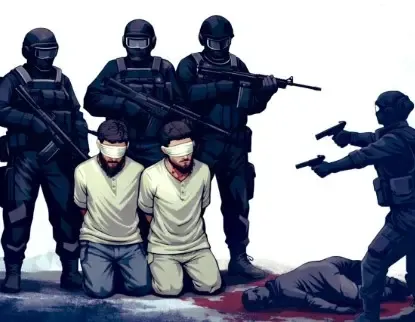
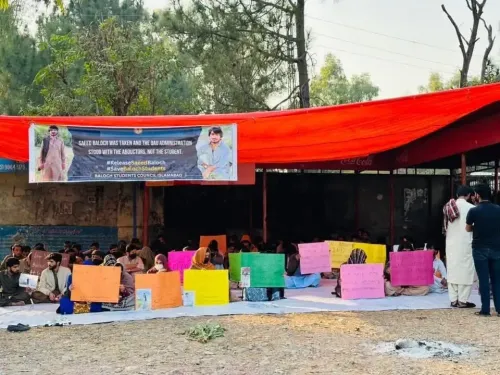
The extrajudicial killing of these 27 forcibly disappeared persons marks a continuation of a broader pattern that has plagued Balochistan for over a decade.
This systemic violence, perpetrated by the Pakistani state, continues to cause distress among the Baloch population and raises alarming concerns regarding serious human rights violations. The Pakistani military and government have a history of systematically eliminating Baloch youth.
Such killings often intensify when Baloch armed groups inflict losses on the Pakistani military, with security agencies frequently asserting that previously disappeared individuals were killed during armed confrontations, underscoring a troubling trend of extrajudicial executions, as reported by local media.
Due to state-imposed media restrictions in Balochistan, only a limited number of incidents reach the global audience, while the region remains entrenched in a deep humanitarian crisis.
The Baloch people have long resisted Pakistani oppression, striving for an independent nation free from Islamabad's exploitation.
According to the Balochistan Post, "Pakistan's powerful institutions seem to believe that enforced disappearances, state repression, collective punishment, and custodial killings can quell the Baloch insurgency. However, the realities on the ground indicate that such tactics are further deteriorating relations between Balochistan and Pakistan."
In a related development, the Human Rights Council of Balochistan (HRCB) expressed severe concern regarding the rising violence across Balochistan, which is being inflicted by both state and non-state actors.
On February 25, unidentified armed individuals executed a brutal assault in the Minaz area of Kech district, resulting in the death of six people and injuries to three others, including women and children.
According to the HRCB, the attackers reportedly fired mortar shells into a residence before unleashing heavy gunfire on the occupants. They also set fire to three vehicles parked on the property.
"The murder of innocent civilians, particularly women and children, represents a serious violation of fundamental human rights and humanitarian principles. No political motive or security rationale can justify such acts," stated the HRCB.
The rights organization further noted that the ongoing pattern of enforced disappearances, custodial killings, and collective punishment by Pakistani forces has intensified tensions and fueled a cycle of violence and retaliation.
The HRCB has called for an immediate, independent, impartial, and transparent investigation into this incident, asserting that "All responsible parties, irrespective of their affiliations, must be identified and held accountable under the law. The safety of civilians must be prioritized, and all actions taken by state authorities should adhere to constitutional protections and international human rights commitments."
Point of View
The situation in Balochistan reflects deep-rooted issues regarding human rights and governance. The reported killings and ongoing violence underscore the urgent need for accountability and reform. The relationship between Balochistan and the Pakistani state is fragile, and addressing these grievances is essential for peace and stability.
NationPress
20 Sept 2026
Frequently Asked Questions
What is 'Operation Herof'?
Operation Herof is an armed resistance launched by the Baloch Liberation Army against Pakistani forces, aimed at asserting Balochistan's independence.
How many civilians were killed during this operation?
A total of 27 forcibly disappeared Baloch civilians were killed by Pakistani forces during the second phase of Operation Herof.
What are the allegations against Pakistani forces?
Pakistani forces are accused of extrajudicial killings, enforced disappearances, and systematic violence against the Baloch population.
What has been the international response to these incidents?
The international community has expressed concern over the human rights violations occurring in Balochistan, calling for investigations and accountability.
What is the current situation in Balochistan?
Balochistan is facing escalating violence, human rights abuses, and a humanitarian crisis, with ongoing demands for independence from Pakistan.