Tragic Killings: 27 Forcibly Disappeared Individuals Executed by Pakistani Police Following BLA's Operation Herof
Synopsis
A shocking report reveals that after incurring losses during the BLA's Operation Herof, Pakistani police executed 27 forcibly disappeared individuals, branding them as militants. This alarming trend of extrajudicial killings raises serious human rights concerns.
Key Takeaways
27 individuals were executed by Pakistani police following the BLA's Operation Herof.
Victims were labeled as armed militants posthumously.
Extrajudicial killings have been a long-standing issue in Balochistan.
The government has faced backlash for its handling of human rights violations.
Human rights organizations continue to advocate for the victims' families.
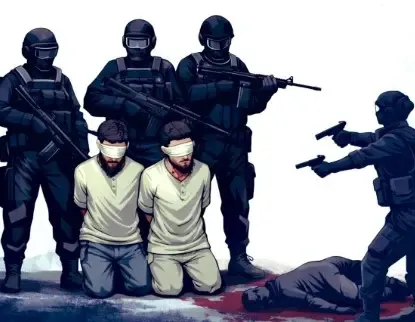
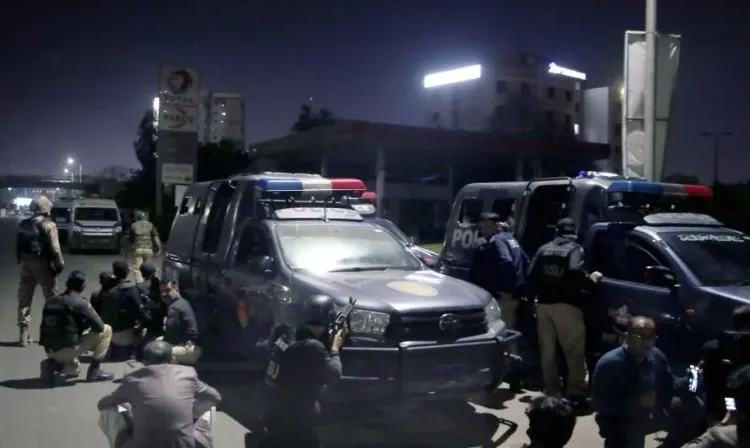
Quetta, March 1 (NationPress) In the wake of losses incurred during the Baloch Liberation Army's (BLA) Operation Herof, Pakistani police in Balochistan and Sindh executed 27 individuals who had been forcibly disappeared, labeling them as armed militants in Karachi, Quetta, and other locations, according to a report.
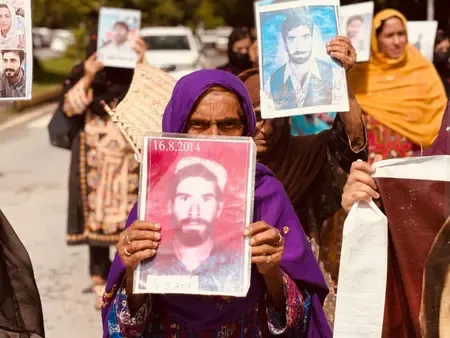
For more than two decades, Baloch youth have faced extrajudicial killings in Balochistan, with Pakistan now extending its targets to their families as a method of collective punishment.
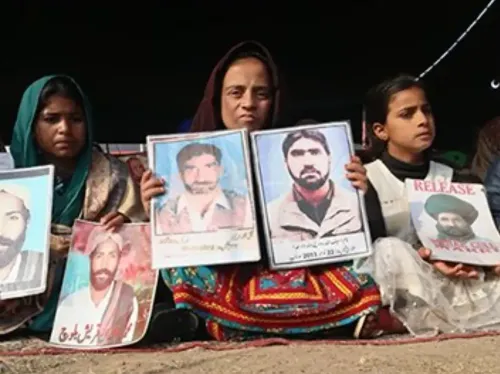
Hamdan Baloch was in the custody of Sindh Police and was presented before the Sindh High Court twice, as per an editorial in The Balochistan Post. Nevertheless, authorities insisted that he was killed in an encounter, while his family has endured ongoing harassment aimed at silencing them.
According to the editorial, "Whenever armed factions in Balochistan inflict losses on the Pakistani military, security institutions often retaliate by executing previously forcibly disappeared individuals under the guise of armed encounters."
Following the setbacks faced by the Baloch Liberation Army during Operation Herof, police in Balochistan and Sindh killed 27 forcibly disappeared individuals in Karachi, Barkhan, Panjgur, and Quetta, later branding them as armed militants. One of those executed, Hamdan Baloch, had been scheduled to appear in court on the very day he was killed, the report indicated.
For years, the Pakistani military and influential state institutions have systematically targeted Baloch individuals. The recent killings of the 27 forcibly disappeared individuals in February are part of a troubling pattern of such incidents in Balochistan that has persisted for over a decade. However, only a fraction of these cases are reported due to media restrictions and state pressure in the region.
"Pakistan's powerful institutions seem to operate under the delusion that enforced disappearances, state repression, collective punishment, and custodial killings can quell the Baloch insurgency. However, the realities on the ground in Balochistan indicate that these tactics are only further deteriorating the relationship between Balochistan and Pakistan. The sorrow of Hamdan Baloch’s mother, along with the anguish of other mothers affected by state repression, continues to undermine the state’s legitimacy in the area," the editorial concludes.
On Friday, the Human Rights Council of Balochistan (HRCB) voiced serious concerns regarding the alarming rise in violence throughout Balochistan, carried out by both Pakistani forces and non-state actors.
The rights organization reported that on February 25, unidentified armed men launched a brutal assault in the Minaz area of Kech district, leading to the deaths of six individuals and injuring three others, including women and children.
The HRCB disclosed that the assailants reportedly fired mortar shells at a residence before unleashing heavy gunfire on those inside. Additionally, the attackers set three vehicles parked at the location ablaze.
"The slaughter of innocent civilians, especially women and children, represents a flagrant violation of fundamental human rights and humanitarian standards. No political aim or security rationale can justify such actions," stated the HRCB.
Point of View
The recent execution of 27 forcibly disappeared individuals by Pakistani police highlights the ongoing crisis in Balochistan. This pattern of extrajudicial killings raises pressing questions about the treatment of human rights and the rule of law in the region. A balanced approach is essential for addressing these complex issues.
NationPress
26 Sept 2026
Frequently Asked Questions
What triggered the killings of the 27 individuals?
The killings were reportedly a response to losses incurred by the Baloch Liberation Army during Operation Herof.
What has been the historical context of extrajudicial killings in Balochistan?
For over two decades, Baloch youth have faced systematic extrajudicial killings, often as a means of collective punishment against their families.
How has the government responded to these killings?
The government has branded the victims as armed militants and has faced criticism for ongoing human rights violations.
What is the stance of human rights organizations on this issue?
Human rights organizations, such as the Human Rights Council of Balochistan, have condemned the violence and called for accountability.
What impact do these actions have on Balochistan's relationship with Pakistan?
Such actions are believed to further deteriorate the relationship between Balochistan and the central government, intensifying feelings of resentment.