Pakistan's coercive strategy in Balochistan failing to deliver stability: ICPS report
Synopsis
A new ICPS report cuts through Pakistan's Operation Shaban narrative: killing over 100 militants after 42 people died in a coordinated TTP-BLA attack wave is reaction, not strategy. The deeper finding — that TTP and BLA are tactically converging against the Pakistani state — is the warning Islamabad appears least prepared to act on.
Key Takeaways
The International Centre for Peace Studies (ICPS) report, released 20 July 2026 , finds Pakistan's coercive approach in Balochistan has failed to deliver lasting stability.
Between 4–8 July 2026 , coordinated insurgent attacks across multiple Balochistan districts killed approximately 42 people , including 38 security personnel and civilians .
Attacks were reportedly attributed to Tehrik-e-Taliban Pakistan (TTP) and Balochistan Liberation Army (BLA) elements, which the report says are increasingly aligned in practice against the Pakistani state.
Pakistan launched Operation Shaban — a joint Pakistan Army , Frontier Corps , and police operation — killing over 100 militants by mid-July, but the report criticises its reactive nature.
The report warns that without inclusive political dialogue, military gains risk remaining temporary fixes to a deeply entrenched crisis.
Pakistan's sustained reliance on military force has failed to bring lasting stability to Balochistan province, with a new report warning that Islamabad's inability to pursue a political solution rooted in dialogue risks turning tactical gains into temporary fixes for a deeply entrenched crisis. The findings, published by the International Centre for Peace Studies (ICPS), were released on 20 July 2026.
The July 2026 Attack Wave
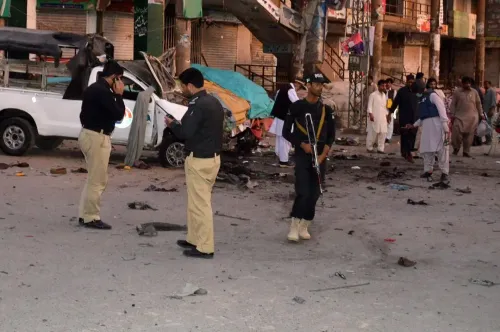
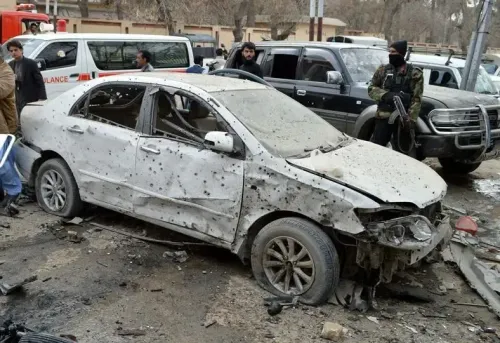
According to the ICPS report, between 4 July and 8 July 2026, a coordinated wave of insurgent attacks struck multiple districts of Balochistan. The incidents included a raid targeting civilians near the provincial capital, an assault on a police checkpoint guarding critical water infrastructure, and an ambush on a key national highway.
Approximately 42 people — among them 38 security personnel and civilians — died as a result of the attacks. The report noted that the compressed timeline and rapid escalation of events “expose long-standing vulnerabilities in a new tactical context,” adding that the pattern was “too coherent to be coincidental.”
Who Is Behind the Attacks
The attacks have reportedly been attributed to elements of the Tehrik-e-Taliban Pakistan (TTP) and the Balochistan Liberation Army (BLA). The report observed that while the two groups are separated by ideology, ethnicity, and historical objectives, they are “becoming much more aligned in practice around a common rival, the Pakistani state.”
This convergence, even if tactical rather than ideological, represents a significant shift in Balochistan's security landscape that Islamabad has yet to address through any coherent political framework.
Operation Shaban: Force Without Foresight
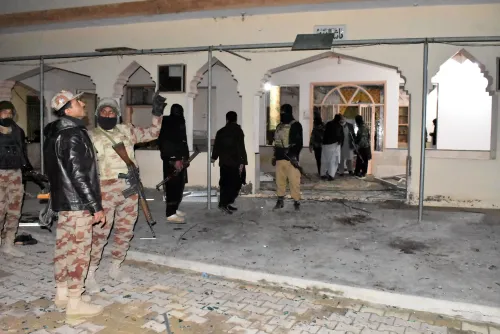
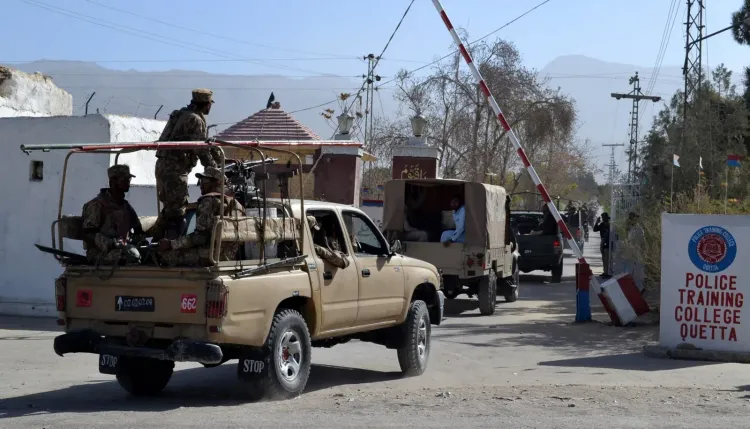
Pakistan responded with a multi-district counter-insurgency operation codenamed Operation Shaban, launched within a day of the militant attacks and carried out jointly by the Pakistan Army, Frontier Corps, and provincial police. By mid-July, the operation had reportedly killed over 100 militants.
However, the ICPS report argued that the reactive nature of the response underscores deeper structural weaknesses. “Although Operation Shaban demonstrated the state's ability to deploy substantial kinetic force, significant force was projected only after a major security breach,” the report noted. It raised a pointed question: whether Pakistan's counter-insurgency framework in Balochistan is “structurally capable of anticipating, rather than merely avenging, the next coordinated challenge to its writ.”
Structural Gaps in Pakistan's Security Architecture
The July attacks, according to the report, exposed persistent gaps in territorial control, infrastructure security, and strategic mobility — weaknesses that military operations alone cannot resolve. By prioritising coercive measures over meaningful political engagement, Pakistani authorities risk reducing tactical military gains to temporary fixes.
The report argued that without inclusive dialogue with regional stakeholders, Balochistan's crisis — rooted in longstanding grievances over political marginalisation and resource control — will remain unresolved regardless of how many operations are launched.
What Comes Next
The ICPS findings add to a growing body of analysis questioning the sustainability of Pakistan's security-first approach in its restive western province. Whether Islamabad recalibrates toward a political track remains to be seen, but the July 2026 violence suggests that the cost of inaction on dialogue is rising.
Point of View
Or only avenge it? Operation Shaban's speed of deployment is being presented as capability; the report correctly reframes it as evidence of reactive failure. More consequentially, the reported tactical convergence of TTP and BLA — two groups with little in common ideologically — signals that shared grievance against the state is becoming a more powerful organising principle than ideology. Islamabad's continued refusal to pursue a credible political track in Balochistan is not just a governance failure; it is a force multiplier for its adversaries.
NationPress
20 Oct 2026
Frequently Asked Questions
What did the ICPS report say about Pakistan's approach in Balochistan?
The International Centre for Peace Studies (ICPS) report found that Pakistan's reliance on military force has failed to bring lasting stability to Balochistan. It argued that without meaningful political engagement and inclusive dialogue, tactical gains from operations like Operation Shaban risk being temporary fixes to a deeply entrenched crisis.
What happened in Balochistan between 4 and 8 July 2026?
A coordinated wave of insurgent attacks struck multiple districts of Balochistan, killing approximately 42 people, including 38 security personnel and civilians. The attacks included a raid near the provincial capital, an assault on a water infrastructure checkpoint, and a highway ambush — a pattern the report described as too coherent to be coincidental.
What is Operation Shaban?
Operation Shaban is a multi-district counter-insurgency operation launched by Pakistan within a day of the July 2026 militant attacks. Carried out jointly by the Pakistan Army, Frontier Corps, and provincial police, it had reportedly killed over 100 militants by mid-July 2026.
Are TTP and BLA working together in Balochistan?
The ICPS report states that attacks have been reportedly attributed to both Tehrik-e-Taliban Pakistan (TTP) and Balochistan Liberation Army (BLA) elements. While the two groups differ in ideology, ethnicity, and historical objectives, the report warns they are becoming increasingly aligned in practice against the Pakistani state.
Why is Pakistan's counter-insurgency approach in Balochistan considered inadequate?
The report argues that Pakistan's framework is reactive rather than preventive — projecting force only after major security breaches rather than anticipating threats. It also highlights persistent gaps in territorial control, infrastructure security, and strategic mobility, and warns that the absence of political dialogue leaves root causes of the conflict unaddressed.