How Pakistan's Support for Extremism in Afghanistan Leads to Instability
Synopsis
Explore the implications of Pakistan's decades-long support for extremist factions in Afghanistan, revealing how this strategy has turned from a perceived strength into a critical vulnerability, escalating tensions and instabilities in the region.
Key Takeaways
Pakistan's reliance on militant proxies has become a source of vulnerability.
Recent airstrikes highlight escalating tensions with the Taliban.
Cross-border attacks from extremist groups are on the rise.
Pakistan's strategy of 'strategic depth' is facing significant challenges.
Coercive measures carry risks of alienating local populations.
Islamabad, March 4 (NationPress) Pakistan's involvement in Afghanistan illustrates the dangers of depending on militant proxies for short-term strategic gains, transforming what was previously seen as a strength into a significant vulnerability.
As Islamabad intensifies its air operations within Afghan borders to tackle a longstanding issue, the more profound divide exists not merely at the Pakistan-Afghanistan frontier but also within the fundamental principles of proxy warfare, as outlined in a recent report.
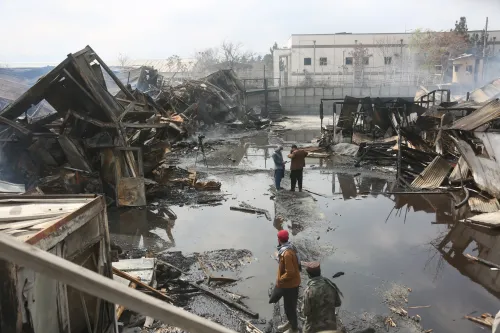
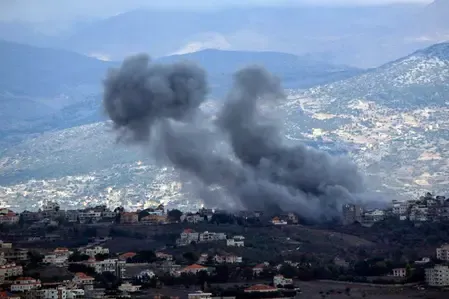
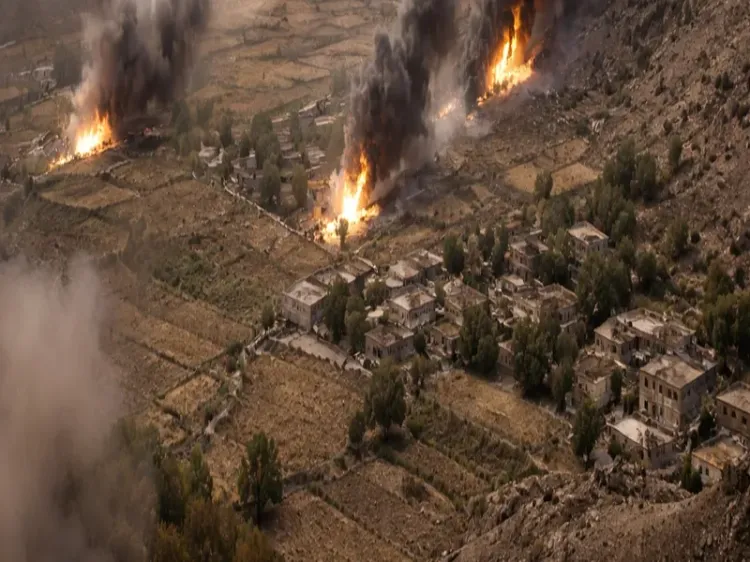
A report from 'South Asia Monitor' indicates that Pakistan's latest airstrikes in Afghanistan, which resulted in numerous casualties including women and children, signify a perilous escalation between Islamabad and the Taliban authority in Kabul.
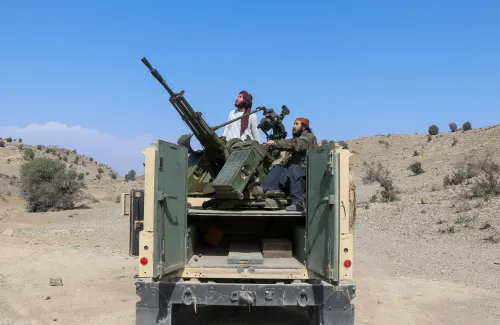
These assaults occur amid increased cross-border violence from extremist groups, especially the Islamic State Khorasan Province (ISKP), highlighting the swiftly declining security landscape in the region.
“What was formerly praised as Pakistan’s strategy of ‘strategic depth’ in Afghanistan now seems to be unraveling under the strain of its internal inconsistencies and backlash from militants. As tensions escalate and the relationship between Islamabad and Kabul deteriorates, the long-standing proxy framework that supported Pakistan’s Afghan strategy is crumbling,” the report asserts.
“For many years, Pakistan has fostered the Taliban as a central element of its strategic depth policy against India. During the Afghan-Soviet conflict and throughout the 1990s, the security establishment in Islamabad nurtured the Taliban to thwart Indian influence in Kabul and to provide bases for anti-India operations,” it elaborates.
The report emphasizes that training centers in Afghan regions such as Khost, Jalalabad, and Kandahar have bolstered operations by Pakistan-based terrorist organizations like Lashkar-e-Taiba (LeT) and Jaish-e-Mohammed.
Post the 9/11 terrorist attacks, it further states, Pakistan publicly aligned itself with the U.S. 'War on Terror' while secretly maintaining ties with militant proxies. The country’s Inter-Services Intelligence (ISI) is believed to have overseen terror networks, including the Haqqanis, LeT, and Jaish, preserving its influence inside Afghanistan while keeping plausible deniability.
“The bombings of the Indian Embassy in Kabul in 2008 and 2009 -- linked to the Haqqani network -- epitomized this dual strategy. India’s diplomatic and developmental engagements faced setbacks as security risks surged, necessitating a reassessment of its presence,” the report explains.
Since the Taliban regained control in 2021, the report indicates that Pakistan has faced dual pressure from both the Taliban regime and the Tehreek-e-Taliban Pakistan (TTP). It notes that the latest airstrikes by Pakistan within Afghanistan, occurring alongside the Taliban's international diplomatic outreach, appear to exhibit determination -- directed both at Kabul and Washington.
“Islamabad may believe that adopting a firmer stance against the Taliban could rejuvenate aspects of its previous counter-terror collaboration with the United States. For Washington, the priority remains to limit extremist havens, although its strategic focus has shifted elsewhere,” the report observes.
“However, escalation carries inherent risks. Airstrikes resulting in civilian casualties may exacerbate anti-Pakistan sentiments within Afghanistan and empower hardliners within the Taliban leadership. Instead of regaining leverage, force could intensify estrangement,” it warns.
Point of View
This report underscores the multifaceted challenges faced by Pakistan due to its longstanding support for militant proxies in Afghanistan. The evolving dynamics signal a critical juncture that necessitates a reassessment of strategies in the face of emerging threats and deteriorating regional stability.
NationPress
28 Sept 2026
Frequently Asked Questions
What are the consequences of Pakistan's support for extremist groups?
Pakistan's support for extremist factions in Afghanistan has led to increased regional instability, escalating tensions with the Taliban, and rising security threats from groups like ISKP.
How do airstrikes affect Pakistan's relationship with the Taliban?
Recent airstrikes by Pakistan have strained its relations with the Taliban, potentially undermining diplomatic efforts and escalating anti-Pakistan sentiments within Afghanistan.
What is the impact of the Taliban's return to power on Pakistan?
Since the Taliban's return in 2021, Pakistan faces dual pressures from both the Taliban regime and the TTP, complicating its security landscape.
What role does the ISI play in Pakistan's strategy?
The ISI has historically overseen various militant networks, allowing Pakistan to maintain influence in Afghanistan while navigating international pressures.
What risks do civilian casualties from airstrikes pose?
Civilian casualties from airstrikes may heighten anti-Pakistan feelings in Afghanistan and empower hardline factions within the Taliban leadership.