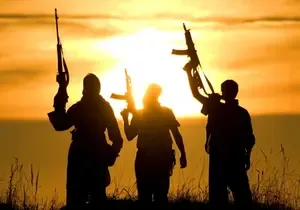
Unintended Consequences: Pakistan's War Fuels ISKP Resurgence
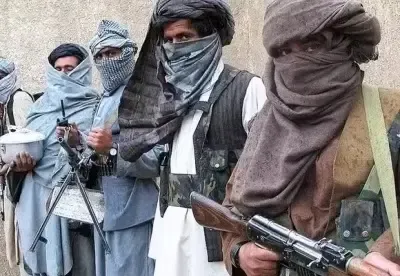
Synopsis
In an unforeseen twist, Pakistan's war with the Afghan Taliban has inadvertently strengthened the Islamic State Khorasan Province (ISKP). As the ISKP rebuilds, it poses an increasing threat not only to the Taliban but also to regional stability, particularly in India.
Key Takeaways
Pakistan's conflict with the Taliban has unintentionally revitalized the ISKP.
The ISKP is focusing on expanding its operational reach in Afghanistan and India.
Pakistan's military actions may backfire by strengthening its adversaries.
Ongoing strife is providing breathing room for groups like the TTP and BLA.
Attacks against Pakistan by the ISKP highlight the evolving security landscape.
New Delhi, April 10 (NationPress) When Pakistan initiated a conflict with the Afghan Taliban, it was oblivious to the fact that it was inadvertently empowering the Islamic State Khorasan Province (ISKP). Presently, the ISKP has emerged as a formidable entity, with a significant increase in recruitment.
The Afghan Taliban has always regarded the ISKP as a rival. Their enmity intensified when the Taliban declined an invitation from Abu Bakr al-Baghdadi, the founder of the Islamic State, to join forces against common foes in Afghanistan.
The Taliban sought to avoid any interference from the ISKP, leading to the latter's formation in Afghanistan. Since its inception, the ISKP has been engaged in a continuous struggle against the Taliban.
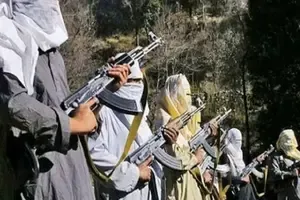
The ISKP's objective is to establish dominance over Afghanistan and to initiate a Caliphate in Pakistan, while also posing threats to India. The rapid establishment of this group and its ability to execute attacks, particularly in Pakistan and Afghanistan, surprised many observers. However, following the Taliban's takeover of Afghanistan after the US troop withdrawal, the ISKP's influence waned significantly.
By 2023, the ISKP had suffered substantial losses as the Afghan Taliban mounted a relentless offensive against the group, maintaining pressure until late 2025. By this time, relations between the Afghan Taliban and Pakistan had deteriorated markedly. Pakistan subsequently accused the Taliban, without any evidence, of providing support to the Tehreek-e-Taliban Pakistan (TTP).
Despite the Taliban's denials, Pakistan opted for military action in Afghanistan. The ISKP swiftly altered its stance, aligning with the very country it once viewed as an adversary.
Islamabad reached out to the ISKP for assistance in combating both the Taliban and the TTP.
This alliance has significantly benefited the ISKP, particularly as the conflict escalated. With the Taliban preoccupied with the war, the ISKP has seized the opportunity to regroup and expand its operational capabilities.
An official noted that a diminished Taliban invariably leads to a more potent ISKP. This situation has created yet another challenge for Pakistan, according to the official.
As the ISKP strives to fortify its presence in Afghanistan, its primary focus remains on India, as it seeks to orchestrate collaborations with the Pakistani establishment to advance its objectives in Jammu and Kashmir.
An Intelligence Bureau official remarked that the ISKP views Pakistan's conflict with the Taliban as a favorable development, granting it the necessary space to recuperate.
The prolongation of the war only serves to provide the ISKP with additional time to strengthen its organization, the official added.
Another official indicated that Pakistan, consumed by the ongoing conflict, fails to recognize that the ISKP could turn against it in the near future. Historically, the ISKP has targeted Pakistan, with notable incidents including a suicide bombing in September 2023 in Mastung, Balochistan, resulting in 52 casualties, and an attack on a Shia Mosque in Peshawar in March 2022.
The ISKP believes that true Islamic principles are not being upheld in Pakistan and insists that it is time to transform the country into an Islamic State.
While the ongoing conflict may bolster the ISKP, Pakistan has overlooked that this turmoil is also providing breathing space for both the TTP and the Balochistan Liberation Army (BLA). These groups are simultaneously engaged in a struggle against the Pakistani establishment, and they will utilize this opportunity to regroup and launch more formidable assaults, another official stated.
Point of View
As the ISKP shifts its focus from the Taliban to potentially targeting Pakistan.
NationPress
15 Oct 2026
Frequently Asked Questions
How has Pakistan's war affected the ISKP?
The ongoing conflict has inadvertently empowered the ISKP, allowing it to regroup and enhance its operational capabilities while the Taliban is preoccupied with the war.
What are the objectives of the ISKP?
The ISKP aims to establish control over Afghanistan, create a Caliphate in Pakistan, and exert influence in India.
What notable attacks have been attributed to the ISKP?
The ISKP has executed several attacks in Pakistan, including a suicide bombing in Mastung in September 2023 that resulted in 52 deaths.
How do the Taliban and ISKP view each other?
The Taliban considers the ISKP a rival and has consistently sought to eliminate its influence in Afghanistan.
What risks does the ISKP pose to Pakistan?
As the ISKP strengthens, it poses a significant threat to Pakistan, potentially turning its attention against the country, especially during its conflict with the Taliban.