Is Islamabad's Blast a Result of ISKP Betrayal While Pakistan Blames India?
Synopsis
The Islamabad blast raises questions about Pakistan's intelligence failures and its relationships with terror groups. As Pakistan points fingers at Afghanistan and India, experts suspect a diversion tactic to mask its internal issues. This article delves into the implications of the attack and the complexities of Pakistan's security landscape.
Key Takeaways
Pakistan quickly blamed India and Afghanistan after the Islamabad blast.
The attack may be linked to either the TTP or ISKP.
Experts suspect the incident is a diversion from internal security failures.
The ISKP's distrust of the Pakistani establishment raises questions about future alliances.
Protests in Pakistan-occupied Kashmir highlight growing unrest.
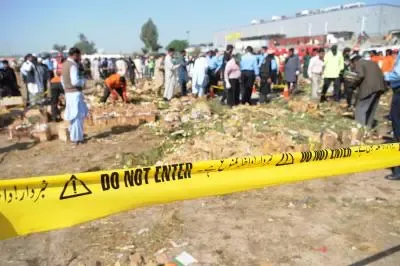
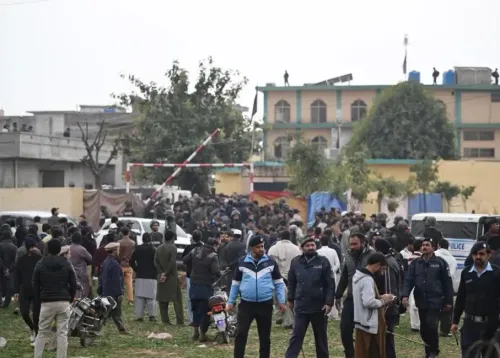
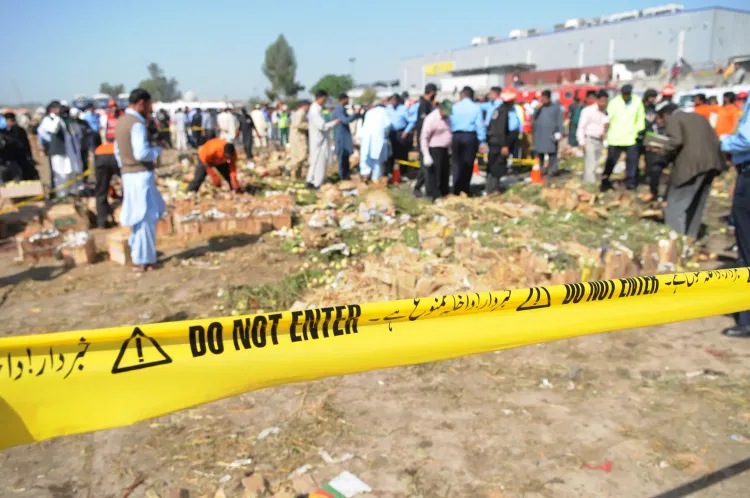
New Delhi, Feb 7 (NationPress) Just a day after the tragic Islamabad blast that resulted in the deaths of over 30 individuals and left 160 injured, Pakistan swiftly pointed fingers at Afghanistan and India. Pakistan, however, conveniently overlooked its own intelligence failures and the longstanding support of terrorist factions that have now turned against it.
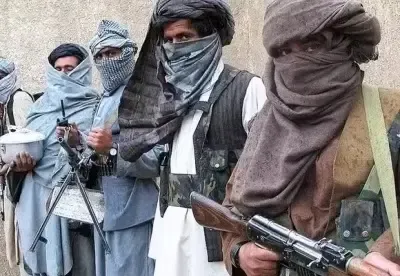
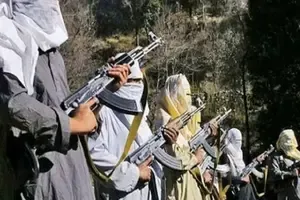
According to evaluations from Indian intelligence agencies, the attack may have been orchestrated by either the Tehreek-e-Taliban Pakistan (TTP) or the Islamic State Khorasan Province (ISKP).
Despite this, neither group has claimed responsibility for the incident.
Indian officials also consider the possibility that this attack serves as a diversion by the Pakistani establishment, aimed at shifting focus from the losses endured by its security forces in Balochistan.
Unknown assailants targeted worshippers at the Khadja Tul Kubra Mosque in Islamabad's Tarlai Kalan area during Friday prayers.
The execution of the attack, particularly the targeting of Shia individuals, indicates a potential connection to either the TTP or ISKP.
Another point of inquiry for Indian officials is why Pakistan was so quick to blame India and Afghanistan, while avoiding discussions on its intelligence shortcomings, raising the question of whether this oversight was intentional.
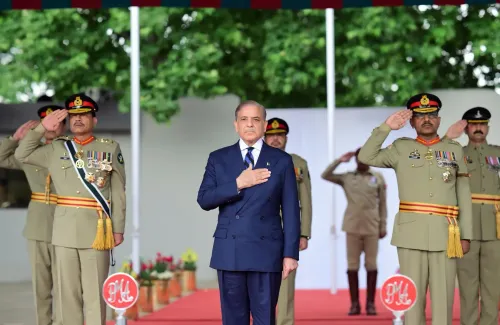
The Pakistani establishment, led by Field Marshal Asim Munir, has faced embarrassment on numerous occasions recently.
This began with India's Operation Sindoor, and since then, Pakistan has been embroiled in conflicts with various entities.
It is currently contending with the Balochistan Liberation Army (BLA), the TTP, and the Afghan Taliban. There are also protests occurring in Pakistan-occupied Kashmir (PoK) against the establishment, with intelligence officials warning that the situation could escalate soon. If the ISKP was behind this attack, it indicates that the ISI's strategy has backfired.
The ISKP has historically distrusted the Pakistani establishment, similarly to the TTP, and seeks governance under Sharia law.
Previously, the ISI had briefly allied with the ISKP to combat the Afghan Taliban and TTP alongside the Lashkar-e-Taiba. However, this strategy has proven ineffective, as the ISKP has once again demonstrated its unreliability.
The ISKP had momentarily agreed to collaborate with the Lashkar-e-Taiba due to its animosity towards the Afghan Taliban, hoping for support from Pakistan in its conflict against them. However, the ISI failed to fulfill its commitments, and many factions within the Islamic State, particularly those from Syria and Iraq, opposed any partnership with the Pakistani establishment. They felt that their aspirations for Pakistan to become an Islamic State governed by Sharia were being compromised by this alliance.
An official indicated that it is premature to conclude that the ISKP executed the attack; however, it bears all the hallmarks of the ISKP's involvement.
Before any preliminary investigation could commence, Pakistan's Defence Minister, Khwaja Asif, accused the Afghan Taliban and India of being behind the incident.
Experts have noted that this immediate response from Munir illustrates a desire to divert attention from various issues. He aimed to shift focus away from the Balochistan situation while crafting a narrative against India and the Taliban. This statement and the attack coincide with a time when Pakistan is amplifying its narrative against India.
Pakistan has allowed the Jaish-e-Mohammad to conduct radical rallies while also attempting to incite unrest among the populace in Pakistan-occupied Kashmir (PoK).
The objective appears to be to instigate disturbances and subsequently blame India, all while failing to evaluate its own internal security, as evidenced by the blast occurring in an urban area, according to experts.
Point of View
It is vital to approach this complex situation with a balanced perspective. The Islamabad blast underscores the fragility of regional security and the need for accountability within Pakistan’s intelligence agencies. The swift blame on external actors like India and Afghanistan shifts focus from pressing internal issues that must be addressed to prevent further violence.
NationPress
20 Sept 2026
Frequently Asked Questions
What caused the Islamabad blast?
The Islamabad blast is suspected to be linked to the Tehreek-e-Taliban Pakistan (TTP) or the Islamic State Khorasan Province (ISKP), although neither group has claimed responsibility.
Why did Pakistan blame India and Afghanistan?
Pakistan quickly attributed blame to India and Afghanistan as a diversion from its own intelligence failures and the internal issues it faces.
What are the implications of this attack?
The attack highlights the ongoing challenges within Pakistan's security framework and the potential for increased violence if internal issues are not addressed.
Who is leading Pakistan currently?
The current de facto head of the Pakistani establishment is Field Marshal Asim Munir.
What is the significance of the ISKP's involvement?
The ISKP's potential involvement indicates a breakdown in the ISI's strategy of aligning with various militant groups, raising concerns about the reliability of such alliances.