CEA Nageswaran: India's micro-enterprises need strong trade skills for growth
Synopsis
India's top economic adviser has flagged trade skills — not just technology — as the missing link for micro-enterprise growth, even as the government rolls out ECLGS 5.0 to shore up MSME credit access amid the West Asia crisis. The twin signals from policy and industry point to a pivotal moment for India's vast informal business ecosystem.
Key Takeaways
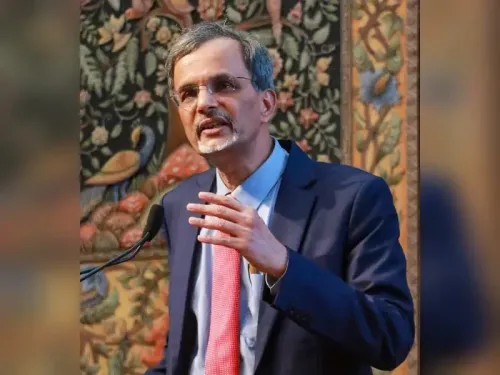
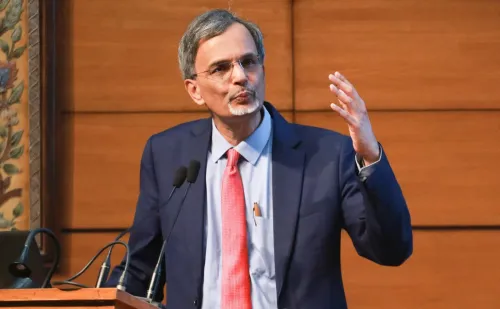
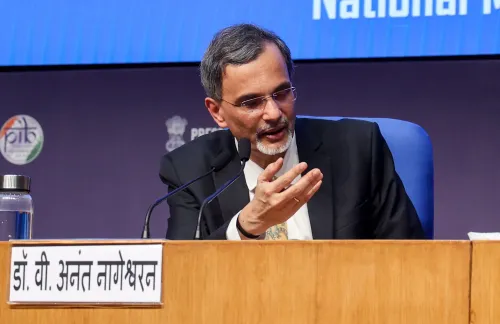
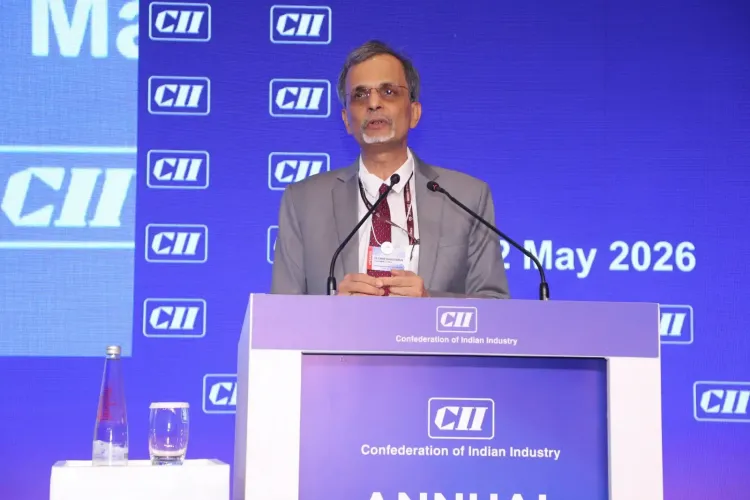
CEA Dr V Anantha Nageswaran addressed the CII Annual Business Summit 2026 in New Delhi on Tuesday, 12 May .
He called development of strong trade skills the most critical requirement for India's micro-enterprises to integrate into global value chains.
CII President Rajiv Memani highlighted manufacturing competitiveness and trade relationships as central to India's long-term economic resilience.
The Union Cabinet approved ECLGS 5.0 this month, offering 100% guarantee coverage for MSMEs and 90% for non-MSMEs and airlines.
Coverage is extended via the National Credit Guarantee Trustee Company Limited (NCGTC) to support businesses hit by the West Asia crisis .
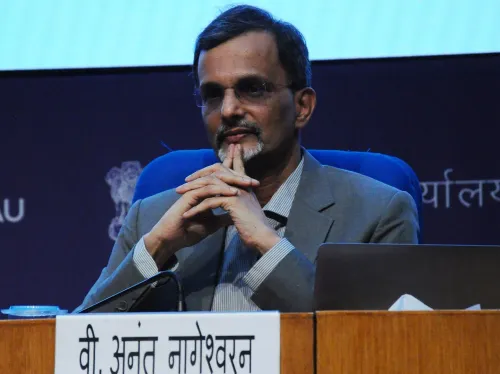
Chief Economic Adviser (CEA) Dr V Anantha Nageswaran on Tuesday said the future of India's growth will hinge on how inclusively micro-enterprises are enabled to adopt, adapt, scale, and compete. Speaking at the CII Annual Business Summit 2026 in New Delhi, Nageswaran called the development of strong trade skills the most critical requirement for the sector's transformation.
The Case for Trade Skills in Micro-Enterprises
Nageswaran drew a sharp contrast between the global reality and India's current situation. "In many leading economies, MSMEs are not technological backwaters but often at the forefront of innovation and technological advancement," he said, urging India's micro-enterprises to evolve in the same direction.
He stressed that entrepreneurs must lead by example — investing in their own skills and ensuring employees across functions, whether in accounting, HR, or inventory management, do the same. "These are also pathways to growth, as these skills will lead to employment generation. This is the way for them to integrate themselves into the global value chain," Nageswaran told the gathering.
Industry Leaders Echo the Call
R Dinesh, Past President of the Confederation of Indian Industry (CII) and Chairman of the CII Centre of Excellence on Employment and Livelihood (CEL), reinforced the message. "We think the future doesn't lie just in boardrooms or tech labs. We want to become the enablers for MSMEs and rural jobs. We have to make the future of India bright and resilient, this paves the way for economic depth, social stability, and employment architecture," he said.
Rajiv Memani, President of CII, broadened the lens further, noting that the key question for India is not just what it imports, but how it thinks about manufacturing competitiveness, trade relationships, and long-term economic resilience.
Government Backs MSMEs with ECLGS 5.0
The remarks at the summit come as the Union Cabinet, chaired by Prime Minister Narendra Modi, this month approved the launch of the Emergency Credit Line Guarantee Scheme (ECLGS) 5.0, aimed at providing financial support to businesses impacted by the ongoing West Asia crisis.
Under the new phase, the government will extend enhanced credit guarantee coverage through the National Credit Guarantee Trustee Company Limited (NCGTC). The scheme offers 100% guarantee coverage for MSMEs and 90% coverage for non-MSMEs and the airline sector — a backstop designed to encourage banks and financial institutions to lend additional funds without fear of default risks.
Why This Matters for India's Economic Architecture
India's MSME sector employs hundreds of millions of workers and contributes significantly to exports and domestic output. Yet productivity gaps — particularly in micro-enterprises — remain a persistent drag on competitiveness. This is the broader challenge that both the CEA's remarks and the ECLGS 5.0 launch are designed to address.
Notably, this push comes against the backdrop of global trade disruptions and supply chain realignments, which present both a risk and an opportunity for Indian MSMEs seeking to enter or deepen their presence in global value chains. Whether the combination of skill development advocacy and credit guarantee expansion translates into measurable productivity gains will be closely watched in the months ahead.
Point of View
HR, and inventory — that make technology adoption meaningful in the first place. ECLGS 5.0 addresses the credit side of the equation, but credit without capability is a liability, not an asset. The real test is whether the CII and the government can build a skills pipeline that reaches the micro-enterprise tier, not just the organised MSME segment that already has access to summits and schemes.
NationPress
13 Oct 2026
Frequently Asked Questions
What did CEA V Anantha Nageswaran say about India's micro-enterprises?
CEA Dr V Anantha Nageswaran said India's micro-enterprises must develop strong trade skills to integrate into global value chains and drive employment generation. He made the remarks at the CII Annual Business Summit 2026 in New Delhi on 12 May.
What is ECLGS 5.0 and who does it cover?
ECLGS 5.0 is the fifth phase of the Emergency Credit Line Guarantee Scheme, approved by the Union Cabinet this month to support businesses affected by the West Asia crisis. It offers 100% guarantee coverage for MSMEs and 90% coverage for non-MSMEs and the airline sector, channelled through the NCGTC.
Why are trade skills important for micro-enterprises?
According to Nageswaran, trade skills in areas like accounting, HR, and inventory management are foundational pathways to growth and employment generation. They are also the prerequisite for micro-enterprises to enter and compete in global value chains.
What did CII leaders say about the future of MSMEs in India?
CII Past President R Dinesh said micro and small enterprises will play a key role in India's future, calling for enabling MSMEs and rural jobs to build economic depth and social stability. CII President Rajiv Memani stressed manufacturing competitiveness and long-term trade resilience as central concerns.
How does ECLGS 5.0 help banks lend to MSMEs?
By providing government-backed guarantee coverage — 100% for MSMEs and 90% for non-MSMEs — ECLGS 5.0 reduces the default risk for banks and financial institutions, encouraging them to extend additional credit to businesses under financial stress.