MP Govt Extends Bhavantar Scheme to Paddy Farmers: CM Mohan Yadav
Synopsis
The Madhya Pradesh government has announced extension of the Bhavantar Bhugtan Yojana — its price-deficiency payment scheme — to paddy farmers, under the banner of Krishak Kalyan Varsh 2026. The move aims to compensate cultivators when market prices fall below the support threshold, with formal compensation rates and district coverage yet to be notified.
Key Takeaways
The Chief Minister's Office of Madhya Pradesh announced on 14 July 2026 that the Bhavantar Bhugtan Yojana will cover paddy (dhaan) .
Bhavantar Bhugtan Yojana , launched in 2017 , compensates farmers directly when market prices fall below a government-set threshold for notified crops.
The announcement is tagged under #KrishakKalyanVarsh2026 , indicating farmer welfare is a declared priority theme for the state in 2026.
Small and marginal paddy farmers in eastern and central districts of Madhya Pradesh are the primary intended beneficiaries.
Specific details — compensation rate, notified districts, and disbursement timeline — are yet to be officially announced by the Department of Farmer Welfare and Agriculture Development .
The state has previously used Bhavantar for soybean and wheat ; extending it to paddy broadens the scheme's crop coverage significantly.
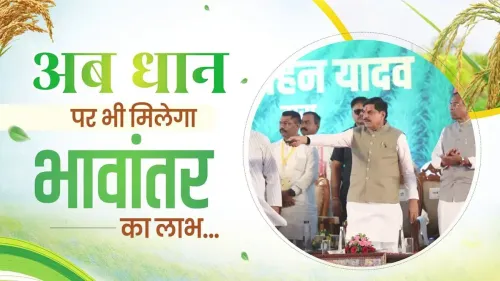
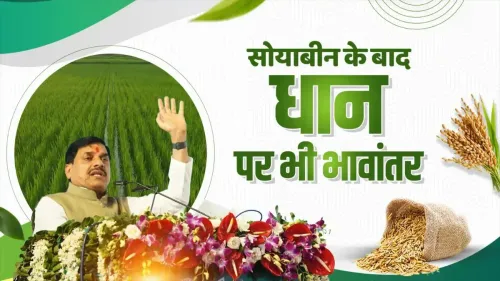
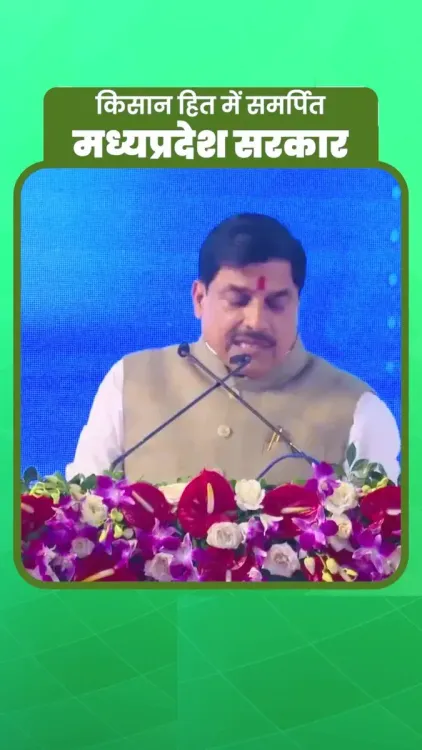
The Chief Minister's Office of Madhya Pradesh announced on Tuesday, 14 July 2026 that the state government is standing by its farmers — annadatas — by extending the Bhavantar Bhugtan Yojana to paddy (dhaan), framing the move as a 'new path to prosperity' for cultivators across the state.
The post, shared by the official handle of the Chief Minister's Office of Madhya Pradesh and tagging Chief Minister Dr. Mohan Yadav and the state agriculture ministry, reads: 'Annadataon ke saath Madhya Pradesh Sarkar — Dhaan par Bhavantar, samridhi ki nayi raah' ('The Madhya Pradesh Government stands with the food-providers — Bhavantar on paddy, a new path to prosperity'). The announcement was made under the hashtag #KrishakKalyanVarsh2026, or Farmer Welfare Year 2026.
Context
The Bhavantar Bhugtan Yojana is a price-deficiency payment scheme pioneered by Madhya Pradesh in 2017. Under the scheme, when market prices for notified crops fall below a government-set threshold, farmers receive a direct cash compensation equal to the difference — a mechanism distinct from physical procurement under the central Minimum Support Price (MSP) framework.
Paddy is a critical kharif crop in the eastern and central districts of Madhya Pradesh, which has emerged as one of India's leading foodgrain-producing states. Extending Bhavantar coverage to paddy signals that the state administration is addressing price-risk concerns for a crop grown by a large share of its smallholder farming population.
Policy Backdrop
The Department of Farmer Welfare and Agriculture Development, Madhya Pradesh has historically administered Bhavantar for crops including soybean and wheat, using it as a buffer when private trade or procurement volumes fell short of farmer expectations. The 2017 rollout was among the first state-level price-deficiency models in India and has since influenced similar discussions in other agrarian states.
State governments in major grain-producing regions have increasingly supplemented central MSP operations with their own income-support instruments to manage local market volatility — particularly in election-sensitive agricultural cycles. Madhya Pradesh has used such tools repeatedly to stabilise rural incomes, and the current announcement under #KrishakKalyanVarsh2026 suggests the government is positioning farmer welfare as a central policy theme for the year.
Stakeholders and Impact
The primary beneficiaries are paddy farmers — especially small and marginal cultivators in districts where private mandis offer prices that routinely dip below support levels during peak harvest arrivals. Direct bank transfers under Bhavantar bypass intermediaries, reducing leakage and ensuring compensation reaches the cultivator.
The move also carries significance for the rural economy of Madhya Pradesh, where agriculture remains the dominant livelihood. Any guaranteed floor for paddy prices can stabilise consumption spending in villages and reduce distress-sale pressure on farmers immediately after the kharif harvest.
What's Next
Key details — including the compensation rate per quintal, the list of notified districts, the registration window for eligible farmers, and the disbursement timeline — are expected to be notified by the Department of Farmer Welfare and Agriculture Development ahead of the kharif paddy harvest season. Any supplementary budget allocation to fund the scheme may be tabled during the state legislature's monsoon session.
Observers will watch whether the government formally declares 2026 as 'Farmer Welfare Year' through an official order, and whether the Bhavantar extension to paddy is accompanied by enhanced procurement targets or additional rural credit support under CM Dr. Mohan Yadav's administration.
Point of View
Both of which remain to be notified.
NationPress
12 Oct 2026
Frequently Asked Questions
What is the Bhavantar Bhugtan Yojana in Madhya Pradesh?
The Bhavantar Bhugtan Yojana is a price-deficiency payment scheme launched by Madhya Pradesh in 2017 . When market prices for notified crops fall below a government-set support level, farmers receive a direct cash payment equal to the difference, credited to their bank accounts.
Which crops are covered under Bhavantar Bhugtan Yojana?
The scheme has previously covered crops including soybean and wheat . The Chief Minister's Office of Madhya Pradesh announced on 14 July 2026 that paddy (dhaan) will also be covered under the scheme.
Who benefits from the Bhavantar paddy scheme in MP?
Paddy farmers — particularly small and marginal cultivators in the eastern and central districts of Madhya Pradesh — are the primary beneficiaries. The scheme is designed to protect them from price drops in private markets during peak harvest arrivals.
What is Krishak Kalyan Varsh 2026 in Madhya Pradesh?
Krishak Kalyan Varsh 2026 (Farmer Welfare Year 2026) is a theme promoted by the Madhya Pradesh government under Chief Minister Dr. Mohan Yadav to focus policy attention and scheme announcements on agricultural and farmer welfare during 2026. A formal government order declaring it has not yet been independently verified.
How is Bhavantar different from MSP procurement?
Under the central Minimum Support Price (MSP) system, government agencies physically procure grain from farmers at a fixed price. Under Bhavantar , the government does not buy the crop; instead, it pays farmers the cash difference between the MSP-equivalent threshold and the actual market price, allowing farmers to sell in private mandis while still receiving income support.