India-UK CETA takes effect July 15: 99% of exports get duty-free access
Synopsis
With the CBIC now notifying origin rules, the India-UK CETA is days away from becoming operational on 15 July 2026. The deal hands Indian exporters duty-free access to 99% of the UK market — but the fine print on origin compliance will determine how much of that advantage businesses actually capture.
Key Takeaways
The India-UK CETA comes into force on 15 July 2026 , as per the official Finance Ministry notification.
99 per cent of India's exports to the UK will receive duty-free access under the agreement.
The CBIC has issued origin determination rules specifying how goods qualify for preferential tariff treatment.
Simple repackaging, relabelling, basic assembly, and minor operations will not confer originating status on products.
Cumulative treatment of originating materials is permitted, benefiting integrated cross-border supply chains.
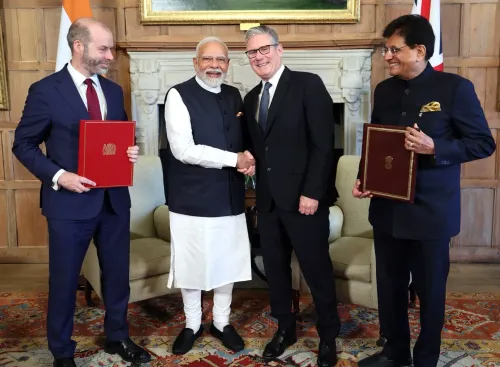
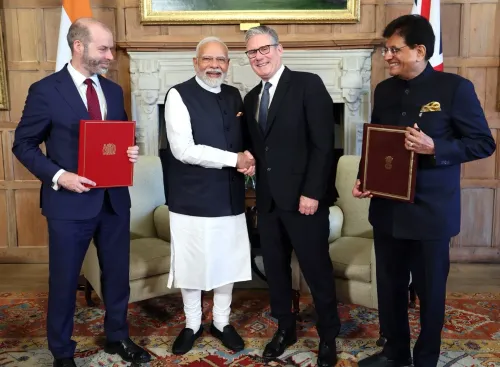
Commerce Minister Piyush Goyal called the pact a milestone for trade, investment, and innovation between the two nations.
The India-UK Comprehensive Economic and Trade Agreement (CETA) is set to come into force on 15 July 2026, with official rules now notified by the Finance Ministry, granting duty-free access to 99 per cent of India's exports to the United Kingdom. The notification marks the final regulatory step before the landmark bilateral trade pact becomes operational.
What the Origin Rules Establish
The rules, issued by the Central Board of Indirect Taxes and Customs (CBIC), lay out the framework for determining whether goods qualify for preferential tariff treatment under the agreement. A product will be considered as originating in India or the UK if it is wholly obtained in either country, produced entirely from originating materials, or manufactured using non-originating inputs that meet product-specific origin requirements prescribed under the pact.
The framework also permits cumulative treatment of originating materials — meaning inputs from one partner country can be treated as originating in the other when used in further production. This provision is particularly significant for manufacturers operating across integrated supply chains.
What Will Not Qualify as 'Made in India or UK'
The notification draws a clear line on activities that will not confer originating status. Simple repackaging, relabelling, washing, sorting, polishing, basic assembly, and other minor operations are explicitly excluded. Customs authorities will hold powers to verify origin claims and deny preferential tariff treatment where goods fail to meet the prescribed conditions.
Importers who miss claiming tariff benefits at the time of import are also provided some flexibility under the rules — a practical safeguard for businesses navigating the new compliance landscape.
What the Government Said
Commerce and Industry Minister Piyush Goyal recently described the India-UK CETA as a pact that will 'further deepen collaboration across trade, investment, and innovation, contributing to shared prosperity for both nations.' Addressing the 'India-UK: Partners in Progress Business Plenary' in London, Goyal urged Indian companies to translate the opportunities under the agreement into sustained business growth and stronger bilateral ties across technology partnerships and resilient supply chains.
Why This Agreement Matters
The India-UK CETA is among the most significant trade deals India has concluded in recent years, coming after negotiations that spanned several years and multiple political transitions in the UK. For Indian exporters — particularly in textiles, pharmaceuticals, engineering goods, and IT services — duty-free access to one of Europe's largest consumer markets represents a material competitive advantage.
This comes amid a broader Indian push to diversify trade partnerships, with free trade agreements also concluded or under negotiation with the UAE, Australia, and the European Union. The CETA's entry into force on 15 July 2026 will be closely watched by industry bodies as a test of whether negotiated gains translate into measurable export growth.
Point of View
Including with ASEAN, that loose or poorly enforced rules of origin can allow third-country goods to route through a partner and undercut the intended beneficiaries. The CBIC's explicit exclusion of simple assembly and repackaging signals an attempt to close those gaps. The real test, however, is enforcement capacity at ports and the speed with which exporters — particularly SMEs in textiles and engineering — can navigate the new compliance requirements. A deal on paper and a deal in practice are two different things.
NationPress
12 Oct 2026
Frequently Asked Questions
What is the India-UK CETA and when does it come into force?
The India-UK Comprehensive Economic and Trade Agreement (CETA) is a bilateral free trade pact between India and the United Kingdom. It comes into force on 15 July 2026, following the Finance Ministry's notification of origin determination rules issued by the CBIC.
What does the India-UK CETA mean for Indian exporters?
Indian exporters will gain duty-free access to the UK market for 99 per cent of their goods under the CETA. Sectors such as textiles, pharmaceuticals, engineering goods, and IT services are expected to benefit most significantly from reduced trade barriers.
What are the rules of origin under the India-UK CETA?
A product qualifies as originating in India or the UK if it is wholly obtained there, produced entirely from originating materials, or manufactured using non-originating inputs that meet product-specific requirements. Simple repackaging, relabelling, basic assembly, and minor operations do not confer originating status.
Who issued the rules for the India-UK CETA?
The Central Board of Indirect Taxes and Customs (CBIC), under the Finance Ministry, issued the Customs Tariff (Determination of Origin of Goods) Rules, 2026, which establish the compliance and eligibility framework for the agreement.
What has Commerce Minister Piyush Goyal said about the India-UK trade deal?
Commerce and Industry Minister Piyush Goyal has described the CETA as a pact that will deepen collaboration across trade, investment, and innovation. Speaking in London, he urged Indian companies to engage with UK counterparts and translate the agreement's opportunities into sustained business growth.