Stalin calls for protecting Tamil heritage, expanding excavations
Synopsis
DMK president M. K. Stalin on 14 July 2026 called for protecting Tamil civilisational sites and demanded that excavations at Keezhadi, Porunai, Tenkasi, and Malaiyadipatti be continued, asserting that Tamil antiquity must be established against revisionist historical narratives.
Key Takeaways
Stalin posted on 14 July 2026 demanding continuation of state-funded Tamil archaeological excavations.
He cited Keezhadi , Porunai , and ancient iron-technology sites as proof of Tamil civilisation's deep antiquity.
The post tagged #Tenkasi and #Malaiyadipatti , indicating active excavation work at these southern Tamil Nadu sites.
Stalin warned that Tamil history is being 'diminished, distorted, and misdirected by revisionist conspiracies' and called for a factual counter through archaeology.
He called for rewriting Indian subcontinent history 'beginning from the south' and pledged to bring more buried and undersea sites to light.
The Keezhadi excavation, which began in 2015 , has yielded Sangam-era artefacts establishing urban Tamil life centuries earlier than previously documented.
DMK president M. K. Stalin on Tuesday, 14 July 2026 called for the protection of ancient Tamil civilisational traces and demanded that archaeological excavations begun under the Dravidian Model government be continued by any successor administration, asserting that Tamil history must be made known to the world.
Context
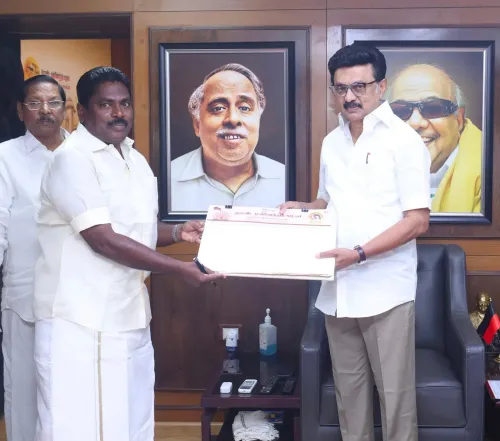
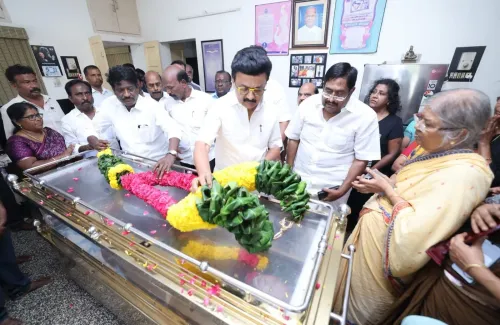
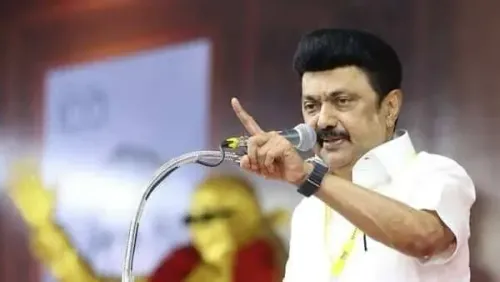
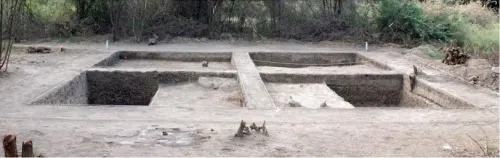
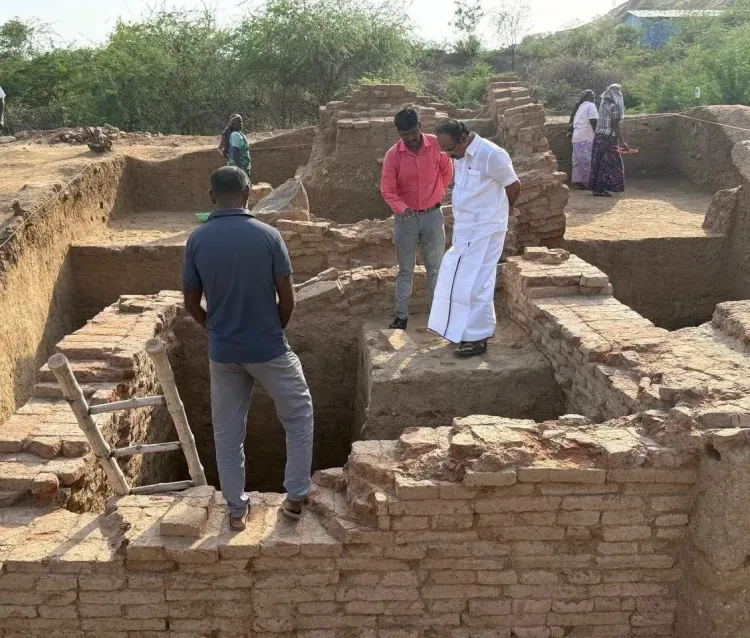
Stalin's post, written in Tamil, opens with a rallying declaration: 'தொடர்ந்து வெளிப்படும் தமிழர் தொன்மையின் தடங்களைப் பாதுகாப்போம்!' ('Let us protect the traces of Tamil antiquity that continue to emerge!'). He invokes three landmark finds — Keezhadi, Porunai, and evidence of ancient iron technology — as proof that Tamil civilisation's antiquity is being validated by material evidence. The post was accompanied by four images and tagged with the locations #Tenkasi and #Malaiyadipatti, signalling active field work in southern Tamil Nadu.
Stalin specifically warned that Tamil history and culture are being 'diminished, distorted, and deliberately misdirected by revisionist conspiracies,' and positioned ongoing excavations as the factual counter to such narratives. He called for rewriting the history of the Indian subcontinent 'beginning from the south.'
Policy Backdrop
The Keezhadi excavation, located near Madurai, first began in 2015 under the Archaeological Survey of India and was later expanded with state funding after the DMK returned to power in 2021. The site has yielded Sangam-era artefacts pointing to an urban Tamil settlement, placing Tamil literacy and urban life several centuries earlier than previously acknowledged in mainstream historiography.
The Porunai river valley and iron-age sites in the region have similarly produced finds that Dravidian parties argue establish an independent southern Indian cultural chronology. The DMK government expanded the state archaeology department's budget post-2021 to fund Keezhadi-style digs at multiple new locations, including Tenkasi district and Malaiyadipatti. Stalin's post explicitly demands this work continue regardless of which political formation governs the state.
Stakeholders and Impact
Tamil archaeologists and historians stand to gain institutional backing if excavation funding is ring-fenced from political transitions. Local communities around dig sites in Tenkasi and Malaiyadipatti have been drawn into heritage tourism and documentation efforts, creating economic and cultural stakes beyond academia.
At the national level, the push to 're-write Indian history from the south' is a direct political assertion against what Dravidian parties characterise as a north-centric or Sanskrit-centric reading of Indian antiquity. Stalin's framing — 'Let us draw strength not just to take pride in history but to create new history' — signals that archaeological assertion will remain central to DMK's political identity regardless of electoral outcomes.
What's Next
Attention will now turn to the release of consolidated excavation reports from Tenkasi and Malaiyadipatti, as well as any new state budget allocations for archaeology in the coming fiscal year. Stalin's demand that a 'new government' continue these digs suggests the issue may become a legislative and budgetary flashpoint. The broader ambition — bringing 'many more Keezhadi-like sites' from underground and undersea to public knowledge — points to a sustained, multi-site excavation programme that will shape Tamil Nadu's cultural policy agenda for years ahead.
Point of View
Using archaeology as a shield against charges of historical revisionism from the opposite direction. By demanding that any successor government continue these digs, he is attempting to institutionalise the Dravidian historical narrative beyond the electoral cycle. The invocation of Keezhadi, Porunai, and iron-age finds fits a long pattern of Dravidian parties using state archaeology to assert southern India's civilisational primacy within — and sometimes against — the broader Indian historical canon. The post signals that Tamil cultural assertion will intensify as a political tool heading into the next phase of state and national politics.
NationPress
14 Jul 2026
Frequently Asked Questions
What is the Keezhadi excavation and why is it significant?
Keezhadi is an excavation site near Madurai, Tamil Nadu, that has yielded Sangam-era artefacts pointing to an urban Tamil settlement and evidence of Tamil literacy several centuries earlier than previously documented. It began in 2015 under the Archaeological Survey of India and was later expanded with state funding under the DMK government.
What did M. K. Stalin say about Tamil history on 14 July 2026?
Stalin called for protecting Tamil civilisational sites, demanded continuation of excavations at Keezhadi, Porunai, Tenkasi, and Malaiyadipatti, and warned that Tamil history is being distorted by revisionist narratives. He called for rewriting Indian subcontinent history 'beginning from the south.'
Where are the Tenkasi and Malaiyadipatti excavation sites?
Both Tenkasi and Malaiyadipatti are located in southern Tamil Nadu. Tenkasi is a district in the southernmost part of the state, and Malaiyadipatti is a site associated with ongoing excavations for pre-historic remains, both referenced in recent state archaeology announcements.
What is the Dravidian Model mentioned in Stalin's post?
The Dravidian Model is the DMK's governance framework that emphasises social justice, welfare, and the assertion of a distinct Tamil and Dravidian historical and cultural identity, including state-funded archaeological work to document southern Indian antiquity.
What is the Porunai site in Tamil Nadu?
Porunai refers to a river valley site in Tamil Nadu linked to ancient trade and early iron-age findings. It is one of the key excavation locations cited by the DMK to establish the depth of Tamil civilisation.