Pradhan Backs West Bengal's PM-POSHAN Upgrades
Synopsis
Union Education Minister Dharmendra Pradhan has commended West Bengal for strengthening the PM-POSHAN scheme through enhanced cooking costs, better cook-cum-helper support, and 100% LPG coverage in schools — steps he linked to PM Modi's vision of a prosperous Sonar Bangla.
Key Takeaways
Union Education Minister Dharmendra Pradhan publicly praised West Bengal 's enhancements to the PM-POSHAN midday meal scheme on 14 July 2026 .
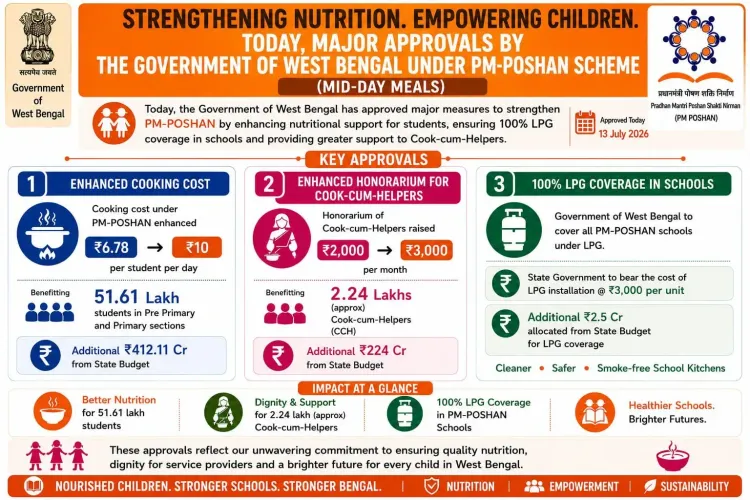
The state has implemented 100% LPG coverage in schools under the scheme, replacing solid fuel use in school kitchens.
Cooking cost norms have been enhanced and support for cook-cum-helpers — the frontline workers who prepare school meals — has been improved.
PM-POSHAN was renamed and revamped from the Mid-Day Meal Scheme in September 2021 with higher financial and nutrition standards.
Pradhan framed the upgrades as contributing to PM Narendra Modi 's stated vision of a Sonar Bangla — a prosperous, aspirational Bengal.
The improvements directly benefit crores of school children and the largely female cook-cum-helper workforce across government schools in the state.
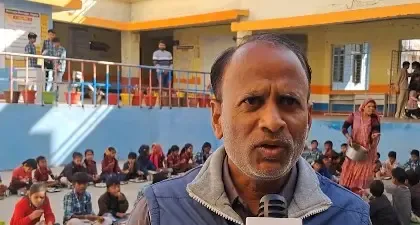
Union Education Minister Dharmendra Pradhan on Tuesday, 14 July 2026, commended the Government of West Bengal for strengthening the PM-POSHAN scheme, citing enhanced cooking costs, improved support for cook-cum-helpers, and 100% LPG coverage in schools as key steps toward better child nutrition and safety.
Context
Pradhan's post on X highlighted three concrete improvements rolled out under the PM-POSHAN framework in West Bengal: revised cooking-cost norms, better remuneration and support for cook-cum-helpers, and full liquefied petroleum gas coverage across government schools. He described these as measures that will 'go a long way in improving nutrition, safety and the overall well-being of our children.'
The minister also invoked Prime Minister Narendra Modi's articulated vision of a Sonar Bangla — a prosperous Bengal — framing the state's initiative as aligned with that broader aspiration for the region's people.
Policy Backdrop
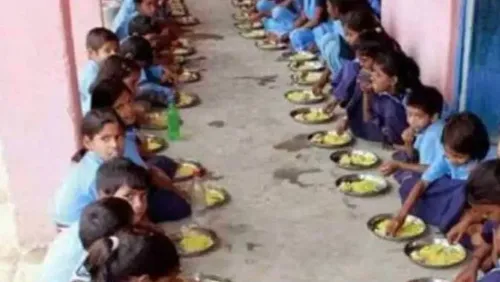
The PM-POSHAN scheme — formally known as the Pradhan Mantri Poshan Shakti Nirman scheme — is a centrally sponsored programme that provides hot cooked meals to children in government and government-aided schools. It is the successor to the long-running Mid-Day Meal Scheme, which was revamped and renamed in September 2021 with higher financial norms and upgraded nutrition standards.
The scheme covers crores of schoolchildren across India, with states responsible for day-to-day implementation while the Centre sets financial and nutritional benchmarks. Cooking cost revisions and LPG adoption are critical levers: they directly affect meal quality, hygiene, and the working conditions of the largely female workforce of cook-cum-helpers who prepare meals daily.
The National Education Policy has explicitly linked health and nutrition outcomes to learning achievement, making mid-day meal quality a stated priority for the education ministry under Pradhan's tenure.
Stakeholders and Impact
The most direct beneficiaries are school children enrolled in government schools across West Bengal, for whom consistent, nutritious meals can significantly affect attendance, concentration, and long-term health indicators. Equally affected are the state's cook-cum-helpers — frontline workers whose wages and working conditions are shaped by the financial norms the state applies.
The shift to 100% LPG coverage eliminates dependence on solid biomass fuels in school kitchens, reducing indoor air pollution and fire hazards — a safety upgrade with direct implications for both the helpers and the children they serve. Enhanced cooking costs mean schools can procure better-quality ingredients, closing a long-standing gap between the scheme's nutritional targets and ground-level delivery.
What's Next
The education ministry is expected to track state-level progress reports on LPG adoption and cooking-cost implementation as part of its periodic PM-POSHAN review cycle. West Bengal's upgrades could be cited as a model during the next inter-ministerial review or in parliamentary discussions on scheme utilisation during the upcoming session.
Pradhan's public acknowledgement signals that the Centre views state-level enhancements favourably and may use such examples to encourage other states to align their own implementation norms closer to the scheme's intended standards — underscoring the importance of centre-state coordination in delivering on school welfare commitments.
Point of View
The minister reinforces a pattern of using welfare programme milestones as political signalling ahead of future electoral cycles. The emphasis on LPG coverage and cook-cum-helper welfare also reflects the Centre's broader strategy of tying visible, tangible welfare deliverables to its education and nutrition agenda. Whether this translates into sustained inter-state benchmarking or remains a one-off commendation will be worth watching in the ministry's next scheme review.
NationPress
14 Jul 2026
Frequently Asked Questions
What is the PM-POSHAN scheme?
PM-POSHAN, or Pradhan Mantri Poshan Shakti Nirman, is a centrally sponsored scheme that provides hot cooked midday meals to children in government and government-aided schools across India. It replaced the earlier Mid-Day Meal Scheme after a revamp in September 2021 with upgraded nutrition and financial norms.
What changes has West Bengal made to PM-POSHAN?
West Bengal has enhanced cooking cost norms under PM-POSHAN, improved support and conditions for cook-cum-helpers who prepare school meals, and achieved 100% LPG coverage in schools — eliminating the use of solid biomass fuels in school kitchens.
Why is 100% LPG coverage in schools important?
Full LPG coverage eliminates indoor air pollution and fire hazards associated with solid fuel cooking in school kitchens, improving safety for cook-cum-helpers and children alike while also enabling more hygienic and consistent meal preparation.
Who are cook-cum-helpers in the midday meal scheme?
Cook-cum-helpers are the frontline workers — predominantly women — employed in government schools to prepare and serve midday meals under the PM-POSHAN scheme. Their wages and working conditions are governed by financial norms set under the centrally sponsored framework.
What is Dharmendra Pradhan's role in education policy?
Dharmendra Pradhan is India's Union Minister of Education and a senior BJP leader. He oversees national education policy, including centrally sponsored schemes like PM-POSHAN, and has been a key figure in implementing the National Education Policy introduced in 2020.