Mandaviya Addresses BRICS Trade Union Forum in Hyderabad
Synopsis
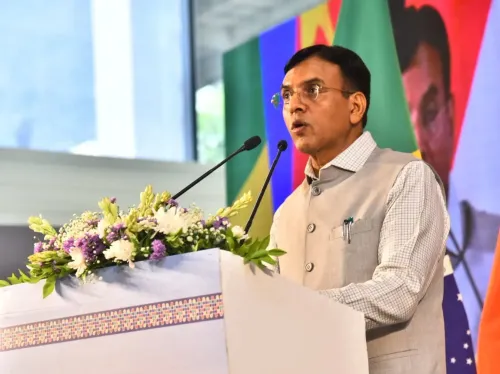
Union Labour Minister Mansukh Mandaviya addressed the BRICS Trade Union Forum Summit in Hyderabad on 14 July 2026, highlighting India's social security reforms under PM Modi and calling for deeper BRICS cooperation to build resilient, human-centric labour markets through stronger tripartite institutions and social dialogue.
Key Takeaways
Mansukh Mandaviya addressed the BRICS Trade Union Forum Summit in Hyderabad on 14 July 2026 .
He highlighted India's progress in expanding social security coverage under PM Narendra Modi .
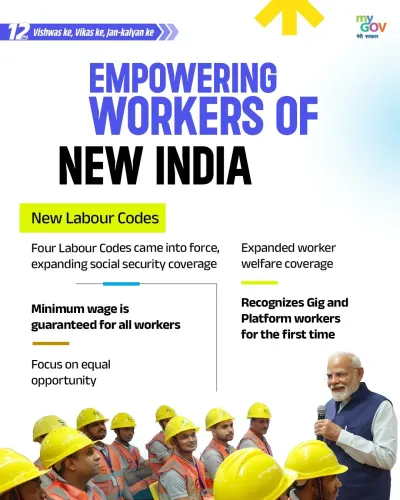
India consolidated 29 central labour laws into four labour codes between 2019 and 2020 , including the Code on Social Security 2020 .
The e-Shram portal , launched in 2021 , registered unorganised sector workers for targeted social security delivery.
Mandaviya called for deeper BRICS cooperation and stronger social dialogue to build resilient labour markets.
Future BRICS labour ministerial meetings will be watched for concrete cooperation agreements on social security and workers' rights.
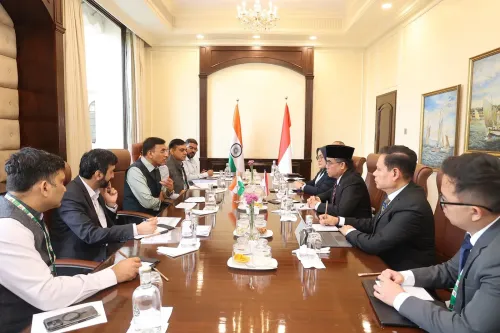
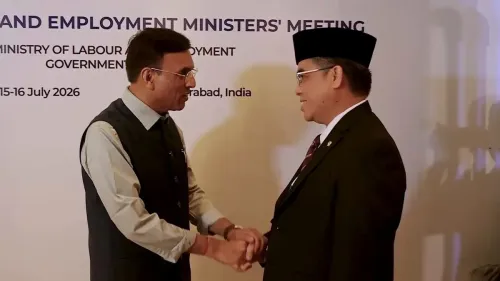
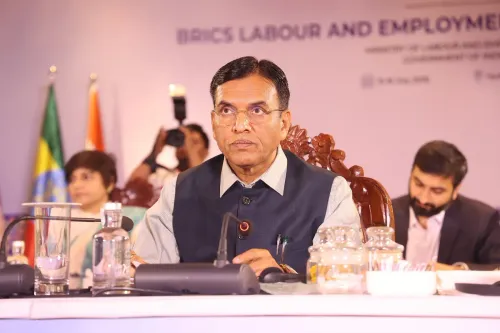
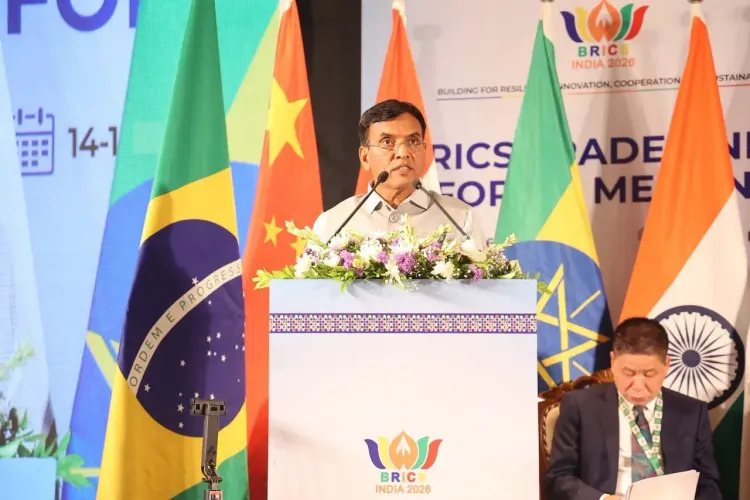
Union Labour and Sports Minister Mansukh Mandaviya addressed the BRICS Trade Union Forum Summit in Hyderabad on Tuesday, 14 July 2026, highlighting India's strides in social security coverage and calling for deeper cooperation among BRICS nations to build resilient labour markets.
Context
Speaking at the summit, Mandaviya underscored the importance of tripartite partnerships — bringing together governments, employers, and trade unions — as the foundation for shaping the future of work. He credited the progress in social security expansion to the leadership of Prime Minister Narendra Modi, framing India's record as a model worth sharing with BRICS partners. The minister emphasised that 'deeper BRICS cooperation and stronger social dialogue are essential for building resilient labour markets and a human-centric future of work.'
Hyderabad, the capital of Telangana, has increasingly hosted high-profile international summits, and the BRICS Trade Union Forum gathering continues that pattern as India deepens its engagement with the bloc on labour and social policy.
Policy Backdrop
India's domestic labour reform push provides the backdrop for Mandaviya's remarks at the forum. Between 2019 and 2020, the central government consolidated 29 central labour laws into four labour codes, including the Code on Social Security 2020, which was designed to extend coverage to gig workers and those in the unorganised sector.
The launch of the e-Shram portal in 2021 further operationalised this ambition, creating a national database of unorganised sector workers to facilitate targeted delivery of social security benefits. These measures form the core of what Mandaviya projected to BRICS counterparts as India's tripartite institutional framework in action.
Stakeholders and Impact
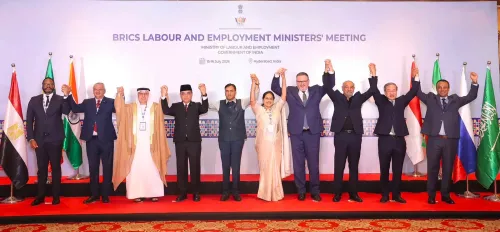
The forum brought together trade union representatives and labour ministry officials from across the BRICS grouping — comprising Brazil, Russia, India, China, South Africa, and newer member states — making it a significant multilateral platform for aligning labour standards and social security frameworks. For India's vast unorganised workforce, greater BRICS-level cooperation on social dialogue could translate into shared best practices and potentially stronger protections.
Domestic trade unions, which participate in India's tripartite consultation mechanisms, stand to gain visibility and leverage if BRICS labour cooperation agreements are formalised. The minister's address signals that New Delhi intends to use such platforms to project its reform narrative internationally while seeking reciprocal learning from partner economies.
What's Next
Attention will now turn to whether the BRICS Trade Union Forum Summit produces a joint declaration or cooperation framework on labour market resilience and social security portability. On the domestic front, the implementation status of the four labour codes across Indian states remains a key variable — several states are yet to finalise rules — and any momentum generated at the Hyderabad summit could add political impetus to that process.
Future BRICS labour ministerial meetings will be watched for concrete agreements that move beyond dialogue toward binding or structured cooperation on social security and workers' rights standards.
Point of View
Using a multilateral platform to validate India's domestic reform narrative — particularly the four labour codes and the e-Shram portal — before an audience of emerging-economy peers. The emphasis on tripartite partnership is also a calibrated signal to domestic trade unions, many of whom have been sceptical of the speed and scope of the labour code consolidation. By projecting India as a model of 'human-centric' labour policy within BRICS, the government is simultaneously building soft power and creating external pressure to accelerate state-level implementation of the codes. The forum thus serves a dual purpose: international positioning and domestic political signalling.
NationPress
12 Oct 2026
Frequently Asked Questions
What is the BRICS Trade Union Forum Summit?
The BRICS Trade Union Forum Summit is a multilateral gathering of trade union representatives and labour officials from BRICS member countries — Brazil, Russia, India, China, South Africa, and newer members — held to align labour standards and social security frameworks across the bloc.
What did Mansukh Mandaviya say at the BRICS Trade Union Forum in Hyderabad?
Mandaviya highlighted India's progress in expanding social security coverage under PM Modi, stressed the importance of tripartite partnerships, and called for deeper BRICS cooperation and stronger social dialogue to build resilient labour markets and a human-centric future of work.
What are India's four labour codes?
India consolidated 29 central labour laws into four codes between 2019 and 2020: the Code on Wages, the Industrial Relations Code, the Occupational Safety Code, and the Code on Social Security 2020, the last of which extends coverage to gig and unorganised sector workers.
What is the e-Shram portal?
The e-Shram portal, launched in 2021, is a national database of unorganised sector workers in India, designed to facilitate targeted delivery of social security benefits to those outside the formal employment system.
Why is India engaging with BRICS on labour policy?
India uses BRICS platforms to project its tripartite consultation model and social security reforms as a template for emerging economies, while also seeking best practices from partner nations to strengthen domestic labour market resilience.