M.K. Stalin Opposes Delimitation Bill with Black Flag Protest
Synopsis
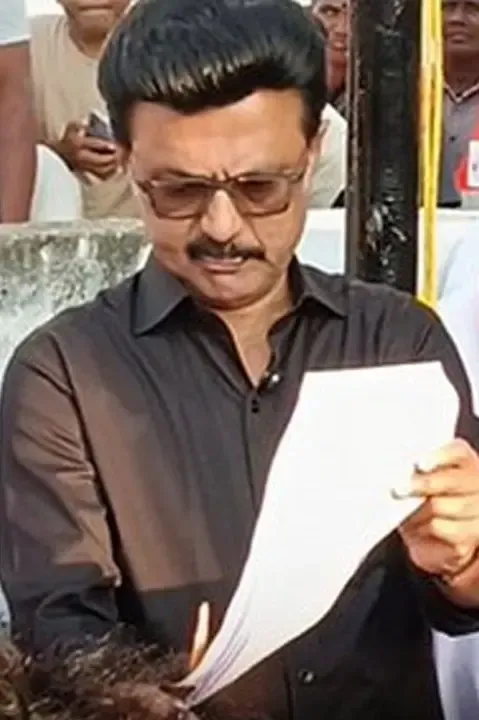
On April 16, Tamil Nadu's CM M.K. Stalin escalated his protest against the Centre's delimitation bill by burning its copy and raising a black flag, urging citizens to join the dissent. This act coincides with a crucial parliamentary session discussing significant legislative changes.
Key Takeaways
Stalin strongly opposes the delimitation bill .
A black flag symbolizes dissent against the proposed legislation.
The protests aim to encourage public participation across Tamil Nadu.
Upcoming parliamentary sessions will address significant legislative changes.
Concerns exist regarding representation shifts favoring northern states.
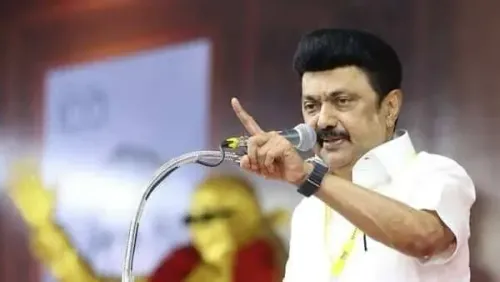
Namakkal, April 16 (NationPress) Tamil Nadu's Chief Minister M.K. Stalin has escalated his resistance against the Centre's proposed delimitation initiative by symbolically setting ablaze a copy of the delimitation bill and raising a black flag.
Leading the charge, Stalin burned the contentious bill in Namakkal, simultaneously hoisting a black flag as part of a statewide protest he organized.
Previously, he had called upon the citizens of Tamil Nadu to display black flags on their rooftops as a sign of dissent, labeling the proposed legislation a “black law” that jeopardizes the state's political representation.
In a related symbolic act, a black flag was also raised outside Stalin’s residence in Chennai.
The Dravida Munnetra Kazhagam (DMK) indicated that this action was designed to solidify the party's staunch opposition and stimulate extensive public engagement.
This protest aligns with the special parliamentary session scheduled from April 16 to 18, during which the Union government is anticipated to present significant legislation, including the Constitution (131st Amendment) Bill, the Delimitation Bill, and amendments concerning Union Territories. The proposed changes aim to redraw parliamentary constituencies and implement a 33 percent reservation for women in the Lok Sabha.
Currently, the Lok Sabha comprises members based on the 1971 Census, with 543 elected representatives out of a possible 550.
Given the substantial growth of India's population since then, the Centre intends to initiate a fresh delimitation process. According to the proposal, the Lok Sabha's strength might increase to approximately 850 members, which would include about 35 seats for Union Territories.
The reforms are also associated with the rollout of women’s reservation ahead of the 2029 general elections, potentially allocating around 280 seats.
Simultaneously, Stalin continued his election campaign in the Namakkal district in anticipation of the April 23 Assembly polls, where voting will occur across Tamil Nadu, with results expected on May 4.
He conducted a roadshow near the Namakkal Uzhavar Sandhai area, campaigning alongside DMK candidate Rani and interacting with farmers, traders, and the public while seeking support for the party’s ‘Rising Sun’ symbol.
This move has provoked significant opposition from southern states, particularly Tamil Nadu, due to concerns that a population-based redistribution of seats would disproportionately benefit northern states and undermine the representation of states that have successfully managed population growth.
Labeling it a threat to the federal balance, Stalin affirmed that Tamil Nadu would vigorously oppose any modifications to representation that would disadvantage the state.
The black flag protests sweeping across Tamil Nadu are viewed as a coordinated display of dissent as Parliament commences discussions on these controversial bills.
Point of View
The actions taken by CM M.K. Stalin reflect significant political resistance against central government initiatives perceived as threatening regional representation. The protests underscore a broader concern about maintaining federal balance in the face of proposed legislative changes, particularly in states with stable population growth.
NationPress
19 Sept 2026
Frequently Asked Questions
What is the delimitation bill?
The delimitation bill aims to redraw the boundaries of parliamentary constituencies based on updated population data, which could affect representation in the Lok Sabha.
Why is M.K. Stalin opposing the delimitation bill?
Stalin opposes the bill because he believes it threatens Tamil Nadu's political representation and could favor northern states in seat distribution.
What does the black flag symbolize in this protest?
The black flag symbolizes dissent and serves as a protest against the proposed legislation, which many view as unfavorable to Tamil Nadu's interests.
When is the parliamentary session discussing the delimitation bill?
The special parliamentary session is scheduled from April 16 to 18.
What are the potential implications of the delimitation exercise?
The delimitation exercise may lead to an increase in Lok Sabha members and could implement a reservation for women, fundamentally altering political dynamics.