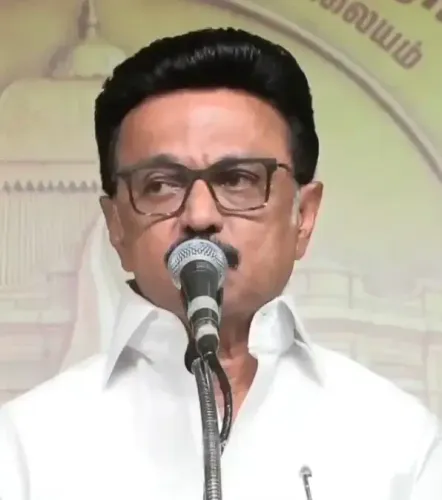
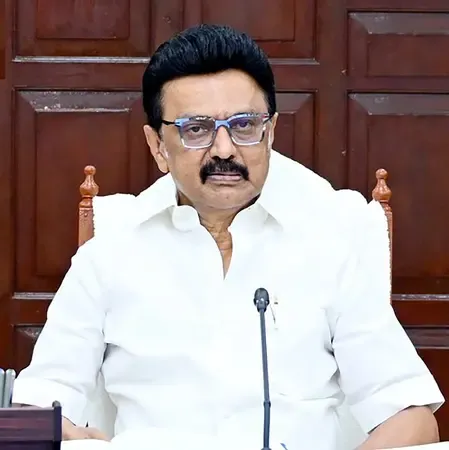
Stalin Defends Naan Mudhalvan, Warns Shutdown Harms TN Youth

Synopsis
Tamil Nadu Chief Minister M. K. Stalin on June 20, 2026, publicly defended his Naan Mudhalvan education scheme, saying its achievements are 'archived in people's hearts' and cannot be erased. He warned that shutting the programme would block the growth of the state's youth.
Key Takeaways
Stalin posted on June 20, 2026 defending the Naan Mudhalvan scheme after apparent changes to its social-media pages.
The scheme was launched in March 2022 to provide career counselling, competitive-exam coaching and skill training to Tamil Nadu students.
Stalin has championed the slogan 'படிங்க, படிங்க, படிங்க' ('Study, study, study') throughout his tenure since May 2021 .
He warned that scaling back the scheme would 'stifle the growth of Tamil Nadu's youth.' The scheme has reached lakhs of students annually through district-level centres and an online portal.
State budget allocations for 2026-27 and any administrative orders on the scheme's status are the next key indicators to watch.
DMK president and Tamil Nadu Chief Minister M. K. Stalin on Saturday, June 20, 2026, sharply defended his flagship student welfare scheme Naan Mudhalvan, warning that any move to shut it down would stifle the growth of the state's youth. Posting in Tamil on X, Stalin said that while the scheme's social-media pages may be renamed and old posts deleted, the achievements of the programme and the gratitude of its beneficiaries cannot be erased from public memory.
Translating his post, Stalin wrote: 'நீங்கள் #நான்_முதல்வன் Social Media பக்கங்களின் பெயரை மாற்றலாம்' ('You may rename the Naan Mudhalvan social-media pages. You may delete the posts on them. But the achievements of the Naan Mudhalvan scheme — which turned the dreams of a thousand Jenifers into reality — and the gratitude it earned cannot be deleted from people's hearts. They have been deeply archived there.')
Context
Stalin launched Naan Mudhalvan ('I am the Chief Minister') in March 2022, positioning it as his government's flagship education and skill-development initiative for higher-secondary and college students across Tamil Nadu. The scheme offered career counselling, competitive-exam coaching, and vocational skill training through district-level guidance centres and an online portal, reaching lakhs of students annually.
The Chief Minister has repeatedly used the phrase 'படிங்க, படிங்க, படிங்க' ('Study, study, study') as a personal rallying call throughout his five-year tenure, framing education as the cornerstone of the DMK's Dravidian-model governance. His Saturday post invoked that slogan directly, calling Naan Mudhalvan the institutional expression of that philosophy.
Policy Backdrop
Since the DMK returned to power in May 2021, the Stalin administration has prioritised large-scale student welfare as a political and policy signature. Naan Mudhalvan sits alongside a cluster of access-focused schemes aimed at government and aided-institution students who lack private coaching resources.
The scheme's social-media presence — pages on platforms such as Instagram and Facebook — served as a key outreach tool, publicising success stories of beneficiaries. Stalin's reference to a beneficiary named Jenifer is emblematic of the programme's framing: first-generation learners from modest backgrounds who cleared competitive examinations with scheme support. The post implies these pages have been or are being altered, though the specific administrative action prompting the post remains unverified.
Stakeholders and Impact
The primary stakeholders are Tamil Nadu's student and youth population, particularly those enrolled in government colleges and higher-secondary institutions who depend on state-funded coaching and career guidance. Any disruption to scheme operations or its digital infrastructure would directly affect access to these services.
Opposition parties and civil-society groups focused on education equity are likely to track any administrative orders concerning the scheme's continuation or restructuring. Stalin's post, framed as a public defence, signals that the DMK intends to treat Naan Mudhalvan as a political red line ahead of future electoral cycles.
What's Next
Attention will now turn to Tamil Nadu's state budget allocations for 2026-27 and any government orders clarifying the scheme's administrative status. Stalin's combative tone suggests the DMK is prepared to contest any move — administrative or political — that scales back the programme.
The episode also underscores a broader pattern in which social-media presence and digital branding of welfare schemes have become contested political terrain in Indian state politics, with governments and rivals alike treating scheme visibility as an extension of electoral messaging.
Point of View
Using a single beneficiary's story — 'Jenifer' — to humanise a bureaucratic dispute over a scheme's social-media pages and convert it into a narrative about class access and aspiration. By invoking his five-year education mantra and calling Naan Mudhalvan his 'dream scheme,' he is signalling that any rollback will be framed as an attack on first-generation learners — a potent electoral argument in Tamil Nadu. The episode reflects a wider Indian pattern in which welfare-scheme branding has become inseparable from political identity, making even administrative restructuring politically costly. Ahead of the next state electoral cycle, the DMK is clearly intent on defending this ground vigorously.
NationPress
19 Sept 2026
Frequently Asked Questions
What is the Naan Mudhalvan scheme?
Naan Mudhalvan is a Tamil Nadu government education and skill-development programme launched in March 2022 by Chief Minister M. K. Stalin. It provides career counselling, competitive-exam coaching and vocational training to higher-secondary and college students, primarily in government and aided institutions.
Why did MK Stalin post about Naan Mudhalvan on June 20, 2026?
Stalin posted to defend the scheme after its social-media pages appeared to be renamed or have posts deleted. He argued that the programme's achievements and the gratitude of its beneficiaries cannot be erased from public memory.
Who benefits from the Naan Mudhalvan scheme?
The scheme primarily benefits students enrolled in Tamil Nadu's government and government-aided higher-secondary schools and colleges, offering them access to coaching and career guidance that would otherwise require private resources.
What did Stalin mean by 'a thousand Jenifers'?
Stalin used 'Jenifer' as a symbolic name for first-generation learners from modest backgrounds who cleared competitive examinations with support from the Naan Mudhalvan scheme, arguing that the programme has transformed the futures of thousands of such students.
What happens next with the Naan Mudhalvan scheme?
Observers will watch Tamil Nadu's state budget allocations for 2026-27 and any government orders on the scheme's continuation or restructuring to understand its future direction.