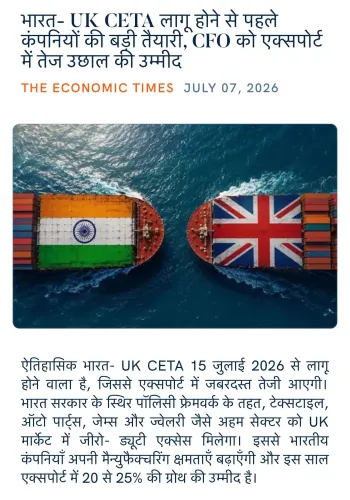
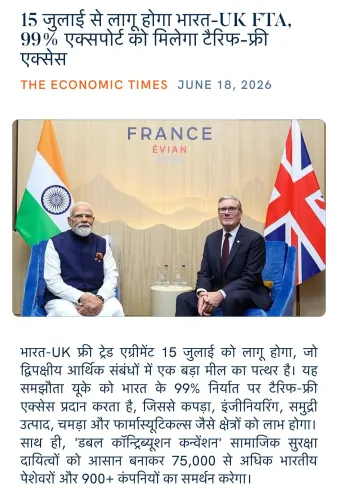
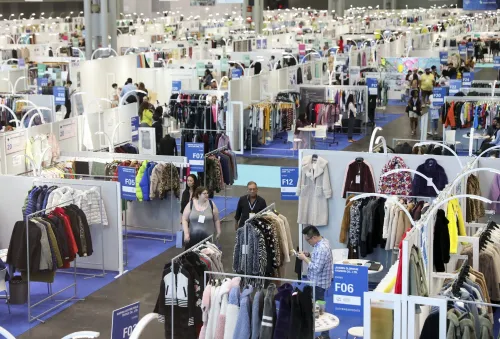
Giriraj Singh: India-UK CETA to give textiles zero-duty UK access
Synopsis
Union Textiles Minister Giriraj Singh announced that the India-UK CETA will provide Indian textile products with zero-duty access to the British market, crediting Prime Minister Modi's leadership for the 'historic' deal aimed at boosting exports, investment and employment.
Key Takeaways
Union Textiles Minister Giriraj Singh announced the India-UK CETA on 19 June 2026 , calling it a historic agreement for the textile sector.
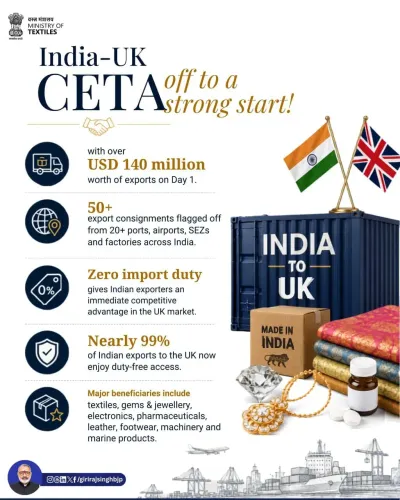
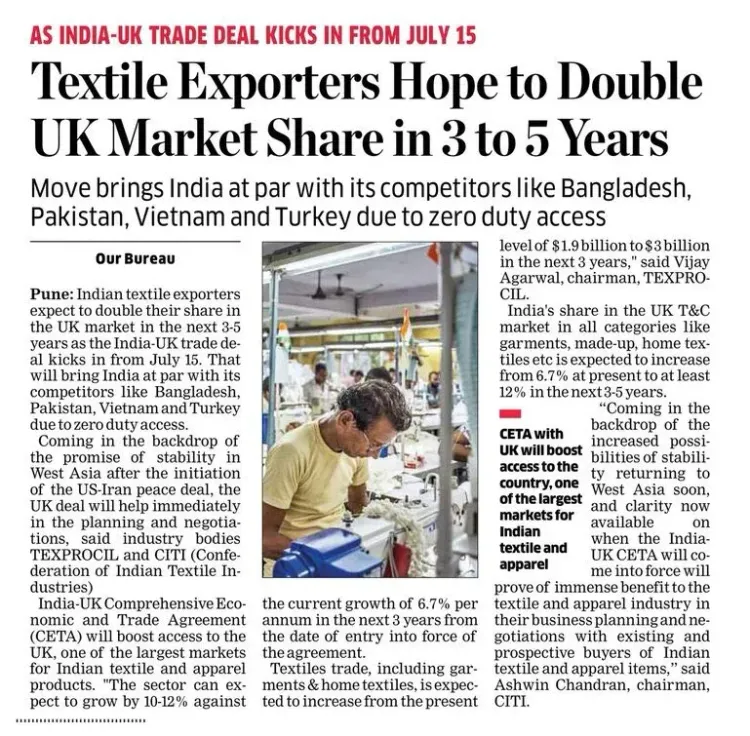
The agreement is expected to provide zero customs duty access for Indian textile products in the United Kingdom .
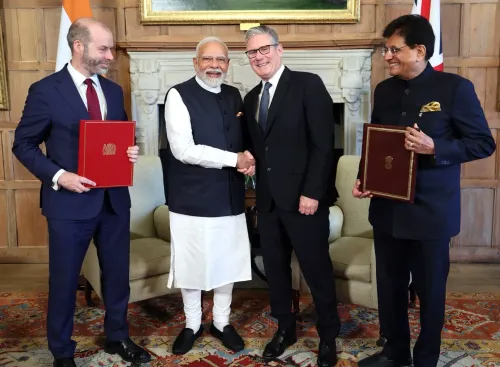
Singh credited Prime Minister Narendra Modi 's leadership for the conclusion of the deal.
India and the UK first launched free trade agreement negotiations in January 2022 following Brexit.
The deal is framed as advancing the goals of Make in India , Atmanirbhar Bharat , and Viksit Bharat .
Parliamentary ratification and release of product-specific tariff schedules remain pending in both countries.
Union Textiles Minister Giriraj Singh on Friday, 19 June 2026 said the India-UK Comprehensive Economic and Trade Agreement (CETA) will open new avenues for the Indian textiles sector, with the deal set to grant Indian textile products zero-duty access to the British market once it comes into force.
Context
Posting on X, the minister stated — 'भारत-यूके व्यापक आर्थिक एवं व्यापार समझौता भारतीय वस्त्र उद्योग के लिए नई संभावनाओं का द्वार खोलने जा रहा है' — ('The India-UK Comprehensive Economic and Trade Agreement is set to open the door to new possibilities for the Indian textile industry'). He added that zero customs duties on Indian textile exports to the United Kingdom would boost exports and strengthen India's global competitiveness.
Singh credited the agreement to the leadership of Prime Minister Narendra Modi, calling it a 'historic' accord that would give fresh momentum to investment, employment and industry.
Policy Backdrop
India and the United Kingdom formally launched negotiations for a bilateral free trade agreement in January 2022, following the UK's exit from the European Union. The talks, which covered goods, services and investment, spanned several rounds across multiple years before culminating in the present agreement.
Textiles have been a focal point in these negotiations because the sector is among India's most employment-intensive export industries. India has actively pursued preferential trade agreements with multiple partners since 2014 to diversify export markets, with textiles consistently highlighted as a priority alongside schemes such as Make in India and Atmanirbhar Bharat.
Stakeholders and Impact
Indian garment manufacturers and textile exporters stand to be the most immediate beneficiaries if preferential or zero-duty access to the UK market is confirmed under the final tariff schedules. The United Kingdom is one of the significant destination markets for Indian apparel and home-textile products.
The minister framed the deal as a step toward realising the vision of a 'Viksit Bharat' (Developed India) and a self-reliant economy, echoing the government's broader narrative of linking trade diplomacy to domestic industrial growth and job creation.
What's Next
The agreement must still navigate parliamentary ratification processes in both countries, and product-specific tariff schedules will need to be publicly released before the extent of duty concessions on individual textile lines can be confirmed. Industry bodies and exporters are expected to closely track the rollout of the tariff architecture to assess the full commercial benefit.
If the preferential access terms are as broad as outlined, the deal could meaningfully shift India's share in the UK textile import basket, particularly at a time when global supply-chain diversification is accelerating.
Point of View
However, carries a caveat: product-specific tariff outcomes will only become clear once the full schedule is published, and the timeline cited in the post has not been independently verified. How quickly the ratification process moves in both parliaments will determine whether the commercial benefits materialise for exporters on the ground.
NationPress
19 Sept 2026
Frequently Asked Questions
What is the India-UK CETA and how does it affect textiles?
The India-UK Comprehensive Economic and Trade Agreement (CETA) is a bilateral trade deal covering goods, services and investment. According to Union Textiles Minister Giriraj Singh, it is expected to grant Indian textile products zero-duty access to the British market, which could significantly boost Indian textile exports.
When did India and the UK start free trade agreement negotiations?
India and the United Kingdom formally launched free trade agreement negotiations in January 2022 , following the UK's departure from the European Union.
What did Giriraj Singh say about the India-UK trade deal?
Giriraj Singh said the India-UK CETA would open new possibilities for the Indian textile industry, providing zero customs duty access to the UK market and strengthening India's global competitiveness. He credited Prime Minister Narendra Modi's leadership for the 'historic' agreement.
Will Indian textile exports to the UK become duty-free under this deal?
The minister has stated that Indian textile products will receive zero-duty access to the UK market under the CETA. However, the precise scope of duty concessions will only be confirmed once product-specific tariff schedules are officially released and the agreement is ratified by both countries.
What is Atmanirbhar Bharat and how is it connected to the India-UK trade deal?
'Atmanirbhar Bharat' means 'Self-Reliant India' and is a policy initiative promoted by the Modi government to boost domestic manufacturing and reduce import dependence. Giriraj Singh linked the India-UK CETA to this vision, saying the deal supports India's goal of becoming a developed, self-reliant economy.