Is the Government Focusing on Trade Talks with Various Nations to Enhance Textiles Exports?
Synopsis
The Indian government is actively engaging in trade negotiations with various countries to enhance market access and tariff advantages for textiles exports. This strategic move, emphasized by Minister Jitin Prasad, seeks to boost India's global competitiveness in the textile sector, aiming for substantial export growth by 2030.
Key Takeaways
The Indian government is focused on trade negotiations to boost textile exports.
FTAs and PTAs are being utilized to enhance market access and reduce tariffs.
The UK agreement offers zero-duty access for Indian textiles.
India aims for $100 billion in textile exports and a $350 billion market by 2030.
MMF and technical textiles are at the forefront of industry growth.
New Delhi, Dec 12 (NationPress) The government is emphasizing trade negotiations with multiple countries to secure market access and tariff benefits for India's exports, particularly in textiles, as stated by Minister of State for Commerce and Industry Jitin Prasad during a session in Parliament on Friday.
India has established 15 Free Trade Agreements (FTAs) and 6 Preferential Trade Agreements (PTAs) with its trade partners.
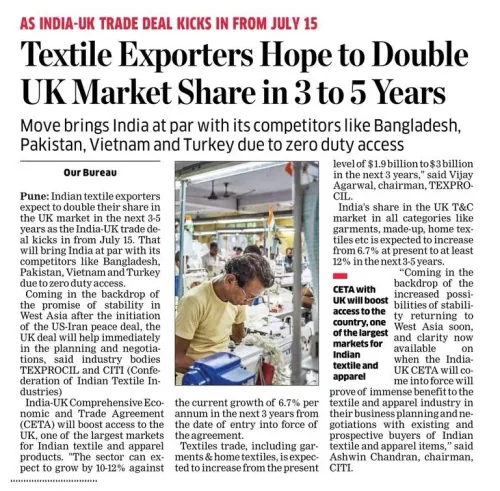
The US, the EU, and the UK represent significant textiles import markets, accounting for over 50% of global imports and about 60% of India's textiles exports.
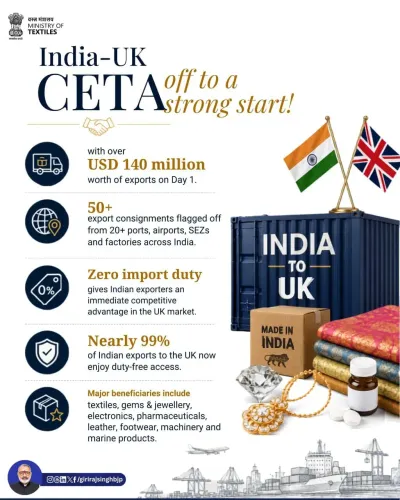
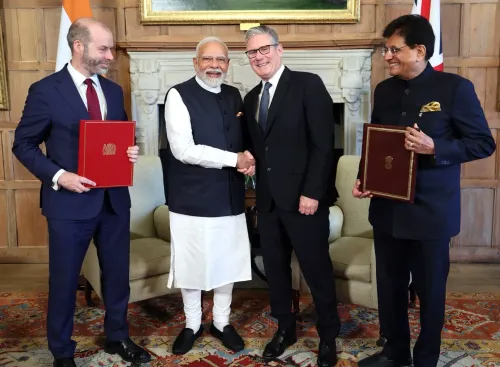
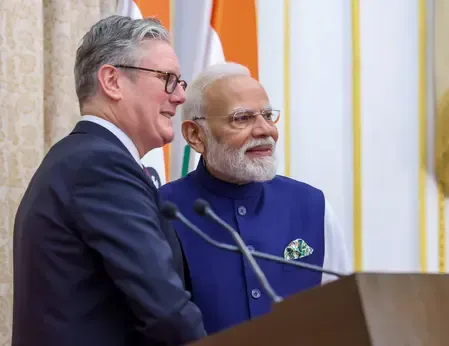
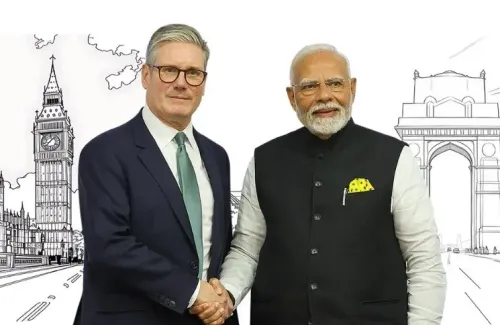
The India-UK Comprehensive Trade and Economic Agreement (CETA) has been finalized and will take effect upon ratification by both nations, the minister noted.
Under this agreement, the UK will grant India zero duty access to all textile lines from the day it comes into force. Ongoing negotiations are in place for an India-European Union (EU) FTA and a Bilateral Trade Agreement with the US.
"These FTAs and PTAs aim to lower tariff and non-tariff barriers, streamline processes, and tackle structural issues to enhance the competitiveness of Indian exports, including textiles, in partner markets," Prasada mentioned in a written response to a query in the Rajya Sabha.
The minister indicated that the government prioritizes trade discussions with various nations to gain market access and tariff advantages for India's exports.
“The government acknowledges the significance of the EU and US as the largest consumers in the textile sector and recognizes the role of FTAs in enhancing India’s global competitiveness. The commitment to improving the competitiveness of the Indian textile industry through better access to international markets under mutually beneficial trade agreements remains strong,” he emphasized.
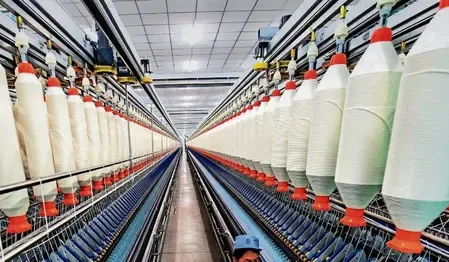
Meanwhile, India's exports of man-made fiber (MMF) saw a growth of 6.5% in 2024-25, while exports of technical textiles surged by over 15%, highlighting the nation’s growing strength in this emerging sector.
Union Minister of State for Textiles Pabitra Margherita noted that the country is striving towards achieving $100 billion in textile exports and a $350 billion textile market by 2030, aligning with the vision for a Viksit Bharat by 2047.
The minister stated that MMF and technical textiles are leading the global transition towards sustainable and advanced materials.
Currently, MMF constitutes nearly 70-75% of the global fiber market, reflecting a significant shift in consumer preferences and industrial applications. “India is responding to this change with determination and assurance,” he added. There is a robust momentum under the PLI scheme for textiles, with 17 newly approved companies pledging Rs 2,374 crore in investments.
Point of View
It is crucial to recognize the government's proactive approach in prioritizing trade negotiations. Such initiatives are essential to enhance India's competitiveness in the global market, especially in the textile sector, which plays a pivotal role in our economy. The emphasis on FTAs and PTAs reflects a strategic vision that aligns with broader economic goals, ensuring that India remains a key player in international trade.
NationPress
23 Sept 2026
Frequently Asked Questions
What are FTAs and PTAs?
FTAs (Free Trade Agreements) and PTAs (Preferential Trade Agreements) are treaties between countries that aim to reduce trade barriers and enhance economic cooperation.
How will the India-UK trade agreement benefit India?
The India-UK Comprehensive Trade and Economic Agreement will provide India with zero-duty access to all textile lines, boosting exports and competitiveness in the UK market.
What is the target for India's textile exports by 2030?
India aims to achieve $100 billion in textile exports by 2030, along with a projected $350 billion textile market.
Why is the textile sector important for India?
The textile sector is vital for India as it contributes significantly to employment, economic growth, and is a major export commodity.
What is the significance of MMF in the global market?
Man-made fiber (MMF) accounts for 70-75% of the global fiber market, indicating a significant shift in consumer demand towards sustainable and advanced materials.