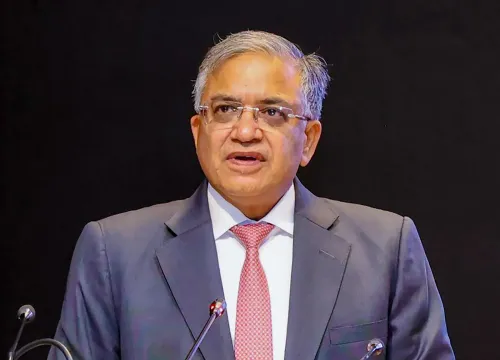
CEC Gyanesh Kumar visits Tirumala Temple after 2026 Assembly polls
Synopsis
After overseeing a landmark 2026 electoral cycle — where BJP broke into West Bengal for the first time and a film star became Tamil Nadu's Chief Minister — Chief Election Commissioner Gyanesh Kumar offered prayers at Tirumala Venkateswara Temple, a quiet moment following one of India's most consequential multi-state polls in years.
Key Takeaways
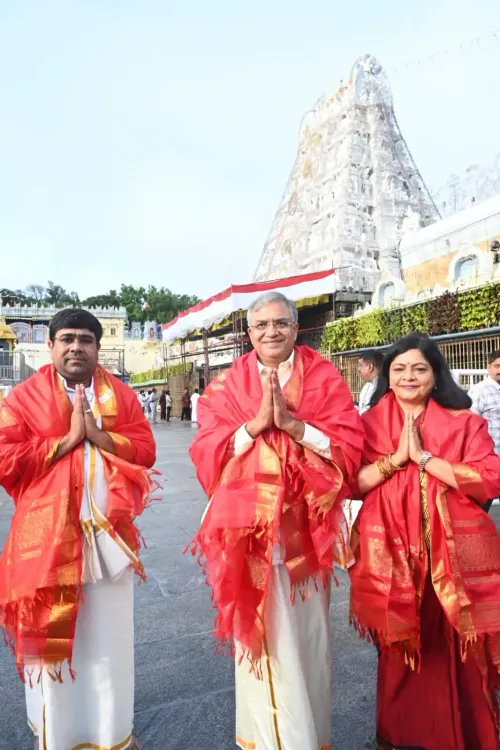
Chief Election Commissioner Gyanesh Kumar visited Tirumala Venkateswara Temple on 10 May 2026 with wife Anuradha Kumar after the 2026 Assembly elections .
Results for all five regions — West Bengal, Assam, Kerala, Tamil Nadu, and Puducherry — were declared on 4 May 2026 .
BJP formed government in West Bengal for the first time, with Suvendu Adhikari as Chief Minister.
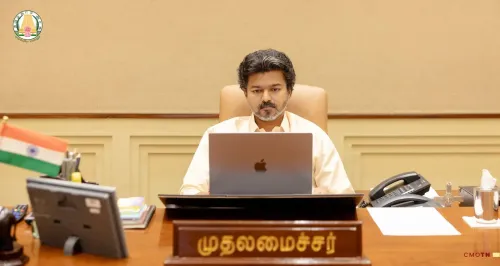
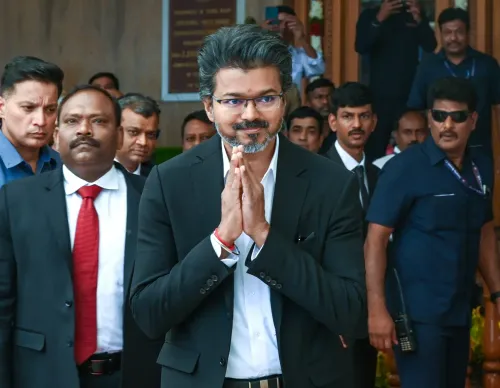
Joseph Vijay became Tamil Nadu Chief Minister , breaking Dravidian party dominance.
BJP retained Assam under Himanta Biswa Sarma ; UDF swept Kerala ; NDA retained Puducherry under N.
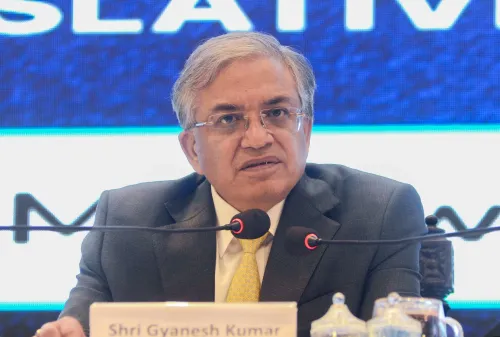
Chief Election Commissioner Gyanesh Kumar on Sunday, 10 May 2026, visited the revered Tirumala Venkateswara Temple in Tirupati, Andhra Pradesh, accompanied by his wife Anuradha Kumar, to offer prayers to Lord Sri Venkateswara Swamy following the successful and peaceful conduct of the 2026 Assembly elections across West Bengal, Assam, Kerala, Tamil Nadu, and Puducherry.
A Visit After a Landmark Electoral Exercise
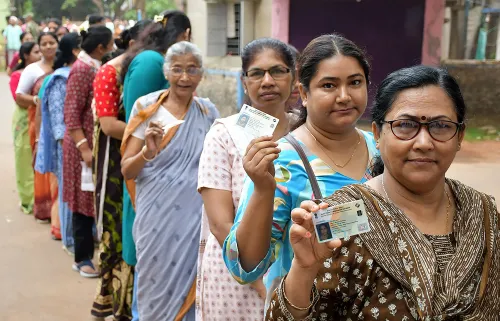
The Chief Election Commissioner's temple visit came days after overseeing one of the largest electoral exercises of the year. The 2026 Assembly elections were conducted in multiple phases throughout April, with results declared on 4 May 2026. The polls drew nationwide attention owing to their high political stakes, with both national and regional parties fielding intense contests across all five regions.
Key Election Outcomes Across Five Regions
In a historic outcome, the Bharatiya Janata Party (BJP) formed the government in West Bengal for the first time, ending the long-standing rule of the All India Trinamool Congress (TMC). Suvendu Adhikari was sworn in as Chief Minister, marking a seismic shift in the state's political landscape.
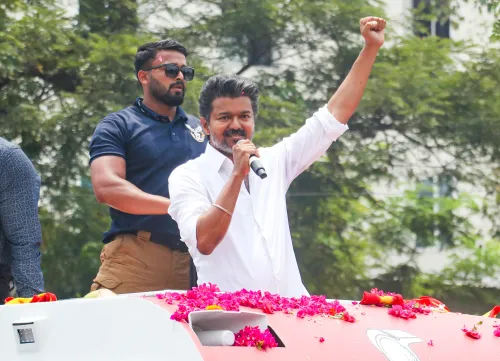
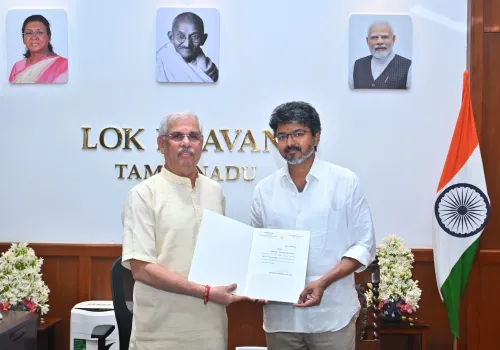
In Tamil Nadu, actor-turned-politician C. Joseph Vijay emerged as a significant political force and assumed office as Chief Minister, marking a notable departure from the state's traditionally Dravidian party-dominated politics.
The BJP retained power in Assam under incumbent Chief Minister Himanta Biswa Sarma, overcoming anti-incumbency to secure a fresh term in office.
In Kerala, the Congress-led United Democratic Front (UDF) swept the Left Democratic Front (LDF), which had served two consecutive stints. Notably, the BJP managed to re-enter the state Assembly, winning three seats.
In Puducherry, the AINRC-led National Democratic Alliance (NDA) retained power for a second consecutive term under Chief Minister N. Rangasamy.
Election Commission's Role in Smooth Polling
The Election Commission of India (ECI) had announced the poll schedule in March 2026, putting in place extensive security and administrative arrangements to ensure peaceful polling across all five regions. The conduct of elections without major incident was widely noted as a logistical achievement given the geographic and demographic diversity of the states involved.
What Comes Next
With the electoral cycle for this round now concluded, attention turns to the new governments taking shape in these states and their early policy priorities. The ECI's handling of the 2026 polls is expected to serve as a benchmark for upcoming state elections on the calendar.
Point of View
But the elections he oversaw were anything but routine. A BJP government in West Bengal ends one of Indian politics' most entrenched regional hegemonies — a result that will reshape national coalition arithmetic. Meanwhile, C. Joseph Vijay's rise in Tamil Nadu signals that Dravidian identity politics may no longer be a guaranteed electoral moat. What mainstream coverage underplays is the cumulative significance: five states, five distinct political cultures, and outcomes that collectively redraw India's federal power map heading into the next general election cycle.
NationPress
23 Sept 2026
Frequently Asked Questions
Why did CEC Gyanesh Kumar visit Tirumala Venkateswara Temple?
Chief Election Commissioner Gyanesh Kumar visited the Tirumala Venkateswara Temple on 10 May 2026 to offer prayers after the successful and peaceful conduct of the 2026 Assembly elections in West Bengal, Assam, Kerala, Tamil Nadu, and Puducherry. He was accompanied by his wife Anuradha Kumar.
What were the key results of the 2026 Assembly elections?
The BJP formed a government in West Bengal for the first time with Suvendu Adhikari as Chief Minister, ending TMC's long rule. C. Joseph Vijay became Tamil Nadu Chief Minister, BJP retained Assam under Himanta Biswa Sarma, UDF swept Kerala, and the AINRC-led NDA retained Puducherry under N. Rangasamy.
When were the 2026 Assembly election results declared?
The results for all five regions — West Bengal, Assam, Kerala, Tamil Nadu, and Puducherry — were declared on 4 May 2026, following multi-phase voting conducted throughout April 2026.
Who is Suvendu Adhikari and why is his becoming CM significant?
Suvendu Adhikari is the BJP leader who was sworn in as Chief Minister of West Bengal after the 2026 Assembly elections. His appointment is historically significant as it marks the first time the BJP has formed a government in West Bengal, ending the Trinamool Congress's prolonged hold on the state.
How did C. Joseph Vijay become Tamil Nadu Chief Minister?
Actor-turned-politician C. Joseph Vijay emerged as a major political force in the 2026 Tamil Nadu Assembly elections and assumed office as Chief Minister. His rise is considered a significant shift in a state whose politics has long been dominated by Dravidian parties such as the DMK and AIADMK.