How is the India-EU FTA bringing joy to Surat textile traders?
Synopsis
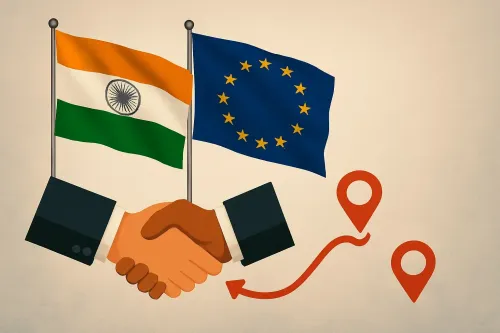
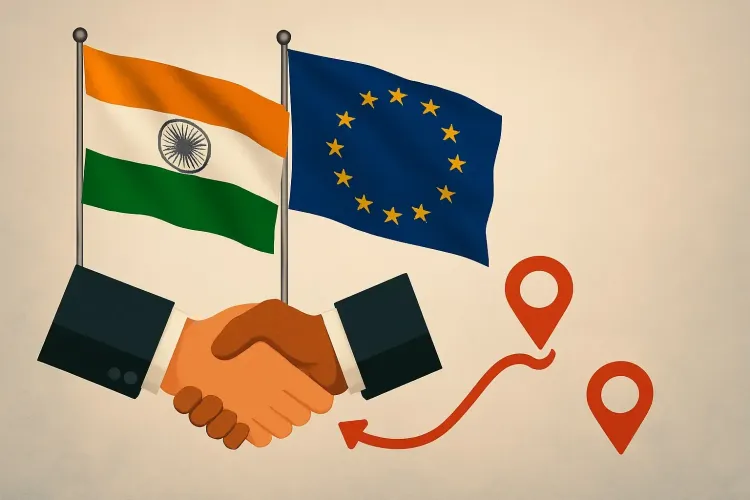
The India-EU Free Trade Agreement is a game-changer for Surat's textile traders, promising better market access, competitive pricing, and a host of new opportunities for growth. This landmark deal is set to transform the landscape of India's textile exports to Europe. Discover how this agreement is reshaping the future for Surat's vibrant textile industry.
Key Takeaways
Surat's textile traders are optimistic about increased exports.
The FTA provides better market access to 27 European countries .
Tariff reductions will allow for more competitive pricing .
Adoption of higher-quality machinery is anticipated.
This deal opens new pathways for international partnerships .
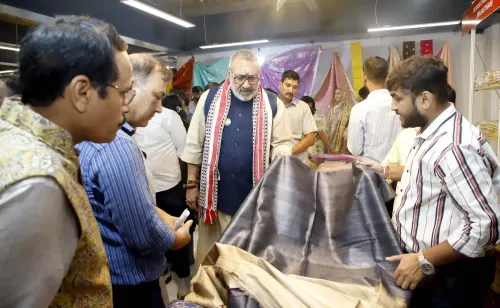
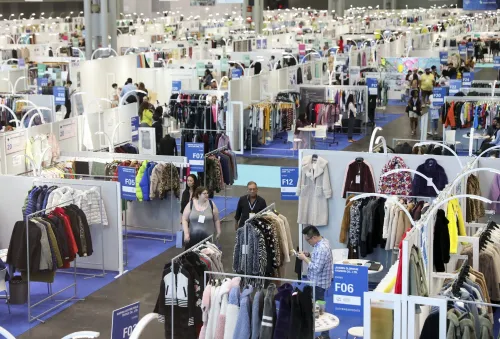
Ahmedabad, Jan 27 (NationPress) The formalization of the Free Trade Agreement (FTA) between India and the European Union has ignited a surge of enthusiasm among textile merchants in Surat, recognized as one of India’s largest textile centers.
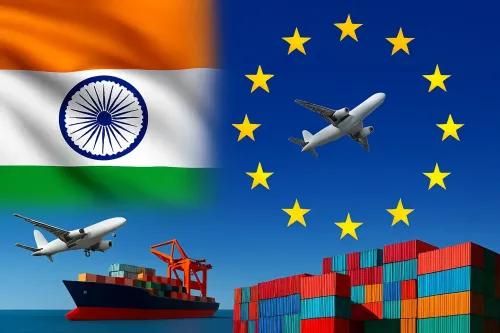
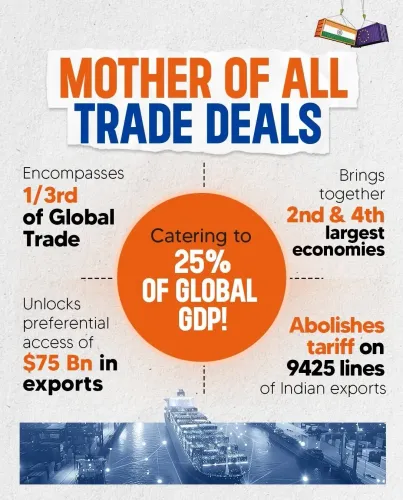
The deal, concluded on Tuesday, is anticipated to considerably enhance exports by granting Indian textile products better access to markets in 27 European nations. Industry leaders believe that the FTA will enable Surat traders to market their goods in Europe at more competitive rates, resulting in increased exports, sales, and profit margins.
As part of the agreement, tariffs on 96.6 percent of European goods entering India will be lowered or removed, while Indian textile exports to Europe will benefit from tariff reductions, thus making them more competitive.
Kailash Hakim, President of the Federation of Textile and Trade Associations, Surat, noted that this agreement would assist the sector in recovering losses incurred due to heightened tariffs in the US market. He expressed gratitude towards Prime Minister Narendra Modi, asserting that the India-EU trade pact would not only mitigate current challenges but also open pathways for growth and international expansion for Surat’s textile industry.
Supporting this sentiment, Sushil Gupta, a local textile entrepreneur, emphasized that the FTA would reinforce India’s export capabilities and provide enduring stability for the sector. He remarked that enhanced access to European markets would empower traders to scale their operations and seek new global partnerships.
Johnny Rathod, another textile trader from Surat, stated that the agreement would motivate the adoption of European-quality machinery, gradually replacing Chinese machines and enabling superior production quality. He described the FTA as a monumental advancement for the textile industry, especially for hubs like Surat that are pivotal in driving India’s textile exports.
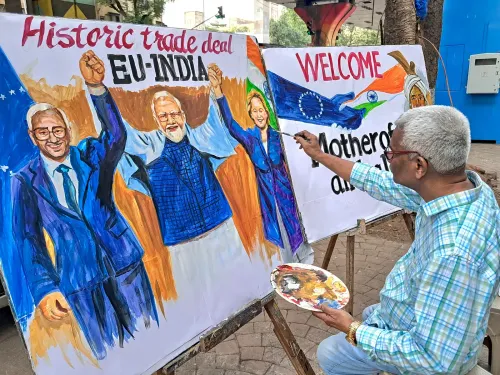
In New Delhi, European Commission President Ursula von der Leyen labeled the agreement as “the mother of all deals,” while Prime Minister Modi referred to it as “historic.” The pact encompasses substantial tariff reductions, including the phased removal of duties on most EU exports such as chemicals, machinery, electrical equipment, aircraft, and spacecraft. Furthermore, import tariffs on motor vehicles, currently as high as 110 percent, will be reduced to 10 percent under a quota of 250,000 vehicles.
India will also decrease tariffs on EU imports like wine, beer, and olive oil. Beyond trade, the agreement is expected to foster a joint security partnership, enhance investment streams, improve market access, and strengthen supply-chain connections between the two regions.
Point of View
This FTA represents a pivotal moment for India's textile industry. The potential for growth, resilience against global market fluctuations, and the creation of new opportunities are vital. This agreement not only strengthens India's export capabilities but also positions Surat as a key player in the global textile market, reinforcing our commitment to economic expansion and international collaboration.
NationPress
2 Oct 2026
Frequently Asked Questions
What is the significance of the India-EU FTA for Surat?
The FTA enhances Surat's textile traders' access to European markets, allowing them to sell products at competitive prices, which is expected to boost exports and profits.
How will tariffs be affected under the new agreement?
The FTA will reduce or eliminate tariffs on 96.6% of European goods entering India and provide tariff concessions for Indian textile exports to Europe.
What impact will the FTA have on production quality?
The FTA is likely to encourage the adoption of European-quality machinery in Surat, gradually replacing lower-quality alternatives and improving overall production standards.
What are the long-term benefits of the FTA for India's textile industry?
The agreement is expected to provide long-term stability, enhance export capabilities, and create opportunities for international partnerships.
Who are the key figures involved in this agreement?
Key figures include Prime Minister Narendra Modi and European Commission President Ursula von der Leyen, both of whom have praised the FTA as a historic milestone.