Centre operationalises four labour codes, replacing 29 old laws

Synopsis
More than five years in the making, India's four labour codes are now fully operational after the Centre notified the corresponding rules in the official gazette. The reform consolidates 29 old labour laws, extends maternity leave to 26 weeks, mandates equal wages, and introduces free annual health check-ups for workers aged 40 and above — the most sweeping overhaul of India's labour framework in decades.
Key Takeaways
The Centre has fully operationalised four labour codes by notifying rules in the official gazette, more than five years after the reforms were introduced.
The codes replace and consolidate 29 existing labour laws into a simplified framework.
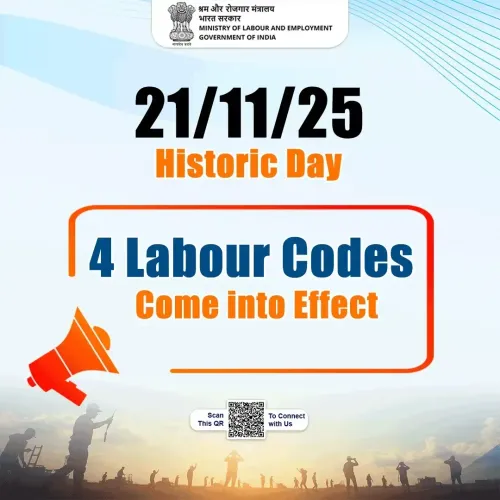
The four codes came into force on 21 November 2025 ; rules were previously absent, limiting implementation.
Free annual health check-ups will now be provided to all workers aged 40 and above across the country.
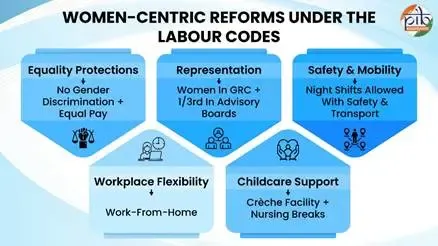
Maternity leave has been extended from 12 weeks to 26 weeks , with work-from-home provisions for women also incorporated.
A National Reskilling Fund has been established to support workers who lose employment and need retraining.
The Centre has fully operationalised India's four labour codes by notifying the corresponding rules in the official gazette, more than five years after the landmark reforms were first introduced to overhaul the country's labour law framework. With the publication of these rules, the new labour regime is now effective across the country.
The Four Labour Codes Explained
The four codes — the Code on Wages, 2019, the Industrial Relations Code, 2020, the Code on Social Security, 2020, and the Occupational Safety, Health and Working Conditions Code, 2020 — had come into force on 21 November 2025. However, according to officials, certain operational aspects could not be implemented earlier due to the absence of notified rules. That gap has now been addressed.
Notably, the labour codes were designed to replace and consolidate 29 existing labour laws into a streamlined, simplified structure — one of the most sweeping overhauls of India's labour legislation in decades.
Key Benefits for Workers
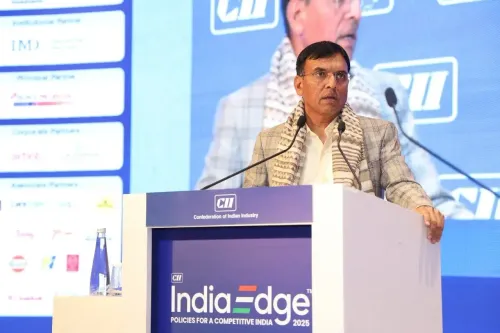
Labour Minister Dr Mansukh Mandaviya launched a nationwide annual health check-up initiative for all workers aged 40 and above under the new codes. These free health check-ups will be conducted every year across the country, marking a significant expansion of worker welfare provisions.
Among the other key provisions, the framework ensures equal wages for men and women workers, extends maternity leave from 12 weeks to 26 weeks, and incorporates work-from-home provisions for women. A National Reskilling Fund has also been established to support workers who lose employment and require fresh training for new opportunities.
What the Government Said
Minister Mandaviya stated that the implementation of the four labour codes reflects Prime Minister Narendra Modi's commitment to ensuring dignity, welfare, and social security for workers across the country. The minister highlighted these reforms as a direct fulfilment of the government's guarantee to the working population.
What This Means Going Forward
The full operationalisation of the codes is expected to bring greater clarity to employer-employee relations, streamline compliance for businesses, and extend formal social security coverage to a broader section of India's workforce — including those in the informal sector. Industry bodies and labour rights groups will closely watch how the rules are implemented on the ground, particularly provisions around reskilling and occupational safety.
Point of View
But the harder question is whether the new framework meaningfully extends protection to the roughly 90% of India's workforce employed informally. The National Reskilling Fund and the annual health check-up initiative are welcome additions, but their real impact will depend entirely on budgetary allocation and administrative reach — details the government has yet to fully disclose.
NationPress
10 May 2026
Frequently Asked Questions
What are the four labour codes that India has operationalised?
The four codes are the Code on Wages (2019), the Industrial Relations Code (2020), the Code on Social Security (2020), and the Occupational Safety, Health and Working Conditions Code (2020). They came into force on 21 November 2025 and are now fully operational following the notification of corresponding rules in the official gazette.
Why did it take more than five years to fully implement the labour codes?
According to officials, certain operational aspects of the codes could not be implemented earlier because the corresponding rules had not been notified. The recent gazette notification of these rules has resolved that gap and made the new labour regime fully effective.
What are the key benefits for workers under the new labour codes?
Key benefits include free annual health check-ups for all workers aged 40 and above, equal wages for men and women, maternity leave extended from 12 weeks to 26 weeks, work-from-home provisions for women, and the establishment of a National Reskilling Fund for workers who lose employment.
How many existing laws do the four labour codes replace?
The four labour codes consolidate and replace 29 existing labour laws, simplifying India's labour law framework significantly.
What is the National Reskilling Fund announced under the labour codes?
The National Reskilling Fund is a provision under the new labour framework designed to support workers who lose their jobs and require fresh training to access new employment opportunities. It is intended to cushion workforce transitions in a changing economy.