Has India Secured 99% Preferential Entry for Exports to the EU?
Synopsis
The India-EU trade agreement marks a historic milestone, granting unprecedented access for over 99% of Indian exports. This transformative deal promises to revolutionize sectors like textiles and agriculture, creating millions of jobs and solidifying India's position in the global market.
Key Takeaways
99% of Indian exports to the EU gain preferential access.
Estimated exports valued at $75 billion set to rise.
Key sectors include textiles, leather, and agriculture .
Empowers MSMEs and enhances global competitiveness.
Facilitates business mobility for skilled professionals.
New Delhi, Jan 27 (NationPress) With the India-EU trade agreement, the nation has achieved remarkable market access for over 99% of its exports by trade value to the EU, enhancing the ‘Make in India’ initiative, as stated by the Commerce Ministry on Tuesday. This latest deal, in conjunction with India’s FTA with the UK and the European Free Trade Association (EFTA), effectively opens the entire European market to Indian businesses, exporters, and entrepreneurs.
This landmark agreement, hailed as the most significant in India’s history, sets the stage for exports worth Rs 6.41 lakh crore ($75 billion) to take flight, with $33 billion in exports from labor-intensive sectors such as textiles, leather, marine products, gems, and jewelry poised to benefit immensely from preferential access under the FTA.
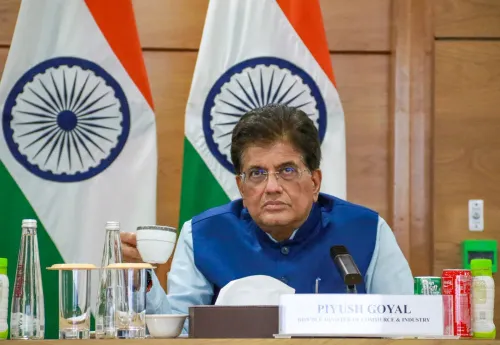
Union Minister for Commerce and Industry Piyush Goyal remarked that the conclusion of the India–EU FTA marks a pivotal achievement in India’s economic diplomacy and global interaction.
"This underscores India’s strategy to forge trusted, mutually beneficial, and balanced partnerships. More than just a typical trade agreement, it embodies a comprehensive partnership with strategic aspects and is among the most impactful FTAs," he noted.
With a youthful and vibrant workforce, along with being one of the fastest-growing major economies, India is well-positioned to utilize this FTA to create jobs, drive innovation, unlock potential across various sectors, and enhance its international competitiveness, according to the minister.
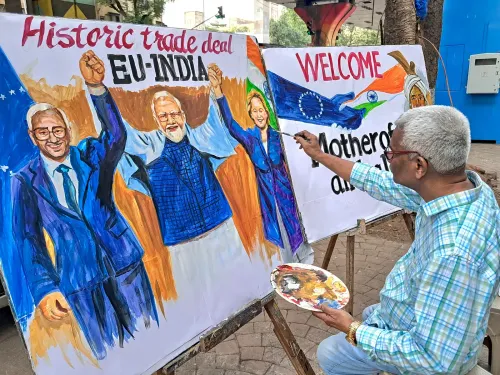
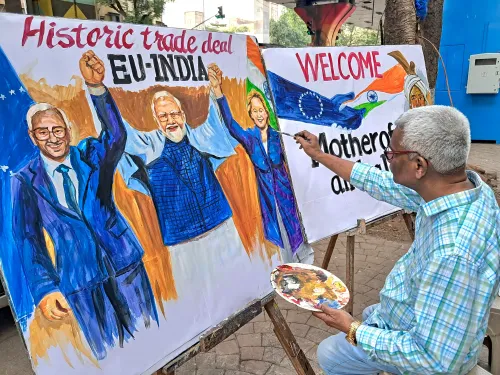
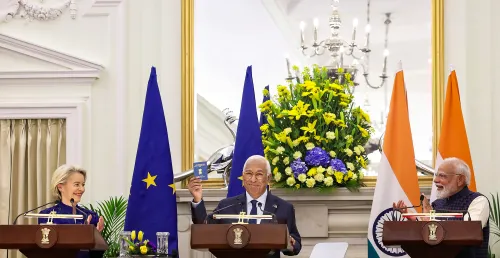
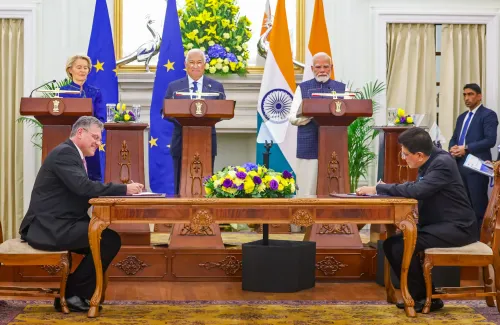
Prime Minister Narendra Modi and European Commission President Ursula von der Leyen jointly announced the completion of the "mother of all deals," marking a significant milestone in India–EU economic relations and trade collaboration with key global partners.
In 2024–25, India’s bilateral trade in goods with the EU reached Rs 11.5 lakh crore ($136.54 billion), with exports valued at Rs 6.4 lakh crore ($75.85 billion) and imports totaling Rs 5.1 lakh crore ($60.68 billion). The trade in services between India and the EU also saw a rise to Rs 7.2 lakh crore ($83.10 billion) in 2024.
"In addition to goods, this agreement unlocks high-value commitments in services, supported by a comprehensive mobility framework that facilitates the seamless movement of skilled Indian professionals," Goyal added.
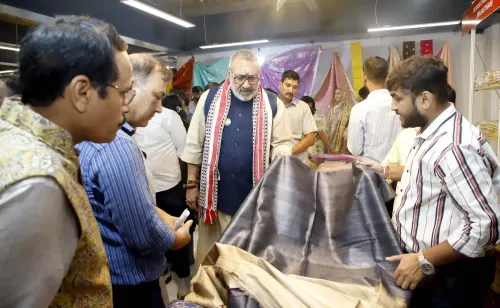
The India–EU FTA provides a significant boost to labor-intensive sectors like textiles, apparel, leather, footwear, marine products, gems and jewelry, handicrafts, engineering goods, and automobiles, reducing tariffs from up to 10% to zero upon the agreement's implementation.
Beyond improving competitiveness, it empowers workers, artisans, women, youth, and MSMEs, while integrating Indian businesses deeper into global value chains and reinforcing India’s position as a key player and supplier in international trade, according to the ministry.
Regarding automobiles, a well-structured quota-based auto liberalization package will enable EU automakers to introduce their models in India at higher price points, while also paving the way for Make in India initiatives and future exports from India.
"Indian consumers will gain from advanced products and increased competition. The reciprocal market access in the EU will also open avenues for India-made automobiles in the EU market," the ministry stated.
Additionally, India’s agricultural and processed food sectors stand to receive a transformative boost under the India–EU FTA, establishing a fair playing field for Indian farmers and agrarian businesses.
"Key commodities such as tea, coffee, spices, fresh fruits and vegetables, and processed foods will enhance their competitiveness, bolstering rural livelihoods, encouraging inclusive growth, and reinforcing India’s status as a reliable global supplier. Sensitive sectors such as dairy, cereals, poultry, soymeal, and certain fruits and vegetables have been prudently safeguarded, balancing export expansion with domestic priorities," the ministry highlighted.
Beyond tariff reductions, the FTA includes measures for addressing non-tariff barriers through enhanced regulatory cooperation, increased transparency, and streamlined customs, Sanitary and Phytosanitary (SPS) procedures, and Technical Barriers to Trade guidelines.
India's assured access to the EU’s 144 subsectors, including IT/ITeS, Professional Services, Other Business Services, and Education Services, will offer a substantial advantage to Indian service providers.
On mobility, the India-EU FTA establishes a facilitative and predictable framework for business mobility covering short-term, temporary, and business travel in both directions.
The EU has also made commitments in 37 sectors/sub-sectors for Contractual Service Suppliers (CSS) and 17 sectors/sub-sectors for Independent Professionals (IP), many of which are of significant interest to India, including Professional Services, Computer and Related Services, Research and Development Services, and Education Services.
According to the ministry, India has also secured a structure for constructive engagement on Social Security Agreements over a five-year horizon, alongside a framework supporting student mobility and post-study work opportunities.
Point of View
I believe this India-EU FTA is a transformative moment for our nation, enhancing our global trade dynamics and fostering economic growth. Such agreements not only strengthen our export capabilities but also empower our workforce, artisans, and small businesses. As we move forward, it is imperative to ensure that the benefits reach every corner of our economy, promoting inclusive growth.
NationPress
30 Sept 2026
Frequently Asked Questions
What is the significance of the India-EU trade deal?
The India-EU trade deal is significant as it provides preferential access for over 99% of Indian exports to the EU, boosting various sectors, creating jobs, and supporting the Make in India initiative.
How much is the estimated export value under this deal?
The estimated export value poised for take-off under this deal is Rs 6.41 lakh crore, equivalent to $75 billion.
Which sectors will benefit the most from the FTA?
Labor-intensive sectors such as textiles, leather, marine products, gems and jewelry are set to gain significantly from the preferential access provided by the FTA.
What are the expected impacts on Indian farmers?
The FTA aims to create a level playing field for Indian farmers and agrarian enterprises, enhancing competitiveness for key agricultural commodities.
How will the FTA affect Indian service providers?
The FTA provides predictable access to 144 subsectors in the EU, significantly benefiting Indian service providers in areas like IT and Professional Services.