Could the India-EU Trade Agreement Unlock Benefits Beyond Goods?

Synopsis
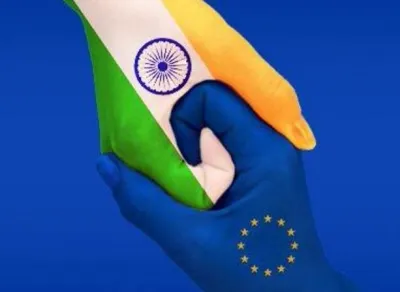
The proposed India-EU Free Trade Agreement is more than just a trade pact; it could reshape economic ties through expanded investments and services, paving the way for significant growth in bilateral trade.
Key Takeaways
India-EU trade could exceed goods in scope.
FDI and services may see significant growth.
The agreement aims to liberalize 92-97% of tariff lines.
Automobile tariffs are expected to be drastically reduced.
Both sides will protect sensitive agricultural sectors.
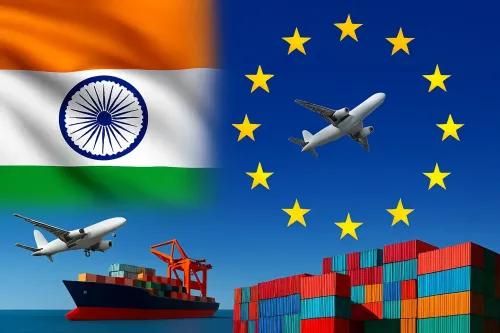
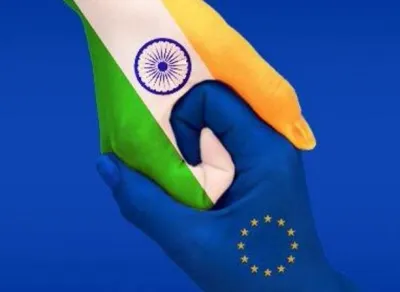
New Delhi, Jan 28 (NationPress) The advantages of the India-EU Free Trade Agreement (FTA) might extend beyond mere goods transactions, potentially leading to increased Foreign Direct Investment (FDI), enhanced services trade, and strategic diversification, according to a report by HSBC Global Investment Research released on Wednesday.
This FTA is hailed as the “mother of all deals”, characterized as balanced, ambitious, and mutually advantageous for both parties. In the fiscal year 2025, trade in goods between India and the EU reached nearly $140 billion.
Analysis indicates that India-EU trade is founded on complementary value chains. The EU primarily exports capital goods and industrial inputs to India, which include high-end machinery, electronic parts, aircraft, and medical devices.
On the other hand, India exports labour-intensive and consumer-centric goods to the EU, such as smartphones, garments, footwear, pharmaceuticals, auto parts, and diamonds, with fuel being the leading export, as stated in the report.
The trade agreement seeks to liberalize 92-97 percent of tariff lines, with officials optimistic about doubling bilateral trade within five years.
Various sectors are set to be liberalized while honoring the red lines established by both sides.
Exports in textiles, leather, marine products, gems, and jewelry stand to benefit significantly from preferential access and the removal of tariffs, according to the report.
India is anticipated to reduce import duties on automobiles dramatically from 110 percent to as low as 10 percent (for a quota of 250,000 units), allowing Indian-made vehicles entry into the EU market.
The report also mentions that tariffs on the EU's wine exports will be slashed from 150 percent to 75 percent and will eventually decrease to 20 percent. Both parties will receive preferential access to each other's agricultural markets while protecting sensitive sectors (e.g., dairy for India and chicken/beef for the EU).
There is a promising outlook for services trade, particularly in financial services, as preferential access is likely. Labour may benefit from more lenient mobility regulations, while investment may see a boost due to supply chain integration and deeper partnerships, especially in defense.
The potential for growth is immense, especially considering that trade in this region constitutes only 0.6 percent of global trade.
Point of View
The India-EU Free Trade Agreement represents a pivotal moment in international trade relations. It aims to bolster economic ties while ensuring that both nations can safeguard their key sectors. As the editor-in-chief, I believe this agreement could lay the groundwork for a prosperous future, benefiting both Indian and European economies.
NationPress
23 Sept 2026
Frequently Asked Questions
What is the India-EU Free Trade Agreement?
The India-EU Free Trade Agreement is a proposed trade deal aimed at enhancing economic relations between India and the European Union, focusing on reducing tariffs and increasing trade in goods and services.
How much is the current trade between India and the EU?
In the fiscal year 2025, trade in goods between India and the EU was approximately $140 billion.
What sectors will benefit from the FTA?
Sectors like textiles, leather, marine products, gems, and jewellery are expected to gain from reduced tariffs and preferential access.
What changes in tariff rates are expected?
India is likely to reduce import duties on automobiles from 110% to as low as 10%, while tariffs on EU wine exports may drop from 150% to 75%, eventually reaching 20%.
What is the potential impact on services trade?
The FTA is expected to enhance services trade through preferential access, particularly in financial services, and facilitate easier mobility for labour.