Giriraj Singh hails India-UK FTA set for July 15 rollout
Synopsis
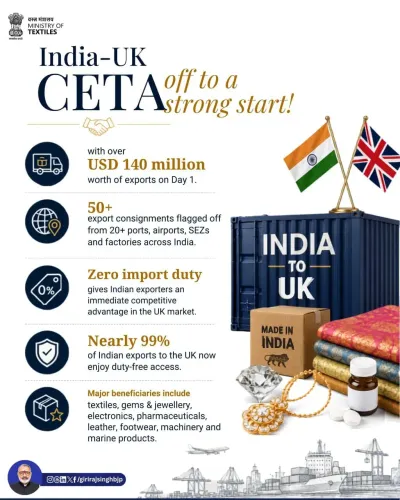
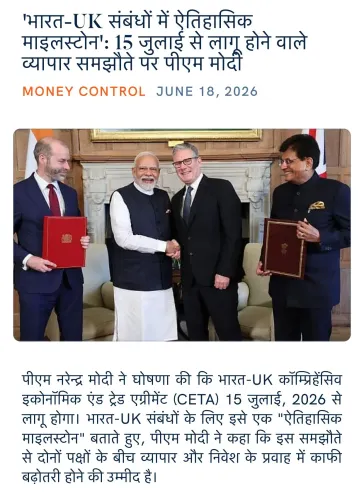
Union Textiles Minister Giriraj Singh announced on June 18, 2026 that the India-UK Free Trade Agreement will come into force on July 15, 2026, giving 99 per cent of Indian exports tariff-free access to the British market — a landmark outcome of negotiations launched in January 2022.
Key Takeaways
The India-UK Free Trade Agreement is set to take effect on July 15, 2026 , as shared by Union Textiles Minister Giriraj Singh .
99 per cent of Indian exports are reported to receive tariff-free access to the United Kingdom under the deal.
Negotiations between India and the UK were formally launched in January 2022 , following Brexit.
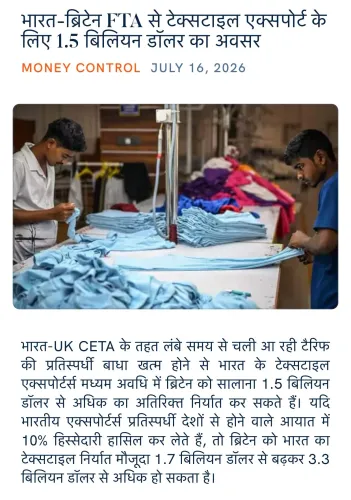
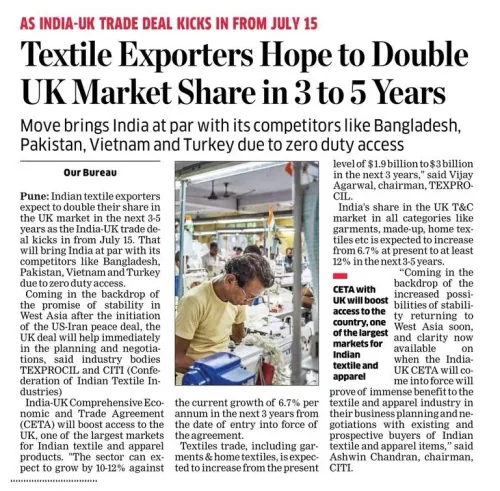
Textile and apparel exporters are among the primary beneficiaries, gaining competitive parity with rivals such as Bangladesh and Vietnam .
The FTA follows India's earlier bilateral trade pacts with the UAE and Australia in 2022 , continuing a pattern of expanding preferential market access.
Official enforcement mechanisms and rules of origin criteria are awaited ahead of the July 15 rollout.
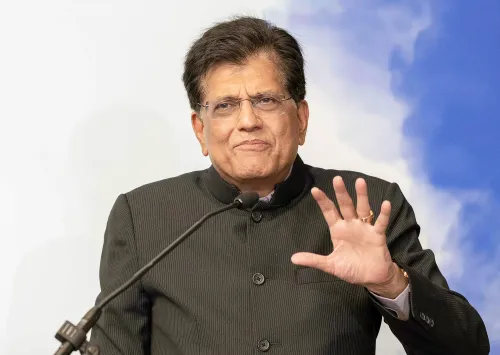
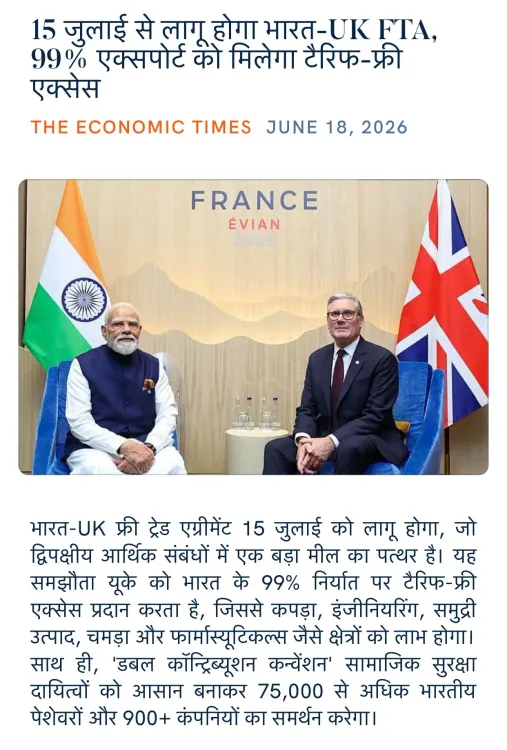
Union Textiles Minister Giriraj Singh on Thursday, June 18, 2026, shared news of the India-UK Free Trade Agreement coming into force on July 15, 2026, describing the deal as one that would open 99 per cent of Indian exports to tariff-free access in the United Kingdom. The minister shared the development via the NaMo App, signalling the ruling dispensation's enthusiasm for the landmark trade pact.
Context
The post, shared in Hindi, announces: '15 जुलाई से लागू होगा भारत-UK FTA, 99% एक्सपोर्ट को मिलेगा टैरिफ-फ्री एक्सेस' — ('India-UK FTA to come into effect from July 15, 99% of exports to get tariff-free access'). For Giriraj Singh, whose ministry oversees one of India's largest labour-intensive export sectors, the agreement carries particular significance: textiles and apparel have long sought preferential access to the British market.
India and the UK formally launched FTA negotiations in January 2022, following Britain's exit from the European Union. The talks, which spanned several rounds across four years, aimed to liberalise trade in goods, services and investment between the two economies.
Policy Backdrop
The India-UK FTA fits into a broader pattern of bilateral trade diplomacy pursued by New Delhi in recent years. India concluded comprehensive trade agreements with the UAE and Australia in 2022, both of which provided early preferential access for goods including textiles, gems and jewellery, and pharmaceuticals. The UK deal, if it delivers the reported 99 per cent tariff-free coverage, would represent one of the most expansive bilateral access commitments India has secured.
For the Textiles Ministry, the agreement is strategically important. The UK is a high-value consumer market for Indian apparel, home furnishings and technical textiles. Elimination or reduction of import duties on these categories could meaningfully improve the price competitiveness of Indian exporters against rivals such as Bangladesh, Vietnam and Sri Lanka, which have historically enjoyed preferential access to the British market through legacy trade arrangements.
Stakeholders and Impact
Indian textile and apparel exporters stand to be among the most direct beneficiaries. Industry bodies representing spinning mills, garment manufacturers and handloom clusters have lobbied for UK market access for years. A tariff-free regime would lower the landed cost of Indian goods in Britain, potentially boosting order volumes and employment in manufacturing hubs across Gujarat, Tamil Nadu, Maharashtra and Uttar Pradesh.
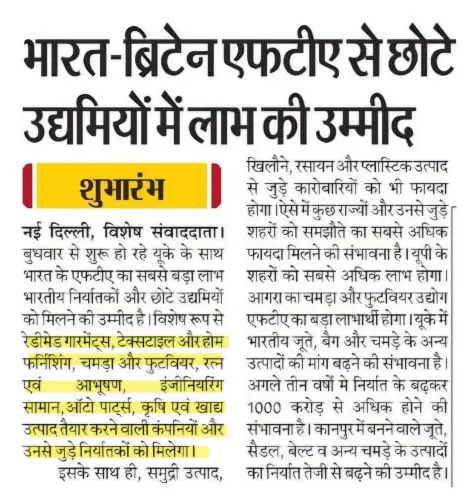
Beyond textiles, Indian manufacturers in engineering goods, chemicals, leather and processed food sectors are also expected to benefit from the broader tariff liberalisation. Services trade — including information technology and professional services — is another dimension of the agreement that Indian industry has keenly watched.
What's Next
With the July 15, 2026 implementation date now publicly flagged by a senior cabinet minister, attention will turn to the official gazette notification, rules of origin criteria, and the enforcement mechanisms that will govern how exporters claim preferential tariff treatment. The parliamentary standing committee on commerce is expected to review the agreement's terms in the coming weeks.
For the BJP-led government, the FTA's rollout ahead of the monsoon session of Parliament provides a tangible economic diplomacy achievement to highlight. The coming months will reveal whether the projected gains in export volumes and job creation materialise on the ground.
Point of View
Preferential access to a high-value Western consumer market addresses a long-standing competitive disadvantage against South and Southeast Asian rivals who have historically benefited from legacy UK trade arrangements. The FTA also fits neatly into the broader 'China-plus-one' supply chain diversification narrative that Indian industry and government have jointly promoted since 2020. The real test, however, lies in implementation: whether rules of origin requirements are workable and whether Indian exporters — particularly small and medium enterprises — can move quickly enough to capture the tariff advantage.
NationPress
19 Sept 2026
Frequently Asked Questions
When does the India-UK Free Trade Agreement come into effect?
The India-UK Free Trade Agreement is set to come into effect on July 15, 2026 , according to an announcement shared by Union Textiles Minister Giriraj Singh on June 18, 2026.
What percentage of Indian exports will get tariff-free access under the India-UK FTA?
99 per cent of Indian exports are reported to receive tariff-free access to the United Kingdom under the terms of the FTA.
When did India and the UK start FTA negotiations?
India and the United Kingdom formally launched FTA negotiations in January 2022 , following the UK's exit from the European Union.
How does the India-UK FTA benefit Indian textile exporters?
Tariff-free access to the UK market would lower the landed cost of Indian textiles and apparel in Britain, improving price competitiveness against rivals such as Bangladesh, Vietnam and Sri Lanka, which have historically had preferential access to the British market.
What other trade deals has India signed recently?
India concluded comprehensive bilateral trade agreements with the UAE and Australia in 2022 , forming part of a broader push to diversify export markets and reduce tariff barriers for labour-intensive sectors.