CM Saini Pledges Strengthening of All Waterlogging-Hit Tanks

Synopsis
Haryana CM Nayab Singh Saini has pledged structural reinforcement of all farm tanks hit by sem waterlogging, targeting canal-belt districts ahead of Rabi sowing — a direct response to a chronic agri-crisis that has cost farmers multiple seasons of crops.
Key Takeaways
CM Nayab Singh Saini announced on 3 November 2026 that all sem -affected diggīs (farm storage tanks) will be structurally reinforced.
Sem — subsoil waterlogging — is a chronic crisis in Haryana's canal-irrigated districts including Kaithal, Jind, Fatehabad and Sirsa .
Reinforcement covers desilting, embankment repair, lining upgrades, and capacity restoration of damaged tanks.
The announcement is timed just before the Rabi sowing window (November-December), when wheat and mustard planting begins.
The post was accompanied by a video, signalling active on-ground government engagement rather than a routine statement.
Waterlogging has quietly swallowed farmland across Haryana for years — and Haryana Chief Minister Nayab Singh Saini has now directly addressed it, announcing on Tuesday, 3 November 2026 that every diggī (farm pond or storage tank) damaged by sem — the chronic subsoil waterlogging that plagues low-lying agricultural belts — will be structurally reinforced.
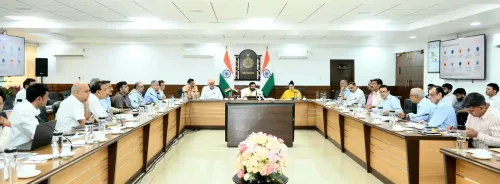
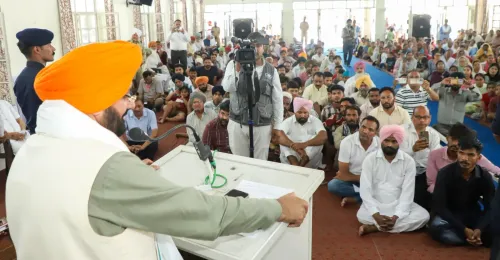
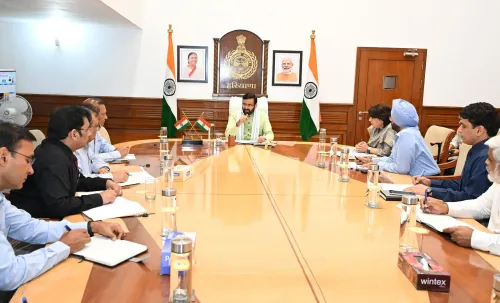
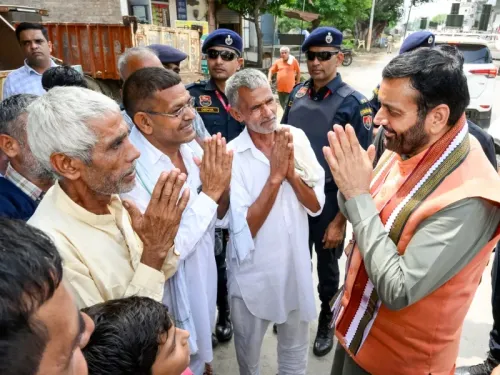
Posting on X with the message 'Sem prabhavit sabhi diggiyōṃ kā sudṛḍhīkaraṇ hogā' — 'All waterlogging-affected tanks will be strengthened' — the Chief Minister accompanied the announcement with a video, signalling an active government push rather than a routine administrative note.The Sem Problem: Why Haryana's Fields Are Drowning
Sem is a persistent agri-crisis in Haryana's canal-irrigated districts, particularly in the areas bordering the Ghaggar river basin and the low-lying tracts of Kaithal, Jind, Fatehabad, and Sirsa. Over-irrigation from canal networks, combined with poor drainage, has raised the water table so high that standing water renders fields uncultivable for extended periods. Farmers in affected zones have reported crop losses across multiple seasons.
Diggīs — the concrete or earthen collection tanks installed under government water-conservation schemes — are a frontline tool against this: they capture and redirect waterlogged runoff. But when sem itself weakens their embankments or silts their beds, the tanks fail precisely when farmers need them most. Reinforcing all such affected structures addresses the problem at the point of failure.
What 'Sudṛḍhīkaraṇ' Means on the Ground
The word sudṛḍhīkaraṇ — structural strengthening — implies more than patching: it covers desilting, embankment repair, lining upgrades, and capacity restoration. For farmers already battered by waterlogging, a reinforced tank means restored drainage capacity and, critically, a return to cultivable land. The Chief Minister's video accompanying the post suggests on-ground inspection footage or a scheme rollout visual, lending administrative weight to the pledge.
The announcement lands ahead of the Rabi sowing season — the November-December window when wheat and mustard go into the ground — making the timing consequential for Haryana's farming communities.
Point of View
Verifiable governance optics. Whether the reinforcement programme is backed by a dedicated budget line or piggybacked onto existing drainage schemes will determine its real reach.
NationPress
3 Nov 2026
Frequently Asked Questions
What is sem in Haryana agriculture?
Sem refers to chronic subsoil waterlogging caused by over-irrigation from canal networks, which raises the water table and renders low-lying agricultural fields uncultivable. It is a persistent problem in districts like Kaithal, Jind, Fatehabad, and Sirsa.
What did CM Nayab Singh Saini announce for waterlogged areas?
Chief Minister Nayab Singh Saini announced on 3 November 2026 that all diggīs (farm ponds and storage tanks) affected by sem waterlogging will undergo structural reinforcement, including desilting, embankment repair, and capacity restoration.
What is a diggī and why does it matter for Haryana farmers?
A diggī is a government-supported concrete or earthen farm pond used to collect and redirect irrigation water. In sem -prone areas they are critical for draining excess water from fields, but waterlogging can weaken and silt them up, reducing their effectiveness.
Which districts in Haryana are most affected by sem waterlogging?
The worst-affected districts are typically in the Ghaggar river basin and the canal-irrigated belt, particularly Kaithal, Jind, Fatehabad , and Sirsa , where low elevation and high canal water usage combine to raise the water table.
Why is the timing of this announcement significant?
The announcement comes just before the Rabi sowing season in November-December, when Haryana farmers plant wheat and mustard. Restoring drainage infrastructure at this point directly affects whether waterlogged fields can be brought back into cultivation this season.