Haryana CM Saini launches micro-irrigation push, 85% subsidy for community tanks
Synopsis
Haryana is moving away from tubewell-dependent open-field irrigation toward a subsidised community tank model linked to drip and sprinkler systems — a structural shift that, if executed, could redefine water use across the state's most water-stressed districts. The 85 per cent government subsidy and a nine-district pilot make this one of the most ambitious farm-water initiatives the state has announced under Vision-2047.
Key Takeaways
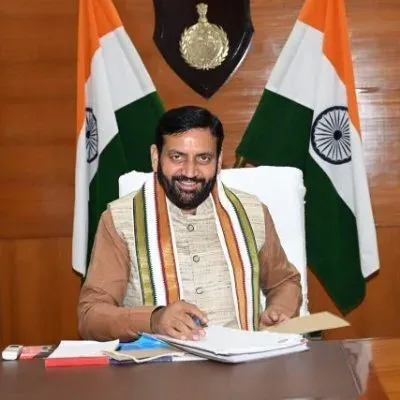
Haryana CM Nayab Singh Saini announced a community tank-based micro-irrigation plan on 23 May 2025 in Chandigarh .
The government will provide an 85 per cent subsidy for construction of community tanks for every 10 acres or more of farmland.
Tanks will be filled via canal pipelines and fitted with solar panels ; irrigation will be delivered through drip and sprinkler systems.
The pilot covers nine districts : Bhiwani, Charkhi Dadri, Gurugram, Mahendragarh, Nuh, Rewari, Hisar, Jhajjar, and Sirsa.
Tenders to convert village agricultural land to micro-irrigation are to be floated within the current financial year .
The initiative aims to eliminate tubewell dependence and phase out open-field irrigation across pilot areas.
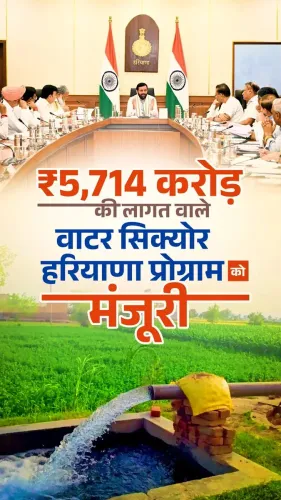
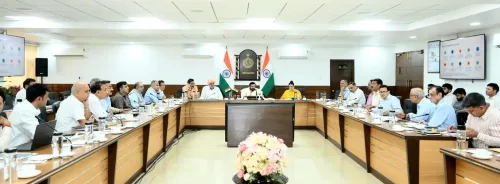
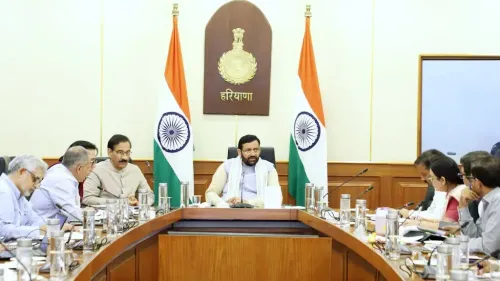
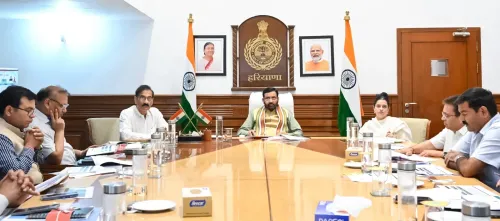
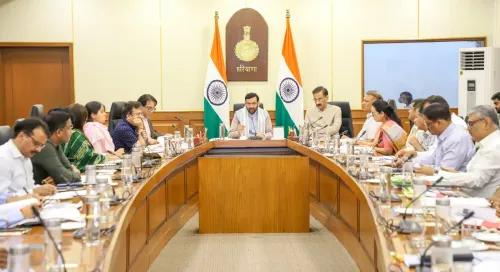
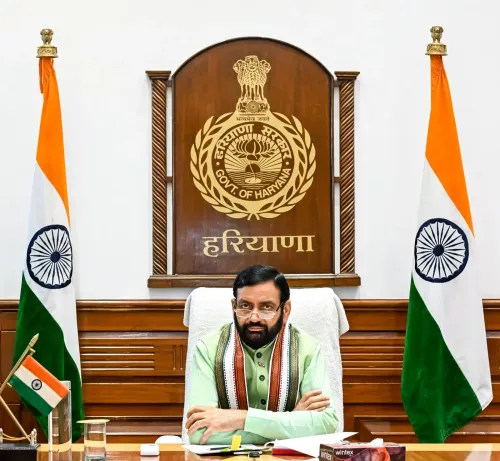
Haryana Chief Minister Nayab Singh Saini on Saturday, 23 May declared that the state government is fully committed to delivering adequate irrigation water to every agricultural field in the state. Chairing a review meeting of the Irrigation and Water Resources Department's five-year action plan under Haryana Vision-2047 in Chandigarh, Saini unveiled a community tank-based micro-irrigation model backed by an 85 per cent government subsidy.
The Community Tank Model
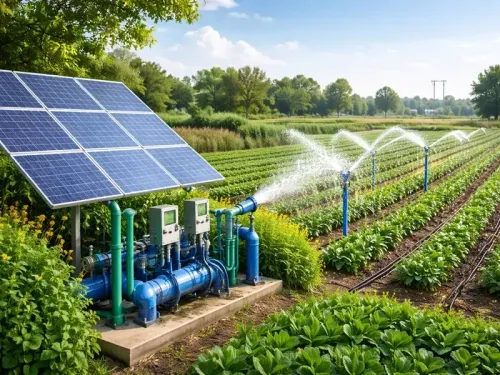
At the core of the plan is a directive for the Irrigation Department to form farmer groups and construct community tanks for every 10 acres or more of agricultural land. These tanks will be filled via canal pipelines, fitted with solar panels, and linked to drip and sprinkler systems in connected fields. The government will bear 85 per cent of the construction cost, minimising out-of-pocket expenditure for farmers.
Saini said the new arrangement will eliminate the need for individual tubewells, reducing farmer dependence on electricity and groundwater. Open-field irrigation — long blamed for water wastage — will be progressively discontinued, allowing more land to be irrigated with less water.
Nine Districts to Lead the Rollout
The initiative will be piloted in nine districts — Bhiwani, Charkhi Dadri, Gurugram, Mahendragarh, Nuh, Rewari, Hisar, Jhajjar, and Sirsa. In these districts, farmer groups will be constituted and community tanks constructed for land holdings of 10 acres or more. The Chief Minister directed the department to initiate tenders this year, involving modern agri-technology companies to convert entire village agricultural land into micro-irrigation systems.
Alignment with 'Per Drop More Crop' and Viksit Bharat 2047
Saini framed the push within Prime Minister Narendra Modi's 'Per Drop — More Crop' philosophy and the broader national goal of Viksit Bharat at 2047. He called on the department to move beyond traditional irrigation practices and draw lessons from developed countries that efficiently manage limited water resources.
'Despite limited water resources, their optimum utilisation is possible and departmental schemes must be visible on the ground,' Saini said at the meeting.
What Farmers Can Expect
Under the new system, drip and sprinkler irrigation will allow farmers to water crops precisely as needed, cutting waste and input costs. Farmers in the pilot districts will receive irrigation water in a 'smart and efficient manner without additional expenditure,' according to the Chief Minister. The department has also been directed to run awareness campaigns urging farmers to reduce open-field irrigation practices.
With tenders expected to be floated within the current year, the rollout's pace across the nine pilot districts will be a key indicator of whether Haryana's water-efficiency ambitions translate from policy to field.
Point of View
And over what timeline? Haryana's water table in districts like Mahendragarh and Nuh has been critically overexploited for years; micro-irrigation alone cannot reverse that without parallel restrictions on groundwater extraction. The real accountability test will come at the tendering stage — whether modern agri-tech companies are selected on merit and whether farmer groups are genuinely constituted or remain on paper. Vision-2047 timelines are politically safe; the current-year tender deadline is the one worth watching.
NationPress
7 Oct 2026
Frequently Asked Questions
What is the Haryana community tank micro-irrigation scheme?
It is a state government initiative announced by Chief Minister Nayab Singh Saini on 23 May 2025, under which community tanks will be built for every 10 acres or more of farmland, filled via canal pipelines, and linked to drip and sprinkler irrigation systems. The government will subsidise 85 per cent of the construction cost.
Which districts are covered under the Haryana micro-irrigation pilot?
The pilot will be implemented in nine districts: Bhiwani, Charkhi Dadri, Gurugram, Mahendragarh, Nuh, Rewari, Hisar, Jhajjar, and Sirsa. Farmer groups will be formed and community tanks constructed for landholdings of 10 acres or more in these areas.
How will the new system benefit farmers?
Farmers will receive irrigation water through drip and sprinkler systems without needing to install or operate tubewells, reducing electricity costs and dependence on groundwater. The 85 per cent government subsidy means minimal additional expenditure for participating farmers.
How does this scheme connect to the 'Per Drop More Crop' initiative?
Chief Minister Saini explicitly aligned the plan with Prime Minister Narendra Modi's 'Per Drop — More Crop' philosophy, which promotes precision irrigation to maximise agricultural output per unit of water. The scheme also feeds into Haryana's Vision-2047 goals under the Viksit Bharat framework.
When will the scheme be implemented?
The Chief Minister directed the Irrigation Department to initiate tenders within the current year for converting village agricultural land in the nine pilot districts to micro-irrigation systems. A broader timeline for statewide rollout has not yet been specified.