CM Nayab Saini Reviews Water Secure Haryana Program
Synopsis
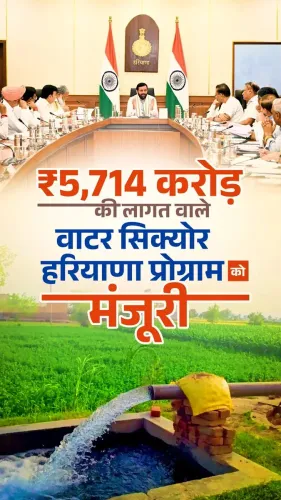
Chief Minister Nayab Singh Saini reviewed the Water Secure Haryana Program in Chandigarh on 20 June 2026, ordering rehabilitation of 678 canals funded by the World Bank, NABARD, and the state budget, and directing a time-bound action plan to strengthen water security across the state.
Key Takeaways
CM Nayab Singh Saini chaired a review meeting of the Water Secure Haryana Program (WSHP) in Chandigarh on 20 June 2026 .
The Chief Minister directed focus on water conservation, groundwater recharge, canal rehabilitation, micro-irrigation expansion, and treated-water reuse.
A total of 678 canals will be rehabilitated: 106 with World Bank support, 293 from the state budget , and 279 with NABARD assistance.
Officials were instructed to prepare an effective, time-bound action plan and implement it at the ground level.
The programme aligns with national initiatives including the Pradhan Mantri Krishi Sinchayee Yojana and the Atal Bhujal Yojana .
Key beneficiaries include Haryana 's farmers and rural households dependent on canal-fed irrigation.
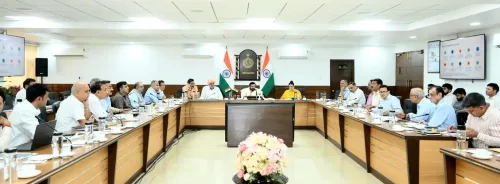
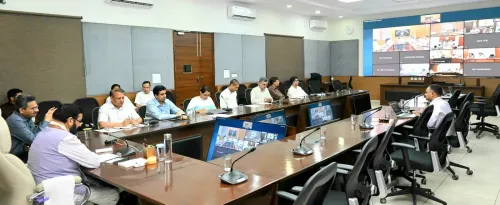
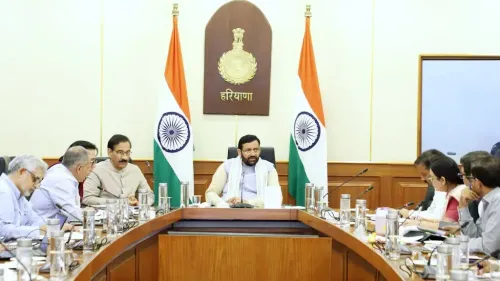
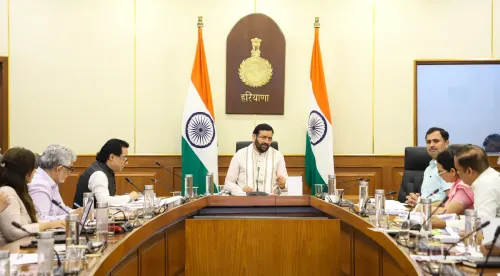
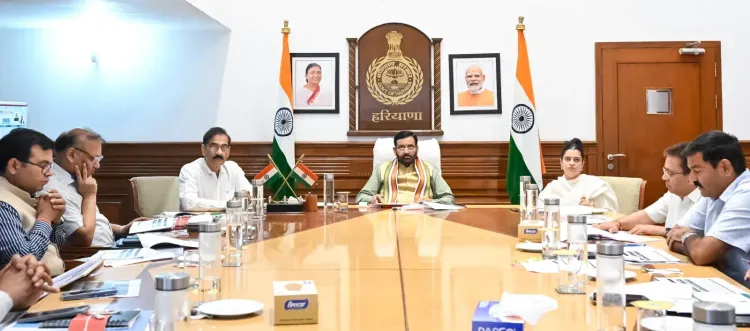
The Chief Minister's Office of Haryana announced on Saturday, 20 June 2026, that Chief Minister Nayab Singh Saini chaired a detailed review meeting of the Water Secure Haryana Program (WSHP) in Chandigarh, covering a wide range of issues related to water security and water resource management.
Context
At the meeting, CM Saini directed officials to prioritise water conservation, groundwater recharge, canal rehabilitation, expansion of micro-irrigation, and promotion of treated-water reuse. He stated, 'Jal ki pratyek boond ka sanrakshan aur sadupyog sunishchit karna sarkar ki sarvoch prathamikta hai' ('Ensuring the conservation and optimal use of every drop of water is the government's highest priority').
The Chief Minister instructed officers to prepare an effective, time-bound action plan and implement it at the ground level so that water management across Haryana can be made more efficient and accessible.
Policy Backdrop
Haryana faces acute groundwater depletion driven by intensive rice-wheat cultivation and depends heavily on canal systems fed by the Bhakra and Yamuna river basins. The WSHP builds on the foundation of national schemes such as the Pradhan Mantri Krishi Sinchayee Yojana (launched 2015), which promoted micro-irrigation and water-use efficiency, and the Atal Bhujal Yojana (approved 2019), which supported groundwater management in water-stressed districts.
The programme also aligns with the broader Jal Shakti Abhiyan, under which states have been encouraged to rehabilitate aging canal infrastructure and scale up treated-water reuse to reduce dependence on groundwater extraction.
The 678-Canal Rehabilitation Plan
CM Saini disclosed that under the WSHP, a total of 678 canals will be rehabilitated across the state. Of these, 106 canals will be taken up with the financial and technical support of the World Bank, 293 canals will be funded through the state budget, and 279 canals will be rehabilitated with assistance from NABARD (National Bank for Agriculture and Rural Development).
This multi-source funding model — combining international institutional support, state resources, and a national refinancing agency — reflects the scale of infrastructure investment the state government is committing to water security. The World Bank and NABARD have both been active partners in irrigation and rural water infrastructure projects across Indian states in recent years.
Stakeholders and Impact
The primary beneficiaries of the WSHP are Haryana's farming communities and rural households, who depend on canal-fed irrigation for the dominant rice-wheat cropping cycle. Rehabilitation of aging canals is expected to reduce water losses from seepage and improve equitable distribution of surface water to tail-end farmers who are currently the most vulnerable to shortfalls.
Expansion of micro-irrigation and the reuse of treated water are intended to reduce the pressure on groundwater aquifers, several of which in Haryana are classified as over-exploited. Urban and peri-urban areas could also benefit from improved water availability as treated-water reuse reduces competition between agricultural and domestic demand.
What's Next
Officials have been directed to operationalise time-bound work plans for the canal rehabilitation drive. The measurable markers to watch will include the pace of canal rehabilitation across all three funding streams, changes in groundwater levels in targeted districts, and the expansion of area covered under micro-irrigation in subsequent agricultural seasons. The government's ability to deliver on the 678-canal target within a defined timeline will be a key test of the WSHP's implementation credibility.
Point of View
A positioning that carries both policy and political weight in an agrarian state where groundwater depletion is an existential concern for farmers. The three-way funding architecture — World Bank, NABARD, and state budget — is a deliberate hedge against fiscal risk and reflects the scale of the challenge. Embedding the programme within the national Jal Shakti framework also allows the state to leverage central visibility while retaining credit for local delivery. The real test will be whether the time-bound directives translate into measurable on-ground progress before the next agricultural cycle.
NationPress
19 Sept 2026
Frequently Asked Questions
What is the Water Secure Haryana Program (WSHP)?
The Water Secure Haryana Program is a state government initiative aimed at improving water security through canal rehabilitation, groundwater recharge, micro-irrigation expansion, and treated-water reuse across Haryana.
How many canals will be rehabilitated under the WSHP?
A total of 678 canals will be rehabilitated: 106 with World Bank support, 293 through the state budget, and 279 with NABARD assistance.
What did CM Nayab Saini say at the WSHP review meeting?
CM Saini stated that ensuring the conservation and optimal use of every drop of water is the government's highest priority, and directed officials to prepare a time-bound action plan for ground-level implementation.
What is the role of the World Bank and NABARD in Haryana's water programme?
The World Bank will co-fund the rehabilitation of 106 canals and provide technical support, while NABARD will support rehabilitation of 279 canals through its rural infrastructure refinancing mechanisms.
Why is water security important for Haryana?
Haryana faces severe groundwater depletion from intensive rice-wheat farming and relies on aging canal systems. Several aquifers in the state are classified as over-exploited, making canal rehabilitation and micro-irrigation critical for long-term agricultural sustainability.