CM Nayab Saini Reviews Haryana Vision-2047 Water Plan
Synopsis
Chief Minister Nayab Singh Saini on 23 May 2026 reviewed the Public Health Engineering Department's five-year plan under Haryana Vision-2047, directing officials to deliver clean drinking water and sewerage to every household, including government-allotted plots and new colonies, with a timeline-backed plan due at the next meeting.
Key Takeaways
CM Nayab Singh Saini chaired a review of the Public Health Engineering Department's five-year action plan on 23 May 2026 .
The review was conducted under the Haryana Vision-2047 long-term development framework.
The Chief Minister directed officials to ensure clean drinking water and sewerage reach every household in the state.
Officials were asked to prepare a timeline-based five-year plan modelled on developed-nation standards for presentation at the next meeting.
The CM specifically sought details on water and sewerage availability in 100-square-yard government-allotted plots and newly approved colonies.
The exercise aligns with national schemes including Jal Jeevan Mission and AMRUT , as well as SDG-6 targets on clean water and sanitation.
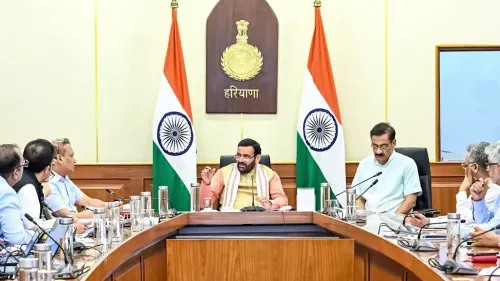
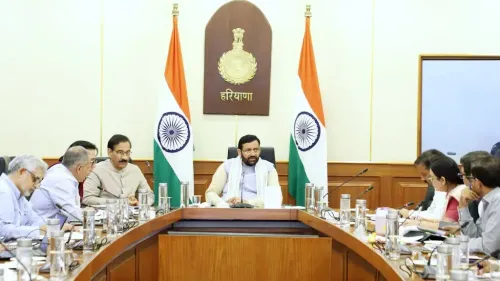
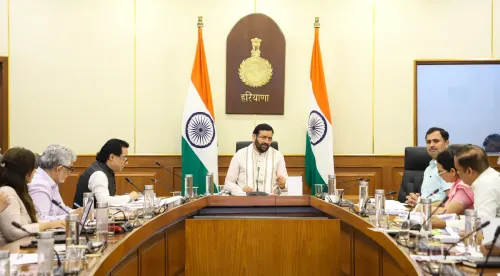
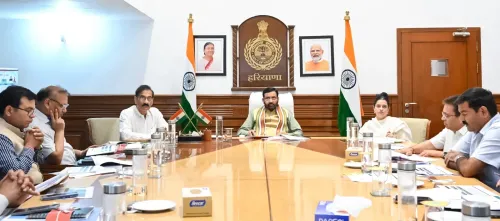
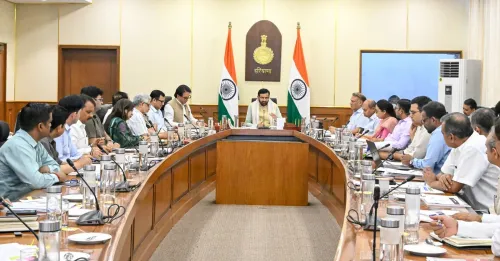
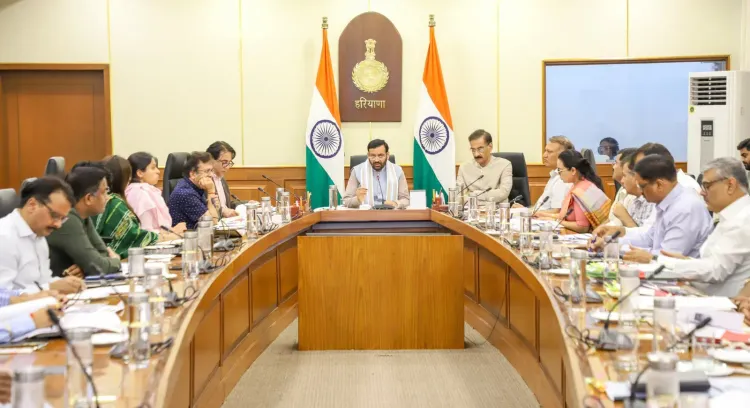
The Chief Minister's Office of Haryana announced on Saturday, 23 May 2026 that Chief Minister Nayab Singh Saini chaired a review meeting on the five-year action plan of the Public Health Engineering Department (PHED) under the Haryana Vision-2047 framework, directing officials to ensure clean drinking water and improved sewerage reach every household in the state.
Context
The Chief Minister, addressing officials at the review, stated that providing swachh peyajal evam behtar sewerage suvidha (clean drinking water and better sewerage facilities) to every home in Haryana is among the state government's top priorities. He directed the department to prepare a detailed five-year action plan — complete with timelines — modelled on the standards of developed nations, and to present it at the next scheduled meeting.
The review also covered the availability of drinking water and sewerage infrastructure in 100-square-yard plots allotted by the government, as well as in newly approved colonies across both urban and rural areas. Officials were given clear instructions to ensure these facilities are made available in all such localities.
Policy Backdrop
Haryana Vision-2047 is the state government's long-term development roadmap aligned with India's centenary of independence, mirroring the national Viksit Bharat @2047 agenda that emphasises universal access to basic services. The five-year sectoral planning exercise being undertaken by PHED fits within this broader framework of time-bound, outcome-linked governance.
At the national level, the Jal Jeevan Mission, launched in 2019, aims to provide functional household tap connections in rural areas, while the AMRUT Mission, started in 2015, targets urban water supply, sewerage, and drainage in selected cities. Haryana's internal planning exercise is expected to complement and build upon these central schemes.
Indian states have increasingly been aligning sectoral plans with SDG-6 targets on clean water and sanitation, and Haryana's approach — demanding a timeline-backed plan from its engineering department — reflects this trend toward measurable, deadline-driven infrastructure delivery.
Stakeholders and Impact
Rural households and urban residents across Haryana stand to benefit directly from any accelerated rollout of drinking water and sewerage networks. The specific focus on 100-square-yard government-allotted plots and newly approved colonies signals that the administration is prioritising last-mile connectivity for newer and underserved settlements that often lack basic utility infrastructure.
The Public Health Engineering Department bears primary responsibility for planning and executing these works. The Chief Minister's instruction to present a timeline-based plan at the next review meeting places the department under a clear accountability framework, with performance expected to be tracked against defined milestones.
What's Next
The immediate deliverable is the department's detailed five-year action plan, with timelines, to be presented at the next review meeting. The plan's scope — covering urban areas, rural areas, government-allotted plots, and newly approved colonies — suggests a wide-ranging tendering and works programme once the roadmap is approved.
Budget allocations and project-specific tenders will be closely watched as indicators of how swiftly the state moves from planning to execution. The outcome of the next review meeting will signal whether Haryana's water and sanitation ambitions under Vision-2047 translate into on-ground timelines and funding commitments.
Point of View
Developed-nation-benchmarked water plan from PHED is a signal that Haryana is shifting from scheme announcement to accountability-driven governance. The explicit focus on government-allotted plots and new colonies suggests the administration is aware that infrastructure rollout has lagged behind housing supply in rapidly urbanising pockets of the state. Framing the exercise within Haryana Vision-2047 also serves a political purpose — anchoring routine departmental reviews within a grand centenary narrative that BJP-led states have widely adopted. Whether the next review meeting produces a credible, funded roadmap or another round of instructions will be the real test of this planning push.
NationPress
20 Sept 2026
Frequently Asked Questions
What is Haryana Vision-2047?
Haryana Vision-2047 is the state government's long-term development roadmap aligned with India's centenary of independence in 2047, covering sectors including water, sanitation, and infrastructure.
What did CM Nayab Saini instruct PHED officials?
CM Nayab Saini directed Public Health Engineering Department officials to prepare a detailed five-year action plan with timelines, modelled on developed-nation standards, and present it at the next review meeting.
Which areas are covered under the new water and sewerage plan in Haryana?
The plan covers urban and rural areas across Haryana, as well as 100-square-yard government-allotted plots and newly approved colonies that currently lack adequate drinking water and sewerage facilities.
How does this relate to Jal Jeevan Mission?
Jal Jeevan Mission is a national scheme launched in 2019 for rural household tap connections; Haryana's internal PHED planning exercise is expected to complement this and the urban-focused AMRUT Mission at the state level.
When will the detailed five-year water plan be ready?
CM Saini has asked officials to present the timeline-based five-year action plan at the next scheduled review meeting; an exact date for that meeting has not been publicly announced.