Cabinet Clears 2-Year Second Tour for Agniveers Under Agnipath
Synopsis
India's Union Cabinet has approved a two-year 'Second Tour of Duty' for Agniveers under the Agnipath scheme, plus a formal route for top performers to become regular soldiers — the most significant structural tweak to the controversial recruitment programme since its 2022 launch.
Key Takeaways
The Union Cabinet, chaired by PM Narendra Modi , approved a 2-year Second Tour of Duty for Agniveers on 4 November 2026 .
Agniveers can now serve up to 6 years total if they opt for the additional tour, up from the original 4-year fixed tenure.
A new, defined selection process will allow Agniveers completing 4 or 6 years to apply for regular soldier status in the Indian Armed Forces.
The Agnipath scheme was originally launched in June 2022 with a 25-percent regular retention provision after a four-year stint.
Union Education Minister Dharmendra Pradhan credited PM Modi and Defence Minister Rajnath Singh for the decision.
Detailed implementation guidelines — including selection criteria and timelines for existing cohorts — are still awaited.
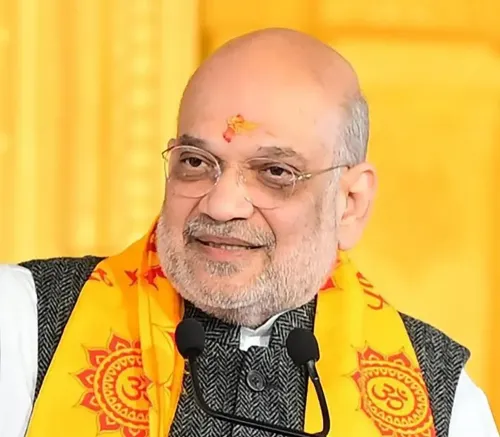
A Cabinet decision has just expanded the horizon for every young soldier who signed up under India's most debated military recruitment experiment. Union Education Minister Dharmendra Pradhan announced on Wednesday, 4 November 2026, that the Union Cabinet — chaired by Prime Minister Narendra Modi — has approved a two-year additional 'Second Tour of Duty' for Agniveers under the Agnipath scheme, along with a fresh pathway for those who wish to transition into the regular army after completing their short-service tenure.
What the Cabinet cleared — and what changes for Agniveers
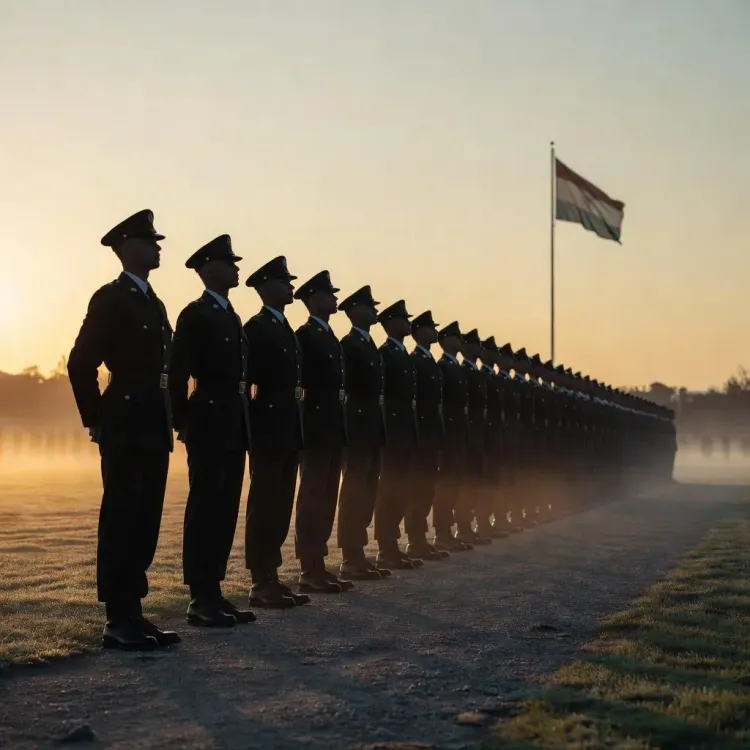
Until now, Agniveers served a fixed four-year tenure, with roughly 25 percent retained as regular soldiers and the rest released with a financial package. The new decision adds a second bite at the apple: Agniveers can now opt for two more years of service — a 'Second Tour of Duty' — giving them a six-year total stint in uniform if they choose it. Beyond that, those who complete either the 4-year or 6-year cycle and want a full career in the armed forces will now be eligible to apply for regular soldier status through a defined selection process.
Pradhan called it a 'visionary decision' (दूरदर्शी निर्णय) and credited Prime Minister Modi and Defence Minister Rajnath Singh for steering it through Cabinet. The post frames the move as strengthening the resolve to build armed forces that are 'younger, more capable, technology-equipped, and ready for future security challenges.'
Why Agnipath needed this correction
The Agnipath scheme, launched in June 2022, was designed with a clear strategic logic: bring down the average age of the Indian soldier, free up the pension bill, and push fresh technical talent into the ranks faster. What it also triggered was a fierce debate about career uncertainty — protests erupted in several states in the weeks after the launch, with young aspirants worried that four years in uniform offered too thin a foundation for a civilian career and too slim a chance of permanent service.
The government responded with incremental adjustments — reservations in paramilitary and state police for Agniveer alumni, priority in public-sector hiring — but the core concern about service duration lingered. The Second Tour of Duty is the most structural response yet: it doesn't dismantle the scheme's youth-first architecture, but it meaningfully deepens the career runway available to those who perform.
The force of a younger, longer-serving pool
India's Indian Armed Forces face a dual pressure — an ageing force structure on one side, the rapid pace of technology-intensive warfare on the other. The Agnipath framework was always about resolving that tension. With the second tour, the military gains something it couldn't before: a cohort of soldiers with two to four additional years of real operational experience who can be retained precisely because they proved their worth in the first cycle.
The revised pathway to regular absorption also sends a signal to the recruitment pipeline: exceptional performance can still lead to a permanent career. That matters enormously in a country where lakhs of young people prepare for years to wear the uniform.
The next critical step will be the release of detailed implementation guidelines — selection criteria for the second tour, the absorption ratio for regular conversion, and the timeline for existing Agniveer cohorts to exercise these new options. Until those specifics land, the full scale of the change remains to be mapped. But the direction is now unmistakable.
Point of View
The Cabinet is trying to preserve the scheme's youth-and-agility dividend while blunting the political and social criticism that dogged it since 2022. For Defence Minister Rajnath Singh, it is a consolidation move ahead of what will likely be a fresh round of Agniveer cohort inductions. The real test will be in the fine print — how generous the selection ratios are and whether the revised structure actually shifts recruitment sentiment among the aspirant class that matters most to the armed forces.
NationPress
4 Nov 2026
Frequently Asked Questions
What is the Second Tour of Duty for Agniveers?
The Second Tour of Duty is a newly approved Cabinet decision that allows Agniveers to serve an additional two years beyond their original tenure, extending their total service to up to six years under the Agnipath scheme.
Can Agniveers become regular soldiers now?
Yes. The Cabinet has approved a pathway for Agniveers who complete 4 or 6 years of service to apply for regular soldier status in the Indian Armed Forces through a defined selection process — going beyond the original 25-percent retention provision.
When was the Agnipath scheme launched?
The Agnipath scheme was launched in June 2022 to recruit soldiers on a four-year short-service tenure, with the aim of lowering the average age of the Indian military and improving technical readiness.
Who approved the Agnipath Second Tour of Duty?
The Union Cabinet , chaired by Prime Minister Narendra Modi , approved the Second Tour of Duty provision on 4 November 2026 . Defence Minister Rajnath Singh also played a key role in steering the decision.
What was the protest against Agnipath about?
When the scheme launched in 2022, widespread protests broke out over concerns that a fixed four-year tenure offered insufficient career security, with only 25 percent of recruits retained as regular soldiers and the rest discharged without a full pension.