Pralhad Joshi Leads 11-Nation ISA Ministerial Tour at Bharat Renewable Energy Summit 2026
Synopsis
Union Minister Pralhad Joshi led ministers from eleven ISA member states — including Ghana, Maldives, Marshall Islands, and Zimbabwe — on an exhibition tour at the Bharat Renewable Energy Summit 2026, showcasing India's clean-energy progress on the sidelines of the 9th ISA Assembly.
Key Takeaways
Pralhad Joshi led an International Solar Alliance ministerial delegation from 11 countries at the Bharat Renewable Energy Summit 2026 .
Participating nations included Belize, Comoros, Eswatini, Ghana, Maldives, Marshall Islands, South Sudan, Zimbabwe, Venezuela, Mauritania, and Seychelles .
The summit is linked to the 9th ISA Assembly , the alliance's major annual gathering of its 121 member countries .
The ISA was founded by India and France at COP21 in Paris in 2015 to promote solar deployment across sunshine-belt developing nations.
India has pledged 500 GW of non-fossil capacity by 2030 , a target that anchors its renewable-energy diplomacy through forums like the ISA.
The tour is part of India's broader strategy of combining domestic clean-energy scale-up with South-South diplomatic outreach to expand markets for Indian firms.
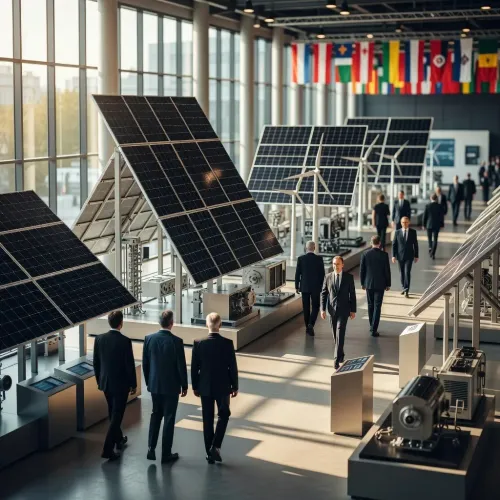
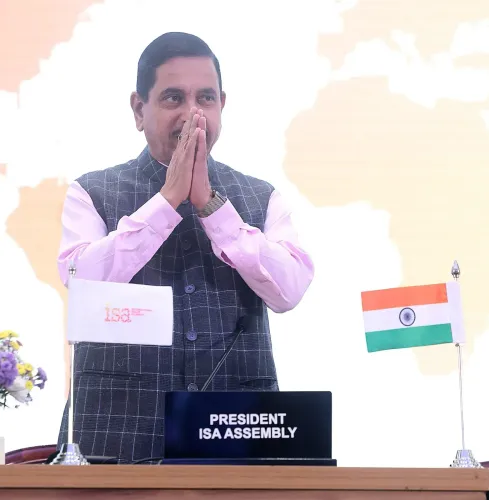
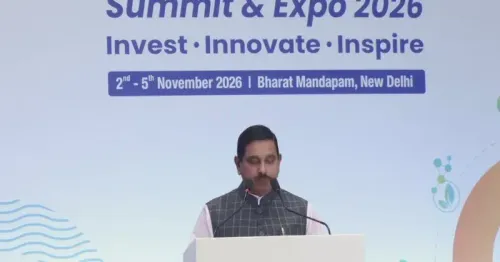
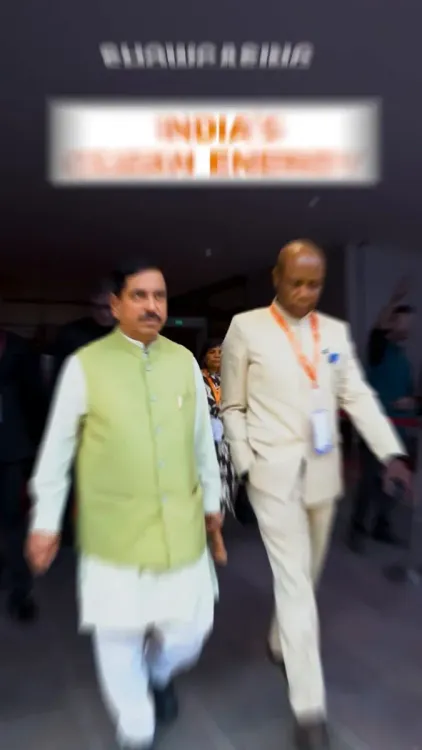
Eleven nations. One exhibition floor. And India playing host, guide, and showcase all at once. Union Minister of New and Renewable Energy Pralhad Joshi on Wednesday, 4 November 2026 led a high-level International Solar Alliance (ISA) ministerial delegation through the exhibition at the Bharat Renewable Energy Summit 2026, walking ministers from Belize, Comoros, Eswatini, Ghana, Maldives, Marshall Islands, South Sudan, Zimbabwe, Venezuela, Mauritania, and Seychelles through India's growing clean-energy portfolio.
Eleven Countries, One Exhibition, India's Clean-Energy Pitch
The delegation, drawn from across Africa, the Pacific, the Caribbean, and the Indian Ocean, represents precisely the constituency the ISA was built to serve — sun-rich, often energy-poor nations that stand to gain most from affordable solar deployment. Joshi, in his post, said the tour was aimed at 'showcasing India's progress in renewable energy and innovative clean energy solutions, highlighting the country's growing capabilities and commitment to a sustainable future while strengthening international cooperation towards a shared clean energy vision.'
The Kannada section of the post — 'ಹಂಚಿಕೆಯ ಸ್ವಚ್ಛ ಇಂಧನ ದೃಷ್ಟಿಕೋನದತ್ತ ಅಂತರರಾಷ್ಟ್ರೀಯ ಸಹಕಾರವನ್ನು ಮತ್ತಷ್ಟು ಬಲಪಡಿಸಿದೆ' [strengthened international cooperation towards a shared clean energy vision] — underlines the diplomatic weight the minister placed on the engagement.
ISA at the Heart of India's South-South Solar Diplomacy
The International Solar Alliance was launched by India and France at COP21 in Paris in 2015 as a treaty-based body uniting 121 sunshine-belt countries. Its founding logic was simple but powerful: pool demand, reduce technology costs, and fast-track solar deployment across the developing world. India has consistently used ISA assemblies to combine domestic manufacturing muscle with targeted diplomatic outreach — particularly toward small-island states and African nations that often struggle to access affordable financing for clean-energy projects.
The Bharat Renewable Energy Summit 2026 is linked to the 9th ISA Assembly, making it one of the alliance's most consequential annual convening points. The exhibition tour that Joshi led serves as both a technology showcase and a soft-power exercise — giving partner governments a first-hand look at what Indian firms can supply and deploy.
India's 500 GW Goal and the Diplomacy Behind It
At COP26 in Glasgow in 2021, India pledged to achieve 500 GW of non-fossil energy capacity by 2030 — a target that has since anchored its entire renewable-energy diplomacy. Every ministerial delegation tour, every ISA assembly, every bilateral MoU signed on solar panels or green hydrogen is a brick in that larger structure. For the eleven countries represented in Wednesday's delegation, India's domestic scale-up is not just an inspiration — it is a potential supply chain.
Joshi's ministry holds the new-and-renewable energy brief, making him the natural point of contact for ISA partners. His presence leading the tour — rather than delegating it to a junior official — signals the political priority New Delhi attaches to the summit's international optics.
What the 9th ISA Assembly Could Unlock
The assembly is the moment when years of diplomatic groundwork translate — or don't — into binding commitments. Watch for bilateral MoUs between India and attending member states, project-financing announcements for solar installations in African or Pacific nations, and any new ISA frameworks on concessional technology transfer. The ministerial delegation tour is the opening handshake; the assembly's formal sessions are where deals get signed.
India's model here is deliberate: build relationships at the top, demonstrate capability on the floor, and let commerce follow the diplomacy. For a country that wants to be both a climate leader and a clean-tech exporter, there is no sharper stage than the ISA — and no better audience than eleven ministers who collectively represent some of the world's most solar-abundant, energy-hungry nations.
Point of View
Not just trade promotion. The choice of eleven countries spanning Africa, the Pacific, the Caribbean, and the Indian Ocean is strategically calculated: these are precisely the nations where Chinese infrastructure financing has deepest penetration, and where India is seeking to offer an alternative model built around solar technology and South-South cooperation. The 9th ISA Assembly comes at a moment when India's domestic renewable buildout is generating genuine export capacity, turning what was once an aspirational diplomatic platform into a commercially meaningful one. If MoUs and financing commitments follow the ministerial handshakes, this summit could mark the ISA's evolution from a symbolically important body into an operationally significant one.
NationPress
5 Nov 2026
Frequently Asked Questions
What is the Bharat Renewable Energy Summit 2026?
The Bharat Renewable Energy Summit 2026 is a major clean-energy exhibition and conference held in India alongside the 9th Assembly of the International Solar Alliance, showcasing Indian renewable-energy technologies to global partners.
What is the International Solar Alliance (ISA)?
The International Solar Alliance is a treaty-based multilateral body launched by India and France at COP21 in Paris in 2015, uniting 121 sunshine-belt countries to promote affordable solar-energy deployment across the developing world.
Which countries were part of the ISA ministerial delegation led by Pralhad Joshi?
The 11-nation delegation included ministers from Belize, Comoros, Eswatini, Ghana, Maldives, Marshall Islands, South Sudan, Zimbabwe, Venezuela, Mauritania, and Seychelles.
What is India's renewable energy target for 2030?
India pledged at COP26 in Glasgow in 2021 to achieve 500 GW of non-fossil energy capacity by 2030, a commitment that drives its renewable-energy diplomacy through bodies like the ISA.
Why does India host ISA ministerial delegations?
India uses ISA assemblies to combine its growing domestic clean-energy manufacturing scale with targeted diplomatic outreach — particularly toward African and small-island states — building partnerships that expand markets for Indian renewable-energy firms while advancing South-South cooperation.