Pralhad Joshi at ISA 9th Assembly: India Elected President for Third Term
Synopsis
At the 9th ISA Assembly, Minister Pralhad Joshi announced India's unprecedented third straight election as ISA President for 2026–2028, and unveiled a $200 million African Solar Facility — including India's $25 million commitment — plus a $300 million Nigeria Fund to accelerate clean energy across Africa.
Key Takeaways
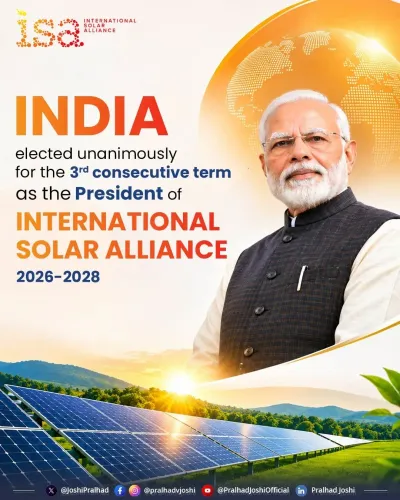
India elected ISA President for a third consecutive term, covering the 2026–2028 period, with unanimous support from all member nations.
A proposed $200 million African Solar Facility was announced to improve solar access across Africa, with India pledging $25 million .
A separate $300 million Nigeria Fund was highlighted as a dedicated clean-energy investment vehicle for the continent.
The International Solar Alliance was co-founded by India and France at COP21 in Paris in 2015 and now has over 120 member countries .
Minister Joshi tied the ISA agenda to PM Modi's 'One Sun, One World, One Grid' vision and the principle of Vasudhaiva Kutumbakam .
Operationalisation of the Africa-focused funds will be the key metric to watch after the 9th Assembly concludes.
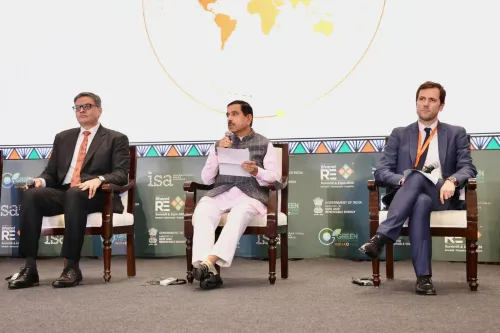
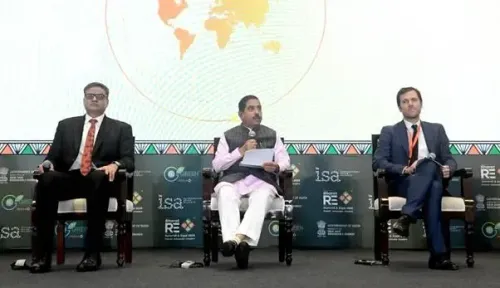
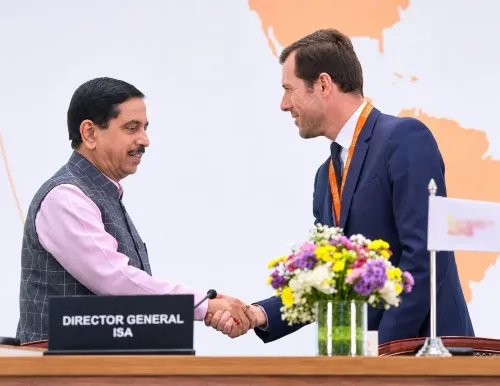
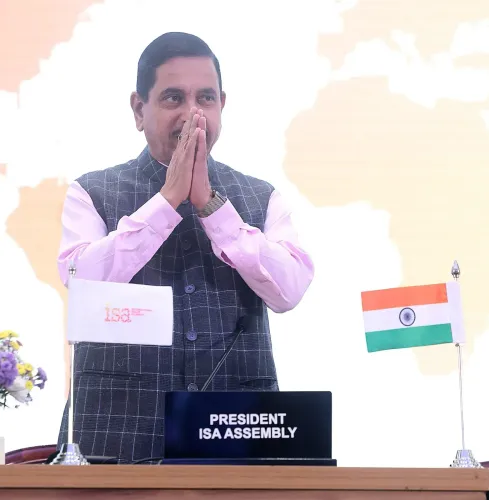
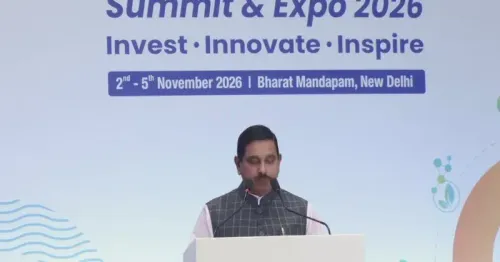
India's solar diplomacy just hit a new high-water mark. Union Minister for New and Renewable Energy Pralhad Joshi addressed a press conference at the 9th Assembly of the International Solar Alliance (ISA) on Tuesday, November 3, 2026, announcing that India has been elected ISA President for an unprecedented third consecutive term — covering the 2026–2028 period — with the support of all member nations.
India's Third Straight ISA Presidency — What the Consensus Signals
Being returned to the chair by unanimous consensus is more than a diplomatic courtesy — it is a statement about which country the solar world trusts to lead. The International Solar Alliance, founded at COP21 in Paris in 2015 by India and France, now counts over 120 member countries. Three straight presidential terms means India has held this seat since the organisation found its operational footing, a run that underlines New Delhi's sustained role as convenor of the Global South's clean-energy agenda.
Joshi, posting in Hindi on X ('sabhee sadasy deshon ka hridaye se aabhaar') [heartfelt gratitude to all member nations], framed the re-election not as a bilateral win but as a shared mandate to accelerate solar access worldwide.
The African Solar Facility and the Nigeria Fund
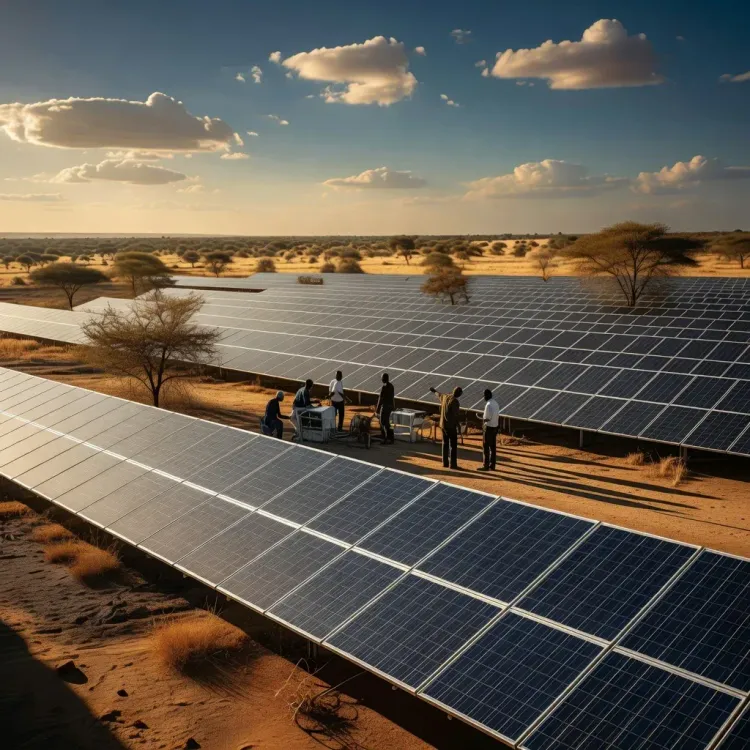
Two financial instruments dominated the minister's press briefing. The first is the African Solar Facility — a proposed $200 million fund aimed at making solar energy accessible and affordable across African member countries, with India committing $25 million of that corpus. The second is a dedicated $300 million Nigeria Fund, flagged as a major vehicle for clean-energy investment on the continent.
Both figures were presented by Joshi as flagship outcomes of the 9th ISA Assembly. The research note flags that these specific funding numbers could not be independently corroborated from prior public records — they should be treated as the minister's stated commitments pending formal ISA documentation. What is well-established is the broader pattern: India has used successive ISA assemblies to direct concessional finance and technical assistance toward African solar markets, building on lines of credit and capacity-building programmes that stretch back to the 2000s.
'One Sun, One World, One Grid' — The Vision Driving the Agenda
Joshi anchored the entire thrust of India's ISA presidency in two ideas that Prime Minister Narendra Modi has championed on the global stage: the 'One Sun, One World, One Grid' vision — a call for transnational solar power grids that would let surplus renewable energy flow across borders — and the classical Indian principle of Vasudhaiva Kutumbakam [the world is one family].
The framing is deliberate. India consistently positions solar leadership not as great-power competition but as development cooperation — making it harder for sceptics to read New Delhi's ISA role as purely self-interested. For African nations sitting at the table, the promise of a $200 million facility backed by a country that has itself scaled solar from near-zero to one of the world's largest installed bases carries weight that a purely rhetorical pitch would not.
What Happens After the 9th Assembly
The real test of Tuesday's announcements lies in operationalisation. The African Solar Facility and Nigeria Fund now need project pipelines, disbursement timelines, and governance structures — the gap between a headline pledge at a multilateral assembly and actual panels on African rooftops has historically been wide. India's diplomatic credibility at the 10th Assembly will depend, in large part, on how much of today's agenda has moved from commitment to concrete megawatts.
If the finance flows, the 9th Assembly could mark the moment the ISA shifted from principally a convening body to a serious capital-deployment engine for the Global South.
Point of View
Making it difficult for any rival bloc to displace that identity. The Africa-focused financial commitments follow a well-worn playbook: pair a principled multilateral vision with targeted concessional capital to keep the Global South coalition cohesive. The risk, however, is pledge fatigue — if the African Solar Facility and Nigeria Fund do not show visible disbursements before the 10th Assembly, India's credibility as a delivery-oriented president, rather than merely a consensus-builder, will face sharper scrutiny.
NationPress
3 Nov 2026
Frequently Asked Questions
What is the International Solar Alliance and who leads it?
The International Solar Alliance (ISA) is a multilateral treaty-based organisation with over 120 member countries, co-founded by India and France at COP21 in Paris in 2015 to accelerate solar energy deployment globally. India has now been elected its President for a third consecutive term, covering 2026–2028.
What is the African Solar Facility announced at the 9th ISA Assembly?
The African Solar Facility is a proposed $200 million fund designed to improve the accessibility and affordability of solar energy across African member countries of the ISA. India has committed $25 million toward this corpus.
What is the Nigeria Fund mentioned by Pralhad Joshi?
The Nigeria Fund is a $300 million dedicated financing vehicle announced at the 9th ISA Assembly to accelerate clean-energy investment in Nigeria, highlighted by Minister Joshi as a major initiative for expanding solar power in Africa.
What is 'One Sun, One World, One Grid'?
'One Sun, One World, One Grid' is an India-led initiative championed by Prime Minister Narendra Modi that envisions interconnected transnational solar power grids enabling surplus renewable energy to be shared across borders, reducing dependence on fossil fuels.
How many times has India been elected ISA President?
With the 2026–2028 election at the 9th Assembly, India has now been elected ISA President three consecutive times, reflecting sustained diplomatic consensus among member states on India's leadership role in global solar cooperation.