Pralhad Joshi: India re-elected to lead ISA for third term

Synopsis
India has been re-elected to lead the International Solar Alliance for a third consecutive term, Union Minister Pralhad Joshi announced at the 9th ISA Assembly and Bharat RE Summit 2026. India co-founded the treaty-based body in 2015 and has led it since inception, prioritising solar access for Global South nations.
Key Takeaways
India has been re-elected to the presidency of the International Solar Alliance (ISA) for a third consecutive term , as announced on November 3, 2026 .
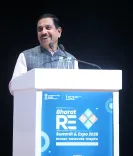
Union Minister Pralhad Joshi made the announcement at the 9th ISA Assembly and Bharat RE Summit 2026 .
The ISA was co-founded by India and France at COP21 in Paris in 2015 and is headquartered in Gurugram, India .
India has pledged to continue strengthening global solar partnerships with a focus on Global South nations .
The re-election reinforces India's role as the leading voice on solar diplomacy in multilateral climate forums.
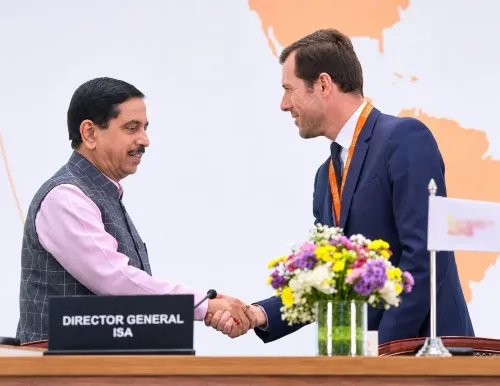
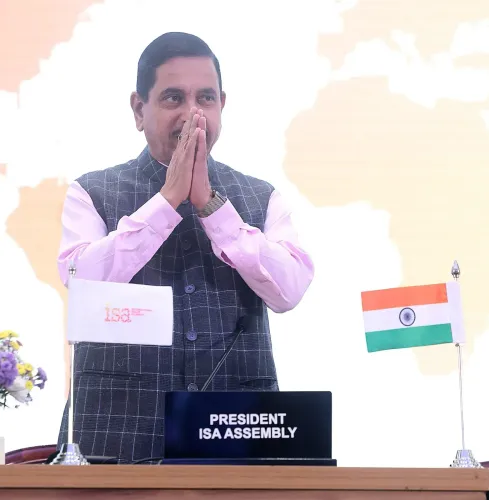
For the third consecutive time, member countries of the International Solar Alliance (ISA) have voted to keep India in the chair — a diplomatic signal that the world's solar coalition continues to see New Delhi as its indispensable anchor. Union Minister for New and Renewable Energy Pralhad Joshi announced the re-election on Tuesday, November 3, 2026, at the sidelines of the 9th ISA Assembly and Bharat RE Summit 2026.
Writing on behalf of the Government of India, Joshi declared: 'This is a proud moment and a renewed responsibility.' The announcement, made in both English and Kannada, reflected the weight of the mandate — ISA member countries, drawn predominantly from solar-rich developing nations, re-affirmed their trust in India to steer a multilateral body that sits at the crossroads of clean-energy access and climate diplomacy.
From Paris 2015 to a third consecutive presidency
The ISA was co-launched by India and France at the Paris Climate Conference (COP21) in 2015, with Prime Minister Narendra Modi and then-French President François Hollande as its founding champions. Headquartered in Gurugram, the treaty-based organisation was designed as a coalition of solar-rich countries to mobilise capital, de-risk technology deployment, and cut the cost of solar for nations that need it most. India, as its permanent host and founding architect, has led the body since inception — first elected, then re-elected, and now entrusted with a third consecutive term.
That continuity matters. Leadership of a multilateral organisation is never purely ceremonial — it sets agendas, drives consensus, and shapes where resources flow. Three consecutive terms in the same chair is a statement of confidence that goes well beyond courtesy votes.
The Global South at the centre of India's solar pitch
Joshi was explicit about who this mandate is really for. 'India will continue to work towards strengthening global solar partnerships and ensuring that the benefits of solar energy reach every nation, particularly across the Global South,' he said. That framing is deliberate: India has consistently positioned the ISA not as a club of wealthy green economies, but as a South-South cooperation vehicle — connecting developing nations with affordable solar finance, standardised equipment, and shared technical know-how.
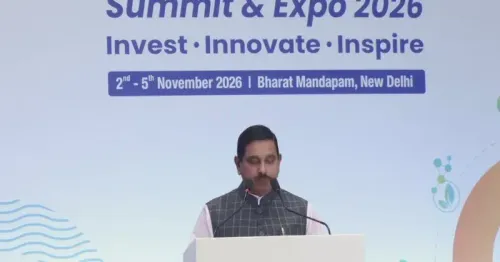
The Bharat RE Summit 2026, running alongside the 9th ISA Assembly, is precisely the arena where those commitments get tested. New project announcements, financing agreements, and partner-country pledges from this summit will be the real measure of whether the third term opens a new chapter or consolidates existing momentum.
What a third term asks of India
Presiding over the ISA for a third term means India now owns the organisation's credibility entirely. Any stall in solar deployment financing for developing nations, any gap between stated ambition and on-ground project delivery, will reflect directly on New Delhi's stewardship. The mandate is also a political asset: it bolsters India's standing in multilateral climate negotiations and reinforces its self-styled role as the voice of the developing world on the energy transition.
Minister Joshi's Kannada closing — 'ಎಲ್ಲಾ ಸದಸ್ಯ ದೇಶಗಳೊಂದಿಗೆ ಸೇರಿ ಈ ಜಂಟಿ ಗುರಿಯನ್ನು ಇನ್ನಷ್ಟು ಮುನ್ನಡೆಸಲು ನಾನು ಎದುರುನೋಡುತ್ತಿದ್ದೇನೆ' ['I look forward to taking this shared mission further with all member countries'] — grounded a global diplomatic moment in the minister's home state, a neat reminder that India's renewable energy ambition runs from village rooftops in Karnataka to the floor of international assemblies.
Three terms in. The mission is no longer new — now it has to deliver.
Point of View
The re-election reinforces a foreign policy doctrine that blends climate leadership with South-South solidarity, giving India institutional leverage in multilateral arenas well beyond its own borders. The moment also raises the stakes domestically: three terms of leadership mean India's own renewable energy targets and ISA project delivery are now inextricably linked in the eyes of member states. Minister Joshi's announcement at the Bharat RE Summit suggests New Delhi intends to use this mandate to accelerate concrete financing and project outcomes, not just symbolic consensus.
NationPress
3 Nov 2026
Frequently Asked Questions
What is the International Solar Alliance?
The International Solar Alliance (ISA) is a treaty-based international organisation of solar-rich countries, co-founded by India and France at the Paris Climate Conference (COP21) in 2015 and headquartered in Gurugram, India. It works to mobilise capital, reduce the cost of solar technology, and promote solar energy deployment, especially in developing nations.
How many times has India been elected to lead the ISA?
India has now been elected to lead the ISA for three consecutive terms. As the permanent host country and co-founder, India has served as president of the alliance since its founding in 2015.
Who announced India's re-election to the ISA presidency?
Union Minister for New and Renewable Energy Pralhad Joshi announced the re-election on November 3, 2026, on behalf of the Government of India, at the 9th ISA Assembly and Bharat RE Summit 2026.
What is the 9th ISA Assembly?
The 9th ISA Assembly is the annual governing body meeting of the International Solar Alliance, held in 2026 alongside the Bharat RE Summit 2026. It is where member countries review progress, elect leadership, and make new commitments on solar energy deployment.
Why does India prioritise the Global South in the ISA?
India has positioned the ISA as a South-South cooperation platform, using it to connect developing nations with affordable solar financing, standardised equipment, and technical expertise. This aligns with India's broader foreign policy goal of acting as a voice and facilitator for developing countries on the global energy transition.