Joshi at Bharat Renewable Summit: Odisha's 10.96 GW push
Synopsis
At the Bharat Renewable Energy Summit 2026, Union Minister Pralhad Joshi backed Odisha's 10.96 GW renewable target by 2030, highlighted gains under PM Surya Ghar and PM-KUSUM, and pledged central support for the state's 2036 Green Energy Hub vision.
Key Takeaways
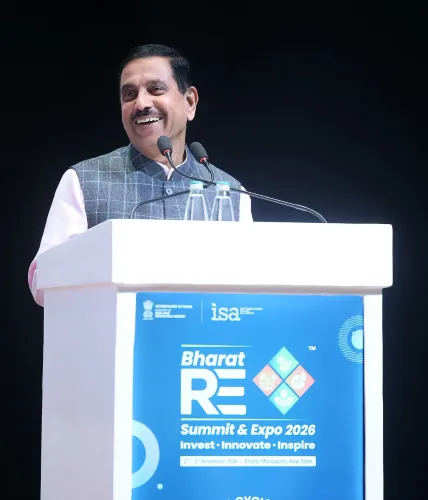
Union Minister Pralhad Joshi addressed the Odisha State Plenary Session of Bharat Renewable Energy Summit 2026 on 3 November 2026 .
Odisha has set a renewable energy capacity target of 10.96 GW by 2030 , spanning solar, wind, pumped storage and green hydrogen.
Progress under central schemes PM Surya Ghar (rooftop solar) and PM-KUSUM (farm solar, launched 2019 ) was highlighted as existing momentum.
Joshi called for accelerating project implementation and confirmed the Centre's full commitment to supporting Odisha's energy transition.
Odisha's broader goal is to become a Green Energy Hub by 2036 , with central support aimed at converting potential into investment and jobs.
Chief Minister Mohan Charan Majhi and Deputy Chief Minister K.V.
Singh Deo were present at the session.
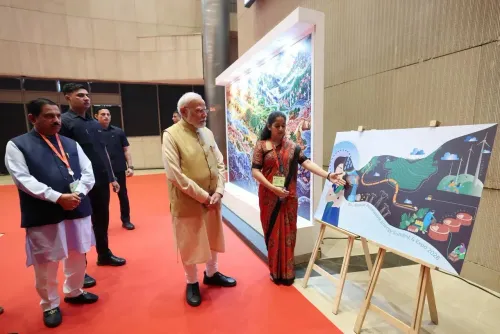
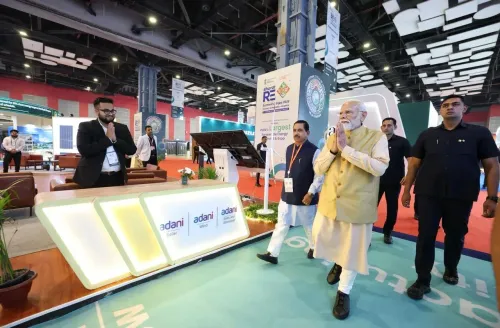
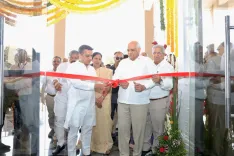
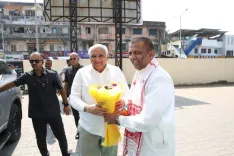
Odisha is sitting on one of India's most underutilised renewable energy frontiers — and on Tuesday, 3 November 2026, Union Minister of New and Renewable Energy Pralhad Joshi made it plain that the Centre intends to help the state cash in. Addressing the Odisha State Plenary Session of the #BharatRenewableEnergySummit2026 in the presence of Chief Minister Mohan Charan Majhi and Deputy Chief Minister K.V. Singh Deo, Joshi laid out an ambitious convergence of central schemes and state-level vision.
Posting on X, Joshi said he addressed the session alongside the 'dignified presence' of the Chief Minister and Deputy Chief Minister, underlining a target of 10.96 GW of renewable energy capacity by 2030. 'Odisha has immense potential in solar, wind, pumped storage and green hydrogen,' he wrote, adding that progress under the PM Surya Ghar rooftop solar scheme and the PM-KUSUM farm-solar programme was highlighted as proof of momentum already building on the ground.
Solar, wind, pumped storage — and green hydrogen
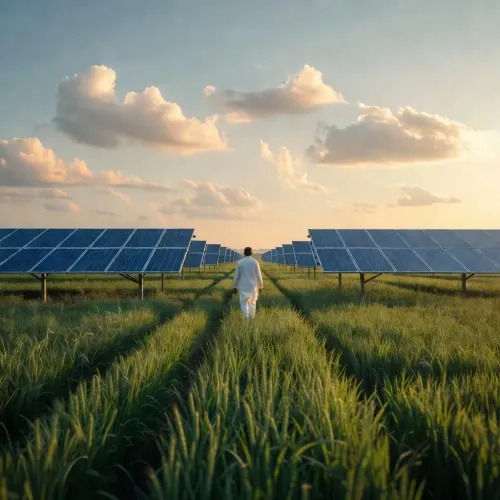
The four pillars Joshi named are not random. Odisha's coastline offers consistent wind resources, its river basins are suited to pumped-storage hydro, and its industrial base makes it a credible candidate for green hydrogen production. Together, these position the state to contribute meaningfully to India's nationally reaffirmed target of 500 GW of non-fossil fuel capacity by 2030 — a commitment India took to COP26 in 2021 and has since embedded in its national energy plans.
Joshi stressed the need to 'accelerate implementation of projects,' a phrase that signals the Centre's concern is less about ambition and more about execution — closing the gap between announced capacity and commissioned megawatts. That gap has been a recurring challenge for several states in India's renewable push.
PM Surya Ghar and PM-KUSUM: central scaffolding for state ambition
PM Surya Ghar provides subsidised rooftop solar installations directly to households, while PM-KUSUM, launched in 2019, targets farmers with solar pumps and decentralised energy — a particularly relevant scheme for a state like Odisha where agriculture remains the economic backbone. By invoking both programmes in the Odisha plenary, Joshi was signalling that the central government is not expecting the state to fund its transition alone; the federal scaffolding is already in place.
'I am firmly confident that Odisha can achieve even greater milestones,' Joshi wrote in his post, framing the Centre's commitment in direct terms: turning the state's capacity into 'investment, jobs and reliable clean energy' — and doing so in time for Odisha's stated vision of becoming a Green Energy Hub by 2036.
Centre-state compact on the 2036 green-hub vision
The 2036 green energy hub target sets a decade-long runway — but the pressure to meet interim milestones is immediate. Watchers of India's renewable sector will now track whether central facilitation translates into faster tendering, land allocation, and grid-readiness in Odisha, and whether PM Surya Ghar and PM-KUSUM deployments in the state keep pace with the 2030 capacity goal.
Joshi's appearance at a state-specific plenary — not a national-level panel — is itself a signal: the Centre is willing to show up in the room, state by state, to push the energy transition forward. Odisha now has both the spotlight and the deadline.
Point of View
Which sits outside the traditional solar-heavy western belt, the political attention is a signal that the Centre sees eastern India as the next frontier for capacity addition. The 2036 green-hub framing also insulates the Odisha BJP government from short-term target slippage by setting a longer political horizon. Closer to the ground, the real test will be whether PM Surya Ghar and PM-KUSUM disbursements in Odisha keep pace with the ambition on display at the summit.
NationPress
3 Nov 2026
Frequently Asked Questions
What is Odisha's renewable energy target by 2030?
Odisha has set a target of 10.96 GW of renewable energy capacity by 2030, covering solar, wind, pumped storage and green hydrogen sectors.
What is PM Surya Ghar scheme?
PM Surya Ghar is a central government scheme that provides subsidised rooftop solar installations to households across India, including in Odisha.
What is PM-KUSUM and how does it benefit Odisha farmers?
PM-KUSUM, launched in 2019, promotes solar-powered pumps and decentralised renewable energy for farmers, reducing their dependence on grid power and diesel pumps.
What is Odisha's Green Energy Hub 2036 vision?
Odisha aims to become a Green Energy Hub by 2036 by scaling up solar, wind, pumped storage and green hydrogen capacity, attracting investment and creating clean-energy jobs.
What did Pralhad Joshi say at Bharat Renewable Energy Summit 2026?
Joshi addressed the Odisha state plenary session on 3 November 2026, backing the state's 10.96 GW renewable target, calling for faster project implementation, and pledging full central support for Odisha's 2036 green energy ambitions.