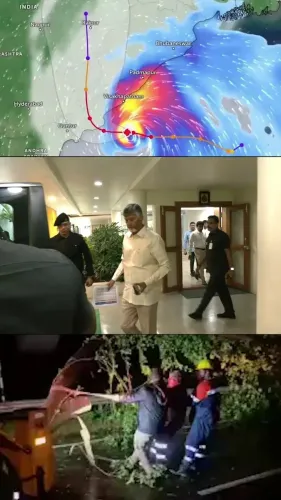
CM Naidu Thanks Amit Shah for Centre's Cyclone Murasu Support

Synopsis
Andhra Pradesh CM N. Chandrababu Naidu publicly thanked Home Minister Amit Shah for the Centre's swift response to Cyclone Murasu, confirming state and central teams are jointly conducting rescue, relief, and road-clearing operations across the state.
Key Takeaways
Chandrababu Naidu publicly acknowledged Union Home Minister Amit Shah and the Centre for 'prompt support and solidarity' during Cyclone Murasu .
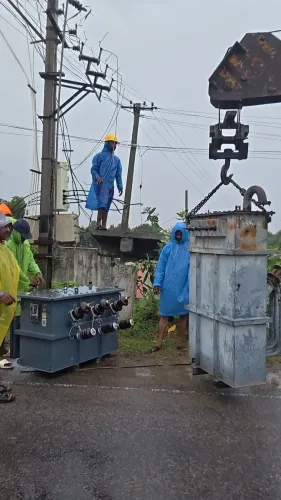
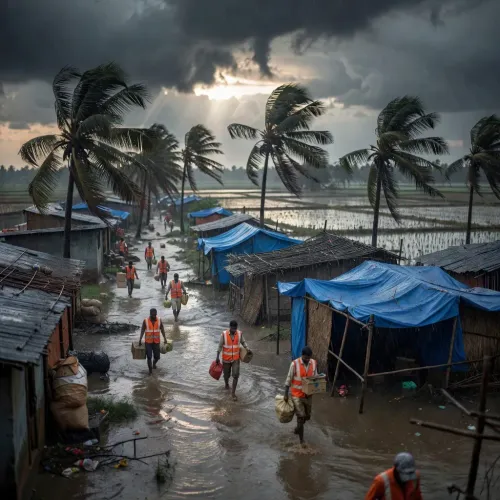
State and central teams are operating in joint coordination on rescue, relief distribution, and road-clearing simultaneously.
Andhra Pradesh has a documented history of severe Bay of Bengal cyclone impacts, including Cyclone Hudhud in 2014 during Naidu's earlier tenure.
India's National Disaster Management Act of 2005 provides the legal framework for this centre-state coordination model.
The next phase will involve joint damage assessments and potential release of central financial assistance from state and national disaster response funds.
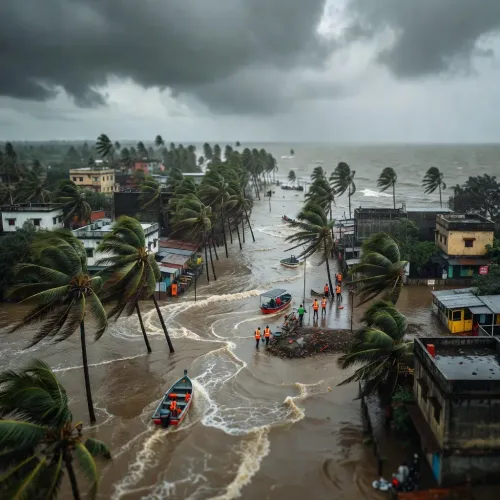
When a cyclone barrels into Andhra Pradesh's coastline, the speed of the federal response can mean the difference between managed recovery and cascading disaster — and on Tuesday, November 3, 2026, Andhra Pradesh Chief Minister N. Chandrababu Naidu signalled that coordination is holding, publicly thanking Union Home Minister Amit Shah for the Centre's 'prompt support and solidarity' as Cyclone Murasu battered the state.
Centre and State Move in Lockstep on Rescue and Relief
In his post addressed directly to Amit Shah, Naidu confirmed that state machinery is operating 'in complete coordination with central teams' to push rescue operations, relief distribution, and road-clearing simultaneously. The joint operational stance reflects the protocol India has practised through successive Bay of Bengal cyclones — where the Ministry of Home Affairs and the National Disaster Management Authority (NDMA) serve as the federal backbone, routing resources and personnel to the affected state government.
The framing of the message — thanking the Centre publicly rather than through internal channels — is itself a signal: coordination is being placed on the record, reassuring coastal communities that no gap exists between Amaravati and New Delhi at the worst possible moment.
Andhra Pradesh's Long and Costly History with Bay of Bengal Storms
Andhra Pradesh sits directly in the path of cyclones that form over the Bay of Bengal, making central-state disaster protocols not a bureaucratic formality but a life-saving infrastructure. Cyclone Hudhud in October 2014 — which struck during Naidu's first year in his previous tenure as Chief Minister — caused catastrophic damage to Visakhapatnam and demonstrated both the scale of central assistance possible and the sheer complexity of post-storm recovery in a densely populated coastal state.
India's National Disaster Management Act of 2005 codified exactly this kind of centre-state coordination, establishing legal architecture for rapid resource deployment during precisely these situations. Each cyclone since — Phailin in 2013, Hudhud in 2014, and the storms that followed — has refined the operational playbook both sides are now executing.
What Comes Next: Damage Counts, Central Funds, and Infrastructure Repair
The immediate rescue and relief phase will soon give way to joint damage assessments — the formal accounting of lives, livelihoods, and infrastructure lost that triggers the release of central financial assistance packages from the State Disaster Response Fund and, for severe events, the National Disaster Response Fund. Progress on restoring roads, power lines, and communications in the worst-hit districts will be the next visible metric.
Naidu's closing line — 'Together, we will ensure absolute safety and swift recovery across AP' — doubles as a public commitment: the pressure is now on both governments to deliver a recovery as coordinated as the rescue.
Point of View
On-record acknowledgment of central support during an active disaster is a calculated act of federal optics — it insulates both governments from blame if recovery slows, while reinforcing the TDP's governance credentials as a credible partner for the BJP-led Centre. The post also places quiet pressure on New Delhi to match the public commitment with rapid financial disbursements. More broadly, it reflects how India's disaster management architecture has matured: chief ministers now treat transparent centre-state communication as an instrument of public reassurance, not just administrative protocol.
NationPress
3 Nov 2026
Frequently Asked Questions
What is Cyclone Murasu and where did it hit in Andhra Pradesh?
Cyclone Murasu is a storm that struck Andhra Pradesh around November 3, 2026 . Specific details about landfall location and intensity are still emerging from ongoing rescue and relief operations.
What role does the Centre play in cyclone relief for Andhra Pradesh?
Under India's National Disaster Management Act of 2005 , the Centre routes rescue teams, resources, and financial assistance to affected states through the Ministry of Home Affairs and the NDMA during declared disasters.
Has Andhra Pradesh received central help for cyclones before?
Yes. During Cyclone Hudhud in October 2014 , which devastated Visakhapatnam , the Centre provided significant support to the state government, then also led by CM Chandrababu Naidu .
What financial assistance can Andhra Pradesh receive after Cyclone Murasu?
After joint damage assessments, the state can receive funds from the State Disaster Response Fund and, for severe events, from the National Disaster Response Fund administered by the Centre.
What did CM Chandrababu Naidu say about the cyclone response?
CM Naidu said state machinery is working 'in complete coordination with central teams' on rescue, relief, and road-clearing, and thanked Home Minister Amit Shah for 'prompt support and solidarity'.