Pralhad Joshi Walks ISA Ministers Through India's Renewable Showcase
Synopsis
Union Minister Pralhad Joshi led ministers from 11 ISA member nations — including Maldives, Ghana, and Zimbabwe — through the Bharat Renewable Energy Summit 2026 exhibition on 4 November, spotlighting India's clean energy advances and deepening South-South cooperation at the 9th ISA Assembly.
Key Takeaways
Eleven ISA member nations — Belize, Comoros, Eswatini, Ghana, Maldives, Marshall Islands, South Sudan, Zimbabwe, Venezuela, Mauritania, and Seychelles — sent ministerial delegations to the summit.
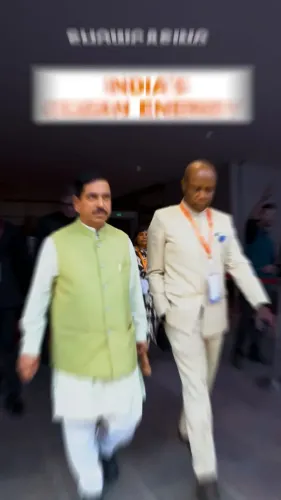
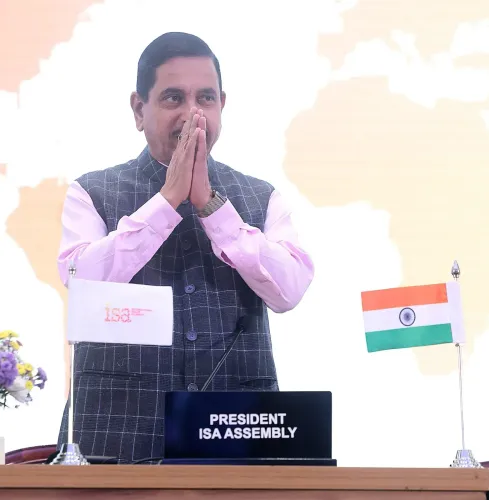
Union Minister Pralhad Joshi personally conducted the ministerial tour of the Bharat Renewable Energy Summit 2026 exhibition on 4 November 2026 .
The event ran alongside the 9th ISA Assembly , the annual gathering of the International Solar Alliance co-founded by India and France at COP21 in 2015 .
India's 500 GW non-fossil fuel capacity target by 2030 , pledged at COP26 in Glasgow, forms the domestic backdrop to the summit's diplomatic outreach.
The delegation spanned small island developing states, African nations, and Latin America — the core constituency the ISA was designed to serve.
Key watch points include any project, financing, or technology-transfer agreements emerging before the assembly concludes.
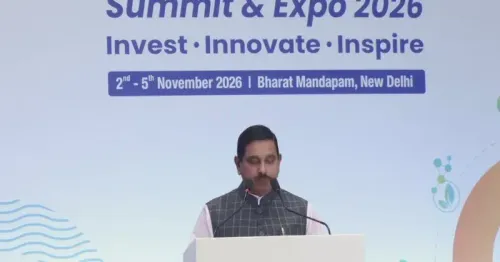
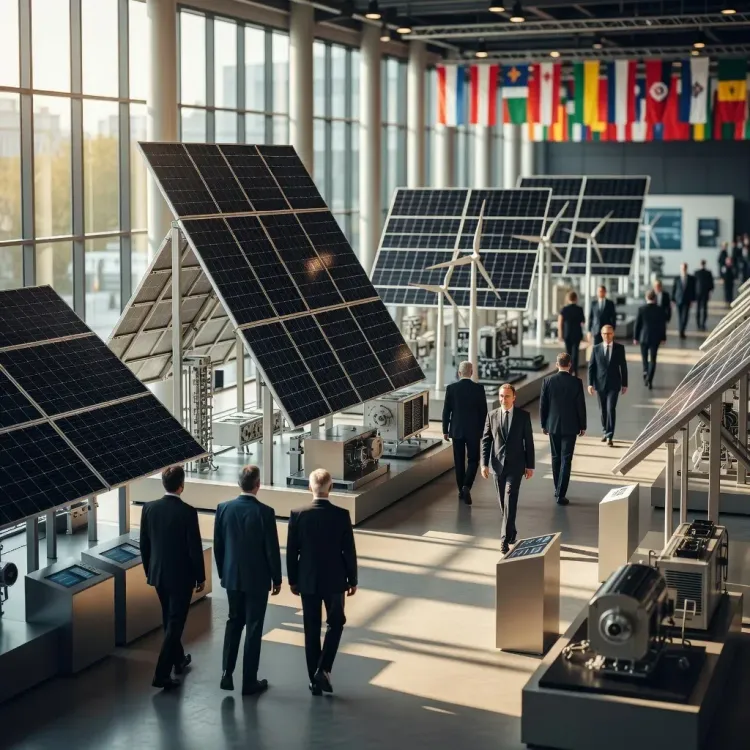
Eleven nations, one exhibition floor, and a pointed message about where clean energy leadership is heading. Union Minister for New and Renewable Energy Pralhad Joshi on Wednesday, 4 November 2026 led a ministerial delegation from the International Solar Alliance (ISA) through the exhibition at the Bharat Renewable Energy Summit 2026, showcasing India's advances in solar and clean energy technology to partners spanning Africa, the Indian Ocean, the Pacific, and Latin America.
The visiting ministers represented Belize, Comoros, Eswatini, Ghana, Maldives, Marshall Islands, South Sudan, Zimbabwe, Venezuela, Mauritania, and Seychelles — a cross-section of the Global South that the ISA was specifically designed to serve. Joshi, posting in Hindi, described the tour as an exercise in underscoring India's 'growing capabilities and commitment to a sustainable future' while strengthening 'international cooperation towards a shared clean energy vision.'
The ISA stage and what it was built for
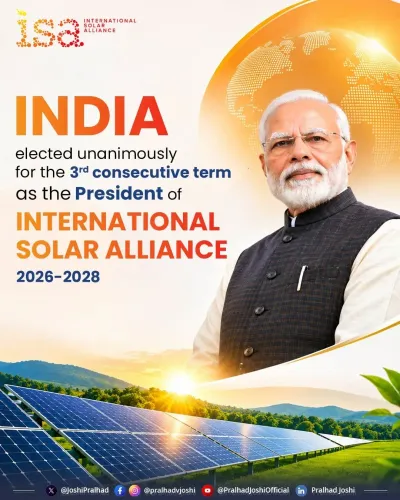
The International Solar Alliance was co-launched by India and France at COP21 in Paris in 2015 as a treaty-based intergovernmental body aimed at mobilising solar investment across the sunshine belt — the band of countries lying between the Tropics of Cancer and Capricorn. More than a decade on, successive ISA Assemblies have evolved into demonstration platforms where India puts its manufacturing scale and project execution record on display for the very nations the alliance was meant to uplift.
The 9th ISA Assembly, running alongside the summit under the hashtag #9ISAssembly, is the latest iteration of that formula. For small island developing states like the Maldives, Marshall Islands, and Seychelles, and for landlocked or conflict-affected economies like South Sudan and Zimbabwe, the promise is not just diplomatic solidarity — it is access to technology and financing for grids that have never been reliably lit.
India's 500 GW ambition as the backdrop
The exhibition Joshi walked the ministers through sits against a larger domestic canvas. At COP26 in Glasgow in 2021, India committed to its 'Panchamrit' climate targets — including 500 GW of non-fossil fuel power capacity by 2030. That target has since become the anchor of India's climate diplomacy: a number large enough to be credible as a global reference point, and ambitious enough to require sustained international partnerships in technology and finance.
Showcasing that trajectory to ISA members — particularly the smaller and more climate-vulnerable ones — is a deliberate act of South-South signalling. India presents itself not as a recipient of green-transition aid but as a provider of solutions, a shift with real consequence for how multilateral clean energy coalitions are structured.
What the delegation visit signals going forward
Ministerial-level exhibition tours rarely end at the velvet rope. The real watch point from the 9th ISA Assembly is whether the conversations that began on the exhibition floor translate into project announcements, technology transfer agreements, or new financing commitments before the assembly closes. For the countries represented in Joshi's delegation — many of them energy-poor and acutely exposed to climate risk — those follow-through moments matter far more than the photographic record of the walk-around.
India's ability to convert diplomatic goodwill into bankable clean energy partnerships will be the true measure of this summit's weight.
Point of View
Joshi reinforces India's bid to be seen as a solutions provider rather than a developing-country peer still navigating the transition. This posture — creditor of green-tech relationships rather than recipient — directly supports India's broader multilateral ambitions in forums like G20 and COP. The summit's real test, however, is whether the floor-level goodwill converts into announced partnerships before the assembly closes.
NationPress
5 Nov 2026
Frequently Asked Questions
What is the Bharat Renewable Energy Summit 2026?
The Bharat Renewable Energy Summit 2026 is an exhibition and summit event held in India to showcase the country's progress in renewable and clean energy, running alongside the 9th Assembly of the International Solar Alliance.
What is the International Solar Alliance (ISA)?
The International Solar Alliance is a treaty-based intergovernmental organisation co-founded by India and France at COP21 in 2015 to mobilise solar energy investment and deployment among sunshine-belt and developing countries.
Which countries attended the ISA ministerial delegation at the summit?
Ministers from Belize, Comoros, Eswatini, Ghana, Maldives, Marshall Islands, South Sudan, Zimbabwe, Venezuela, Mauritania, and Seychelles participated in the delegation that toured the exhibition with Pralhad Joshi.
What is India's renewable energy target by 2030?
India committed at COP26 in Glasgow in 2021 to achieving 500 GW of non-fossil fuel power capacity by 2030 as part of its five-point 'Panchamrit' climate pledge.
Who is Pralhad Joshi?
Pralhad Joshi is a senior BJP leader from Karnataka and currently serves as India's Union Minister for Consumer Affairs, Food and Public Distribution, and New and Renewable Energy.