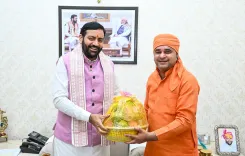
CM Himanta backs Agniveer extension, cites Assam's 12% quota
Synopsis
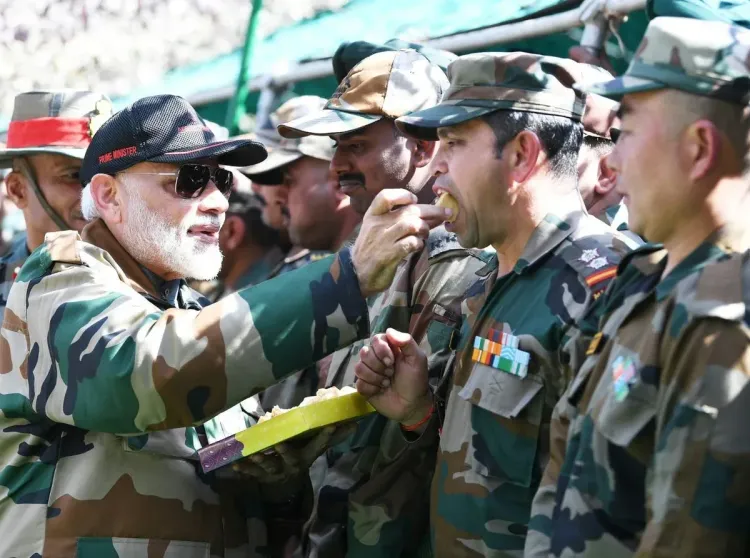
Assam CM Himanta Biswa Sarma praised PM Modi's reported two-year extension for Agniveers as evidence of trust earned, while reaffirming Assam's 12% reservation policy for those who choose to exit after their service term.
Key Takeaways
PM Narendra Modi has reportedly announced a two-year extension for Agniveers, lengthening the baseline service beyond the original four-year term.
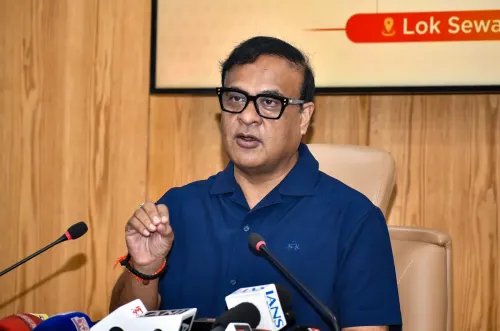
Assam CM Himanta Biswa Sarma publicly welcomed the extension on 4 November 2026 .
Assam's 12 percent reservation for Agniveers who do not extend their service remains in place for civilian career support.
The Agnipath scheme was launched in June 2022 , originally offering four-year tenures with 25 percent regular retention.
The post reflects coordinated centre-state strategy on managing Agniveer transitions into both extended service and civilian employment.
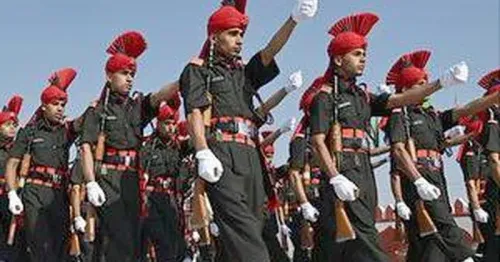
Four years after critics questioned whether young soldiers recruited under the Agnipath scheme would ever earn lasting institutional trust, Assam Chief Minister Himanta Biswa Sarma says the answer has arrived — in the form of a two-year service extension announced by Prime Minister Narendra Modi on Wednesday, 4 November 2026.
Modi's extension decision and what it signals
Sarma framed the extension as proof of PM Modi's 'compassion for our jawans and high priority for the nation's security needs.' The Agnipath scheme, launched in June 2022, enrolled youth aged 17.5 to 21 for a fixed four-year term, with only 25 percent eligible for regular absorption into the armed forces. The remaining 75 percent were always expected to return to civilian life — a design that drew fierce protests and political criticism at inception. A reported two-year extension now lengthens that baseline commitment, signalling that the government views Agniveers as a maturing, dependable cadre rather than a stopgap.
Assam's 12% reservation for exiting Agniveers
Sarma simultaneously underscored that the Assam government's 12 percent reservation for Agniveers who choose not to extend their service will remain intact. The state-level policy is designed to absorb veterans into government jobs and career pathways after their short-service tenure ends — a parallel safety net running alongside the central extension. 'The first Agniveers have earned what their critics never imagined: the trust to serve longer,' Sarma wrote, closing with the rallying cry 'Jai Jawan, Jai Hindustan.'
Centre-state coordination on a contested reform
The post illustrates a deliberate two-track strategy: the Centre deepens the military commitment by extending service tenures, while BJP-governed states like Assam cushion the exit of those who leave. That centre-state coordination is precisely what the scheme's architects envisioned but struggled to demonstrate in its turbulent early years. Sarma, as convenor of the North-East Democratic Alliance (NEDA), carries additional weight in showcasing northeast states as model implementers of contentious national reforms.
The original 25 percent retention cap — and whether the two-year extension applies universally or selectively — remains a live question for the thousands of Agniveers currently completing their fourth year. What is now clear is that both New Delhi and Dispur are treating the scheme not as an experiment to wind down, but as a foundation to build on.
Point of View
If formalised, represents a meaningful evolution of the Agnipath scheme from its embattled 2022 debut — when mass protests forced a hasty upper-age-limit revision — toward a more flexible, trust-based military compact. Sarma's statement serves a dual political purpose: validating the Centre's reform record ahead of likely state election cycles and positioning Assam as a pioneer in state-level veteran welfare. The 12 percent reservation detail is worth watching; it sets a precedent other BJP-governed states may feel pressure to match, gradually building a national civilian-absorption architecture for exiting Agniveers.
NationPress
5 Nov 2026
Frequently Asked Questions
What is the Agniveer two-year extension announced by PM Modi?
PM Narendra Modi has reportedly announced a two-year extension to the service tenure of Agniveers, the short-service military recruits enrolled under the Agnipath scheme originally for a four-year term. Assam CM Himanta Biswa Sarma confirmed this on 4 November 2026, calling it a reflection of the government's trust in the recruits and its commitment to national security.
What is Assam's 12% reservation for Agniveers?
The Assam government has reserved 12 percent of seats in state government jobs and recruitment for Agniveers who complete their service but choose not to extend. CM Himanta Biswa Sarma confirmed this policy will continue to support their civilian career advancement after their military tenure ends.
What was the original Agnipath scheme?
The Agnipath scheme was launched in June 2022 by the central government to recruit youth into the armed forces for a fixed four-year term. Only 25 percent of recruits were eligible for permanent absorption; the rest were expected to return to civilian life, a provision that triggered widespread protests at the time.
Why did Agnipath face criticism when it was launched?
Critics argued that the four-year tenure was too short to build a career, that the 75 percent non-retention rate left most recruits without long-term job security, and that the scheme reduced the defence pension bill at the cost of soldier welfare. Protests broke out across several states in 2022, forcing the government to raise the upper age limit for the first batch.
Who is Himanta Biswa Sarma?
Himanta Biswa Sarma is the Chief Minister of Assam and a senior BJP leader. He also serves as the convenor of the North-East Democratic Alliance (NEDA), which coordinates BJP and allied-party governance across northeastern states.